
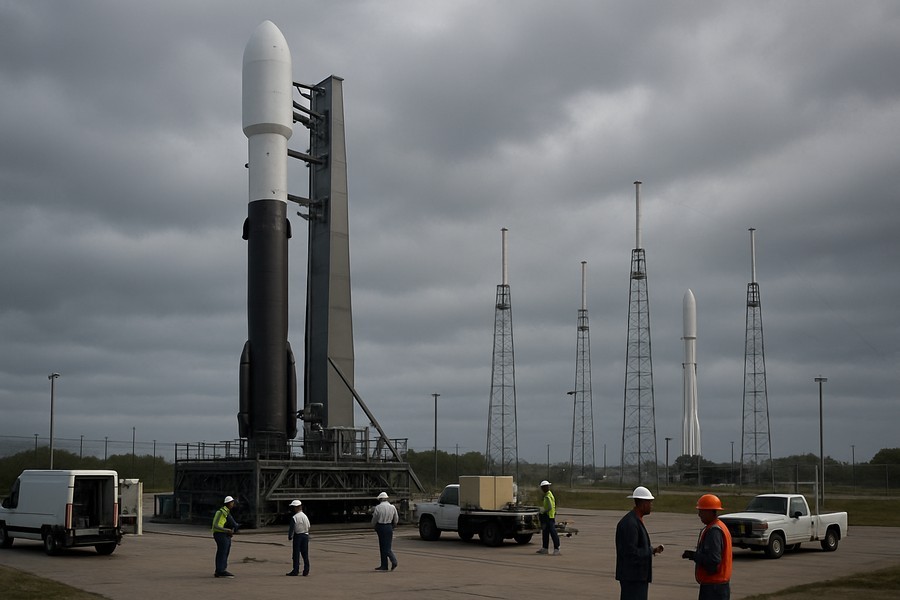
Recurring Technical Glitches Forces US Military to Rely on Alternative Satellite Launch Provider
A continuous chain of setbacks for a prominent space launch company has left the US military seeking alternative means to place a new navigation satellite into orbit. This marks the fourth instance in just over a year where the intended launch provider has failed to fulfill its commitment.
The company, a joint venture between two industry giants, was scheduled to send the final satellite of a significant military GPS program into space this month. However, due to recurring technical issues, the military has had to switch to an alternative launch provider.
Shuffling Launch Assignments: A Tale of Two Rival Companies
This isn't the first time the military has had to make such a switch. The recent launch of three GPS satellites faced similar issues. Initially, the launch was assigned to the joint venture company, but due to problems, the responsibilities were transferred to its main competitor in the market.
In return, the military moved three future launches from the competitor back to the original company, including the launch of a specific GPS satellite. The company's new rocket model, however, has been grounded for the second time in less than two years, forcing the military to switch back to the competitor for the GPS satellite launch.
In light of these changes, the original company has been given the rights to execute a classified military mission in 2028.
Recurring Rocket Issues
The joint venture company was assigned to launch the final four GPS satellites several years ago. At that time, their new rocket model was close to its initial test flight. However, the rocket's debut was postponed from 2020 until early 2024. Since then, the journey to operational service has been anything but smooth.
On two separate occasions, the new rocket encountered difficulties with its solid rocket boosters. An investigation into the first incident found a manufacturing flaw that caused the booster's exhaust nozzle to fail shortly after takeoff. The results of the investigation into the second failure have not been announced, but the issue appeared to be similar.
Concerns Over Space Access
These recurring failures raised concerns among military officials. The officer overseeing the military's space launch program stated last month that the investigation into the booster issue would take "several months." The military decided to stop launching payloads with the new rocket until the investigation is complete.
This decision signaled a likely change in plans for the GPS satellite set to fly on the next new rocket. And that is indeed what happened. The military confirmed that the GPS satellite will now launch with the competitor's rocket in late April.
All GPS satellites weigh more than four tons at launch. The competitor's rockets and the joint venture's new rocket are the only ones certified by the military to carry out these launches. Thanks to a stockpile of reusable boosters that fly several times per week, the competitor can accommodate new missions on relatively short notice.
A Notable Shift in Market Dominance
This consistent failure to deliver on commitments paints a grim picture for the joint venture company, which was once the single launch provider for the US military. The competitor started launching US national security missions in 2018 after winning the right to compete for military launch contracts.
In a recent competition for launch contracts, the military chose the competitor for more than half of the contracts, with the joint venture company coming in second. The military has also added a third company to the list of launch providers.
Despite the joint venture company's backlog of over $8 billion in military launch contracts, the competitor is now the closest to providing assured access to space.