
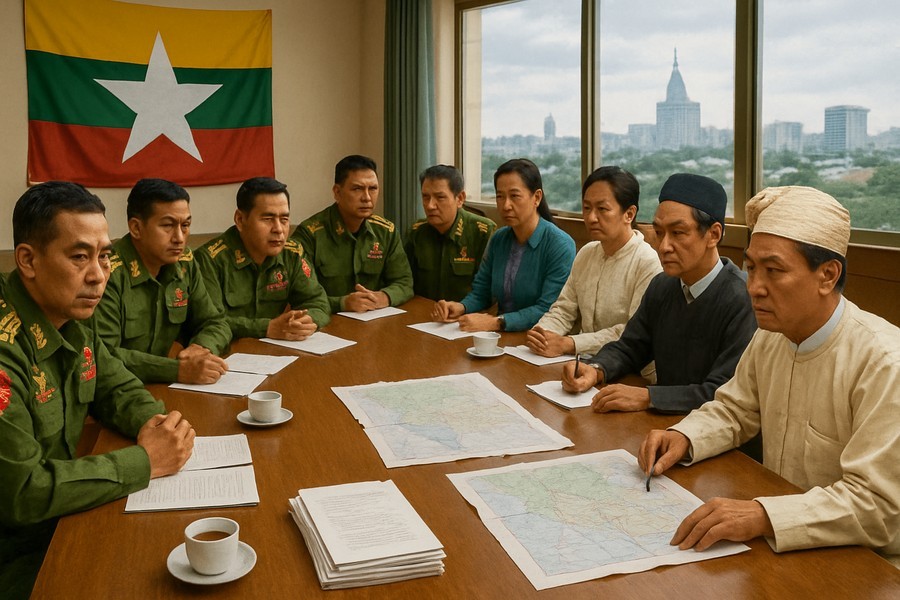
New Peace Talks Proposed by Myanmar's Government Leader
The person in charge of Myanmar's government, which is supported by the military, has extended an invitation to the nation's armed opposition groups to engage in fresh peace discussions. This marks the first time such an invitation has been extended from the head of the government since he assumed his position earlier this month.
A 100-Day Plan for Peace and Development
The invitation is part of a 100-day plan introduced by the leader at a recent cabinet meeting held in the nation's capital. The plan puts a high priority on peace, stability, and development. The leader assumed his office following an election that has been heavily criticized by some, who claim that the process was neither free nor fair. The election was viewed as a method to ensure the military's control, five years after the previous civilian government was removed.
Military Takeover and Civil War
The military's takeover has escalated the ongoing armed opposition in the country. Pro-democracy activists have joined forces with ethnic armed groups, who have been fighting for many years for greater independence. This has led to a civil war that continues to impact the majority of the country. The military government initiated a series of face-to-face peace discussions with ethnic minority leaders in the hopes of weakening anti-military alliances, but these talks have yielded little success.
Invitation to New Peace Talks
The head of the government announced that he is inviting ethnic armed groups to engage in new peace talks. However, a representative for the main group opposing military rule stated that they, along with the defense units under their command, will continue to fight alongside other resistance forces until their goals are achieved. They believe that the military's invitations to peace talks are simply a tactic to prolong the people's subjugation under military rule.
Myanmar's History with Armed Organizations
Myanmar has a history of 21 established ethnic armed organizations. Ten of these groups signed ceasefire agreements in 2015 and 2018 under previous governments. However, four of these groups have rejected the agreement and resumed fighting following the military's takeover. Both signatories and non-signatories are invited to participate in the peace process. The leader also extended an invitation to armed guerrilla groups, known collectively as the People's Defense Force, to participate and enter the legal fold within the 100-day period.
Other Aspects of the 100-Day Plan
Other aspects of the 100-day plan cover social and economic measures and infrastructure. For several decades, Myanmar has experienced cycles of ceasefires leading to temporary periods of relative peace. However, none of these ceasefires has led to a comprehensive political agreement that would grant the ethnic groups the degree of autonomy they seek in the regions where they dominate.
Recent Developments in the Nationwide Conflict
The recent proposal for peace discussions comes after the military regained control in the nationwide conflict following a series of ceasefires brokered with major rebel groups and an increase in the military's numbers due to the activation of a conscription law. The military has recaptured territory from ethnic militias, including powerful offensives in northeastern Myanmar near the Chinese border and in western Myanmar. One member of the alliance has publicly congratulated the head of the government on his position and has expressed optimism for the proposed peace talks.