
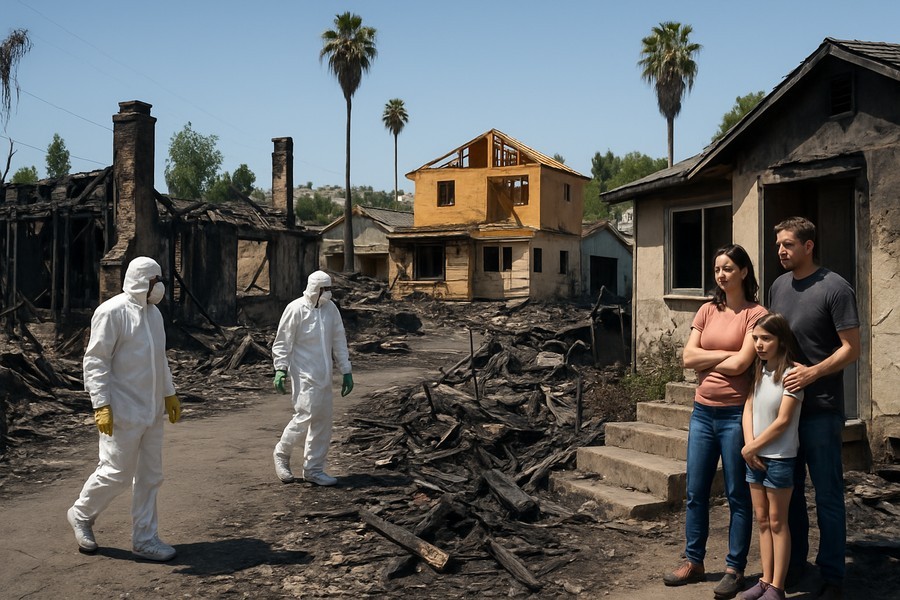
Surviving After the Blaze: The Struggle of Residents in Fire-Affected LA Community
Even a year after the destructive fire in a Los Angeles community, the shadow of the disaster remains. While construction of new homes has begun, and some families are moving back, a significant concern looms: Is it safe?
The fire brought life to a halt in this part of Los Angeles. It claimed 19 lives, displaced tens of thousands, and destroyed nearly 9,500 structures. The fire also left lasting effects on the environment, with toxins from incinerated lead paint and asbestos-contaminated homes spreading far and wide.
Returning Home Amid Uncertainty
As the community begins to rebuild and people return, they face immense challenges. Information regarding health risks was scarce at first, and many residents only discovered the dangers as they moved back into their homes. Health issues such as migraines and respiratory problems have emerged among some returnees. There are also ongoing battles with insurance companies over coverage costs and the habitability of the homes.
The situation serves as a stark reminder of the heightened dangers associated with urban fires. The community has become a real-time learning ground for scientists and residents alike.
The Lingering Aftermath of the Fire
Though some families have moved back following an extensive clean-up process, concerns persist. Air purifiers still detect high levels of particulate matter, heavy sediment appears during vacuuming, and the distinctive smell of the fire returns with the rain.
During the initial hours of the fire, many thought their homes would be lost. Miraculously, some homes survived the flames. However, they were not left untouched. The flames showered the community with ashes and unseen traces of heavy metals, leaving residues in and on the structures.
Community Action for Safe Recovery
Unsatisfied with the local government's response to health concerns, some fire survivors formed a community group to ensure safe recovery. The group is developing testing and remediation guidelines, collected testing reports of hundreds of homes, and advocated for fire survivors and workers.
Despite being close to downtown Los Angeles, the community had a small-town feel, attracting a diverse population attracted by affordable home prices and proximity to the mountains. But the fire changed everything.
The Struggle to Return to Normalcy
When the fire subsided, the devastation was immense. Many older adults who hadn't received evacuation warnings in time lost their lives. The once familiar landscape was barely recognizable, with once thriving neighborhoods reduced to rubble.
Returning residents had to navigate streets stripped of any identifiable landmarks. Fire had scorched community gardens, country clubs, old hardware stores, museums, and numerous schools and houses of worship.
As the community rebuilds, residents are grappling with the long-term consequences of the fire. Many are battling with their insurance companies and struggling to clean up their homes, which are filled with ash and potentially hazardous materials. The fear of unseen dangers lurks in their minds.
A Community United for a Safe Future
In response, a group of residents formed a community organization to ensure safe recovery. The group is developing testing and remediation guidelines, advocating for fire survivors, and working to establish protocols for future disasters.
Their research found that more than half of the remediated homes still had unsafe levels of lead and/or asbestos. The findings underscore the need for comprehensive clearance before residents return.
The struggle to return to normalcy continues, but this ordeal has brought the community closer together. Despite the challenges, they remain united, advocating for each other and committed to rebuilding their lives and their community.