
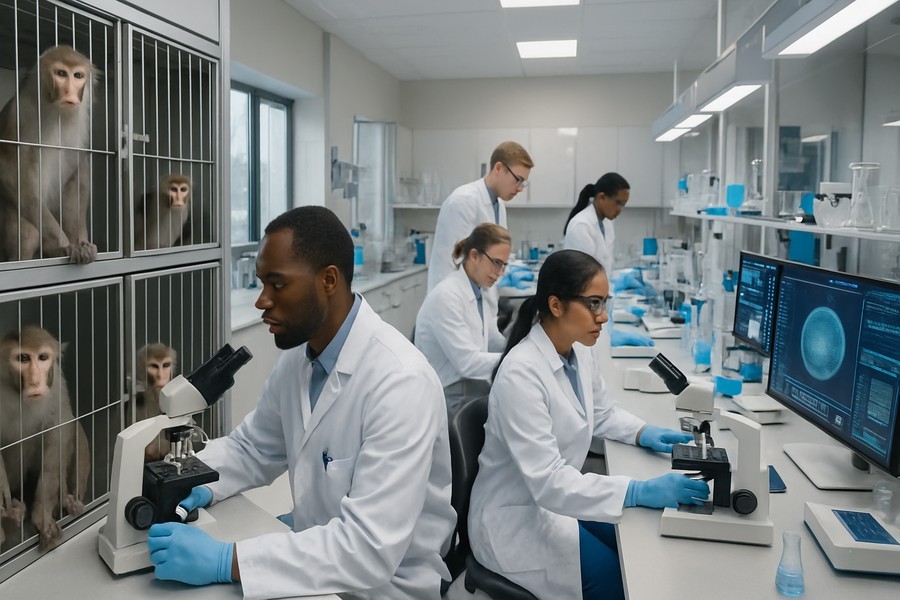
Efforts to Minimize Animal Testing in Progress, but Challenges Persist
The drive to minimize animal testing for drugs and other medical advancements is gaining momentum. However, the existing technology isn't yet advanced enough to completely replace the need for animal testing.
Change in Direction of Animal Testing
A recent communication indicates an average of 144 monkeys are used in the preclinical testing of some drugs. However, a shift from this practice is being planned. The administration's initiative to promote healthier living within the country has targeted animal testing, resulting in draft guidelines released to clarify how developers can leverage alternative testing methods for drug approvals.
The country's leading health research organization has also declared a $150 million investment towards the creation of alternatives to animal testing models. These guidelines and plans are preliminary, but aim to redirect the industry towards a new approach that could potentially expedite the drug development process.
An Ethical Dilemma
While this shift is deemed more ethical, it does not signify the end of animal testing in the country. The current technology cannot address all scientific concerns that animal testing can. The new guidelines do not encompass the use of animals in the government's research or provide clarity on the quantity of animals currently used for testing. Therefore, there is still much work to be done.
Why Animal Testing is Necessary
Historically, animals have been integral to numerous major scientific breakthroughs due to their biological similarities to humans. They can contract the same diseases as humans, but their environment is much easier to control. They also have shorter lifespans, allowing researchers to study a therapy over the course of an animal's life.
Despite the benefits of animal testing, public tolerance for the practice is on the decline. Comparatively fewer people now consider animal testing to be morally acceptable than two decades ago, with public opinion almost evenly split between those who support and oppose the practice.
Regulatory Hurdles
While the government has made efforts to reduce animal testing, critics argue that the regulatory body responsible for approving drugs has been slow to allow the use of non-animal alternatives. Until recently, animal studies were a prerequisite for the licensing of a therapy. A recent legislation removed this requirement, allowing for alternative methods.
Present and Future of Animal Research
Nevertheless, animal research will continue to be essential for the foreseeable future. This is due to the current inability of alternatives to address certain crucial scientific questions. For instance, the current alternatives cannot yet provide insight into integrated systems.
The government has already begun making changes to its approach to animal testing. Last year, plans were announced to replace animal testing with alternative models for the development of certain types of antibodies. Additionally, an initiative was launched to reduce the use of animals in federally-funded research projects.
However, despite these changes, it is important to note that the government still invests heavily in animal research. In fact, over 3.18 million animals have been used in research in government-licensed facilities in the past four years alone. This number does not include animals like rats, mice, birds, and fish, as they are not protected under the Animal Welfare Act. If these animals were included, the total number would be significantly higher.
Developing Alternatives to Animal Testing
Efforts are underway to develop alternatives to animal testing. Some of these include organs-on-a-chip, biometric materials, organoids, and computer simulations. However, these alternatives each have their own limitations and cannot yet fully replace animal testing.
For example, organs-on-a-chip can mimic the structure and function of human organs, but they cannot replicate the complexity of a complete human body. Biometric materials, like reconstructed human skin and corneas, can only model local effects, not systemic toxicity or metabolism. Organoids, or miniature versions of human organs grown in a lab, lack immune components and full organ interactions, making them less reliable for systemic safety assessments. Computer simulations require large datasets, which are currently limited, and it is unclear how well they can capture true biological variability.
Despite these challenges, the development of alternatives to animal testing is a promising area of research. With further testing and technological advancements, these alternatives could one day replace animal testing in many areas of scientific research.