
Donald Trump has appeared on the cover of TIME more than anyone else in history. Now the magazine has produced a cover that manages to drag him without putting him on it at all—and the visual punchline is almost insultingly easy to understand.
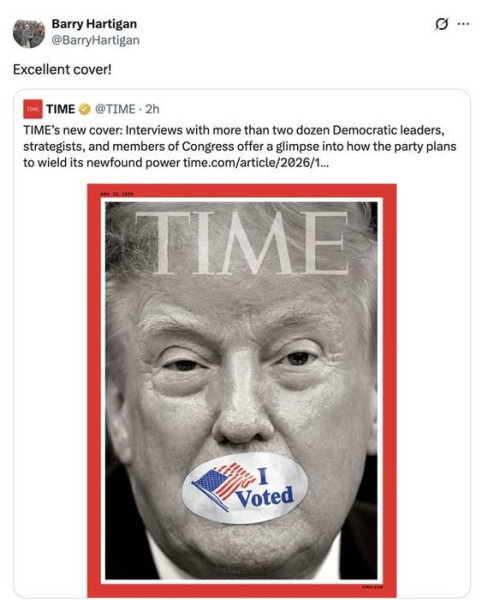
Trump has been featured on TIME’s cover 56 times. This is number 57, and it arrives with an “I Voted” sticker slapped directly over a person’s mouth, alongside interviews with Democratic leaders about power and strategy. Somehow, the magazine found a way to make voting look like a command to stop talking.
Trump’s Cover Record Meets Its Match
The cover does not bother with a giant headline explaining the joke. It does not need one. The sticker normally signals civic participation: I showed up, I cast my ballot, I did my part. Put it over someone’s mouth, though, and the message gets considerably less wholesome.
Now the sticker says: You voted. Please stop speaking.
That visual lands especially hard because of Trump’s long history with the magazine. Fifty-six TIME covers is a remarkable number, and it has become part of his public image. But this new issue does not give him another portrait, another dramatic headline, or another piece of magazine real estate to admire.
Instead, it places Democratic leaders and their plans at the center while making silence the cover’s loudest idea. Trump is not pictured, but his absence feels extremely deliberate.
People Started Tagging Him Immediately
Once the cover began circulating, people started tagging Trump in the replies. They did not need to write a five-paragraph explanation of why. The image had already done the work.
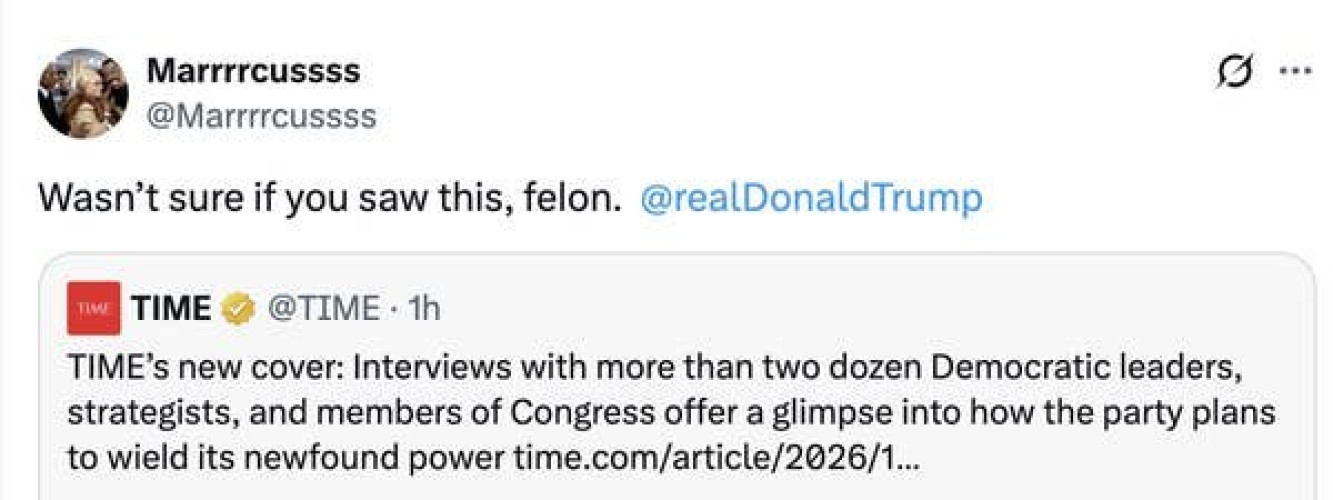
The reactions focused on the sheer nerve of it. TIME had taken a familiar political symbol and turned it into a one-image insult aimed at someone with a famously extensive relationship with the magazine.
It was the kind of cover that practically begs people to send it to the person who will dislike it most. And in this case, that person has appeared on the magazine 56 times, which makes the joke feel even more tailored.
“Quiet, Piggy”
Then came the bluntest caption possible: “Quiet, piggy.”
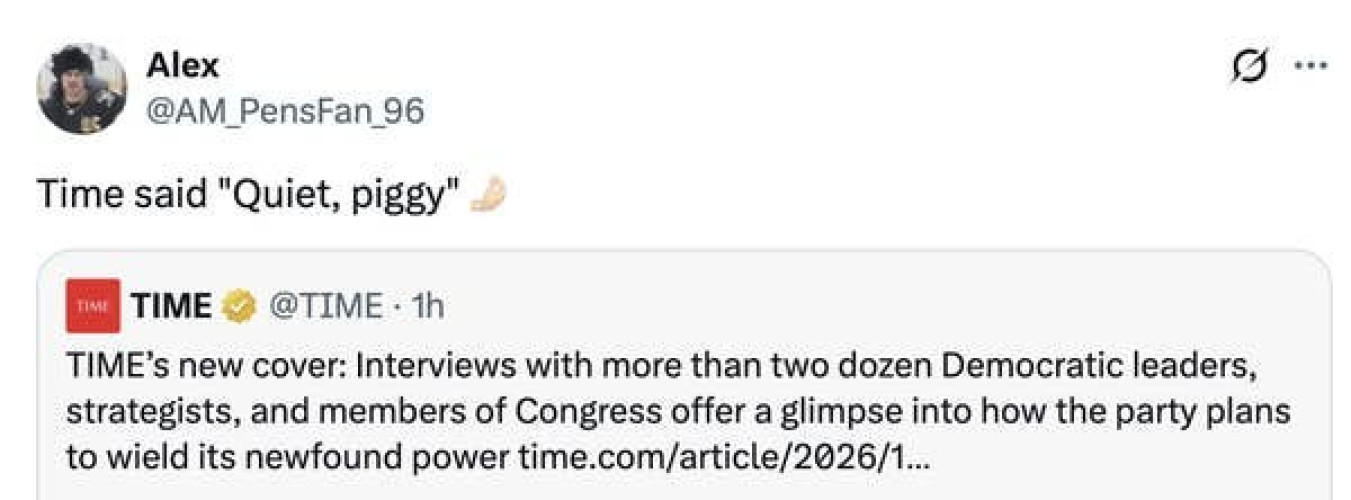
Subtle? Absolutely not. Effective? Unfortunately for Trump, yes.
The phrase turns the “I Voted” sticker into a direct instruction instead of a cheerful badge. The cover is already doing the shushing; the caption simply walks in, points at it, and says the quiet part out loud.
There is no complicated decoding required. You see the sticker covering the mouth, read the coverage about Democratic power, and understand exactly why people thought the image was funny. The joke is sitting right there in the center of the cover, wearing a sticker.
“They Cooked With This One”
Another reaction offered a more approving review: “They cooked with this one.”
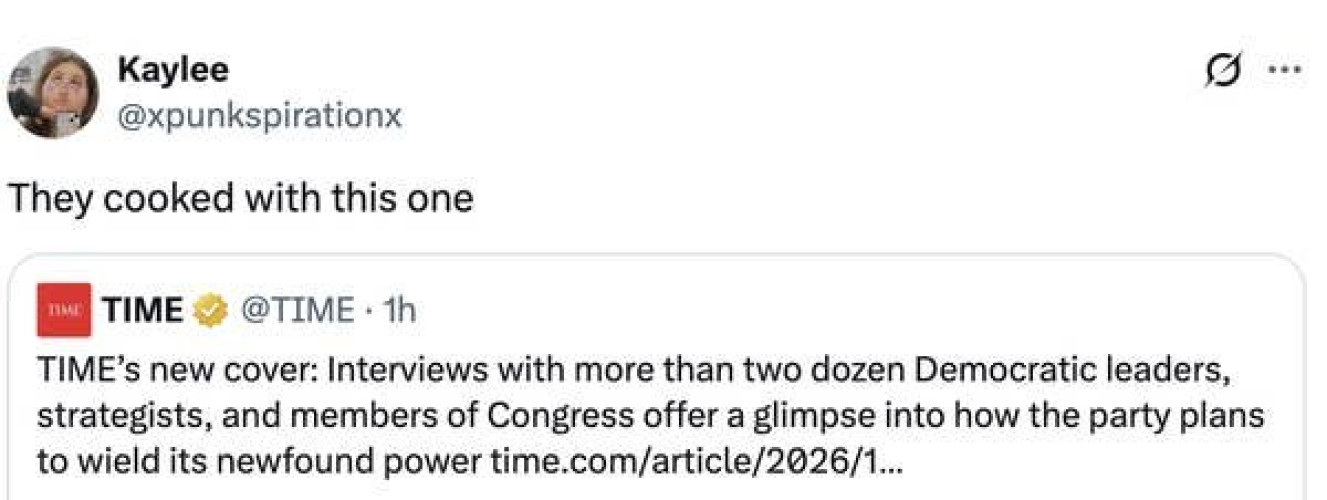
That is internet shorthand for saying the design worked perfectly. TIME did not just make something people noticed; it made something people immediately wanted to share, caption, and aim at Trump.
The cover has a tidy little mechanism. Voting suggests having a voice. The sticker blocks the mouth. The surrounding story focuses on Democratic leaders and how they plan to use power. Put those pieces together and the cover becomes a visual contrast between political influence and being told to keep quiet.
It is not exactly a maze. No one needs a decoder ring. But the idea is clean enough to land instantly, which is why the reactions came so quickly.
The Cover He Probably Won’t Add to His Gallery
The sharpest reaction got to the central joke: this is one TIME cover Trump probably will not be adding to his collection of TIME covers.


That line works because Trump’s record makes the contrast impossible to miss. He has been featured by TIME more than anyone else in history, but that does not mean every new issue is a personal victory lap. Sometimes the magazine puts someone else at the center. Sometimes it turns your absence into the whole joke.
This cover does both. It discusses Democratic leaders and their strategy, while the image hints at a political figure who would probably prefer to be the one doing the talking. Trump does not need to appear for readers to think of him. The cover’s entire setup points in his direction.
A Sticker Doing a Lot of Damage
Political magazine covers are supposed to compress a complicated argument into one memorable image. This one compresses its argument into a small white sticker.
“I Voted” usually communicates participation, voice, and public expression. Covering the mouth changes all three. The person has taken part, but the image refuses to let them deliver a speech afterward. Beside that image, interviews with Democratic leaders about power strategies make the contrast even more pointed.
The cover is not simply celebrating that someone voted. It is playing with the idea of who gets to speak after an election, who gets to shape what happens next, and who might be furious that the conversation has moved on without them.
That is also why the 56-cover record matters. Without that history, the cover would still be clever. With it, the joke has a target already waiting in the wings. Trump’s connection to TIME is so well known that the magazine can reference him without printing his name across the page.
So yes, this is technically the 57th TIME cover connected to Trump’s record. But it is not a Trump cover in the usual sense. There is no familiar face, no flattering portrait, and no new image for the gallery. Instead, there is a sticker over a mouth, a story about Democratic power, and a whole internet enjoying the implication.
For once, Trump’s TIME-cover streak has produced an issue that seems designed to leave him out of the picture—and somehow make that exclusion the most noticeable thing about it.
Would this make your list of TIME’s sharpest political covers, or is the joke almost too obvious?
Trump has been featured on TIME’s cover 56 times. This is number 57, and it arrives with an “I Voted” sticker slapped directly over a person’s mouth, alongside interviews with Democratic leaders about power and strategy. Somehow, the magazine found a way to make voting look like a command to stop talking.
Trump’s Cover Record Meets Its Match
The cover does not bother with a giant headline explaining the joke. It does not need one. The sticker normally signals civic participation: I showed up, I cast my ballot, I did my part. Put it over someone’s mouth, though, and the message gets considerably less wholesome.
Now the sticker says: You voted. Please stop speaking.
That visual lands especially hard because of Trump’s long history with the magazine. Fifty-six TIME covers is a remarkable number, and it has become part of his public image. But this new issue does not give him another portrait, another dramatic headline, or another piece of magazine real estate to admire.
Instead, it places Democratic leaders and their plans at the center while making silence the cover’s loudest idea. Trump is not pictured, but his absence feels extremely deliberate.
People Started Tagging Him Immediately
Once the cover began circulating, people started tagging Trump in the replies. They did not need to write a five-paragraph explanation of why. The image had already done the work.
The reactions focused on the sheer nerve of it. TIME had taken a familiar political symbol and turned it into a one-image insult aimed at someone with a famously extensive relationship with the magazine.
It was the kind of cover that practically begs people to send it to the person who will dislike it most. And in this case, that person has appeared on the magazine 56 times, which makes the joke feel even more tailored.
“Quiet, Piggy”
Then came the bluntest caption possible: “Quiet, piggy.”
Subtle? Absolutely not. Effective? Unfortunately for Trump, yes.
The phrase turns the “I Voted” sticker into a direct instruction instead of a cheerful badge. The cover is already doing the shushing; the caption simply walks in, points at it, and says the quiet part out loud.
There is no complicated decoding required. You see the sticker covering the mouth, read the coverage about Democratic power, and understand exactly why people thought the image was funny. The joke is sitting right there in the center of the cover, wearing a sticker.
“They Cooked With This One”
Another reaction offered a more approving review: “They cooked with this one.”
That is internet shorthand for saying the design worked perfectly. TIME did not just make something people noticed; it made something people immediately wanted to share, caption, and aim at Trump.
The cover has a tidy little mechanism. Voting suggests having a voice. The sticker blocks the mouth. The surrounding story focuses on Democratic leaders and how they plan to use power. Put those pieces together and the cover becomes a visual contrast between political influence and being told to keep quiet.
It is not exactly a maze. No one needs a decoder ring. But the idea is clean enough to land instantly, which is why the reactions came so quickly.
The Cover He Probably Won’t Add to His Gallery
The sharpest reaction got to the central joke: this is one TIME cover Trump probably will not be adding to his collection of TIME covers.
That line works because Trump’s record makes the contrast impossible to miss. He has been featured by TIME more than anyone else in history, but that does not mean every new issue is a personal victory lap. Sometimes the magazine puts someone else at the center. Sometimes it turns your absence into the whole joke.
This cover does both. It discusses Democratic leaders and their strategy, while the image hints at a political figure who would probably prefer to be the one doing the talking. Trump does not need to appear for readers to think of him. The cover’s entire setup points in his direction.
A Sticker Doing a Lot of Damage
Political magazine covers are supposed to compress a complicated argument into one memorable image. This one compresses its argument into a small white sticker.
“I Voted” usually communicates participation, voice, and public expression. Covering the mouth changes all three. The person has taken part, but the image refuses to let them deliver a speech afterward. Beside that image, interviews with Democratic leaders about power strategies make the contrast even more pointed.
The cover is not simply celebrating that someone voted. It is playing with the idea of who gets to speak after an election, who gets to shape what happens next, and who might be furious that the conversation has moved on without them.
That is also why the 56-cover record matters. Without that history, the cover would still be clever. With it, the joke has a target already waiting in the wings. Trump’s connection to TIME is so well known that the magazine can reference him without printing his name across the page.
So yes, this is technically the 57th TIME cover connected to Trump’s record. But it is not a Trump cover in the usual sense. There is no familiar face, no flattering portrait, and no new image for the gallery. Instead, there is a sticker over a mouth, a story about Democratic power, and a whole internet enjoying the implication.
For once, Trump’s TIME-cover streak has produced an issue that seems designed to leave him out of the picture—and somehow make that exclusion the most noticeable thing about it.
Would this make your list of TIME’s sharpest political covers, or is the joke almost too obvious?