
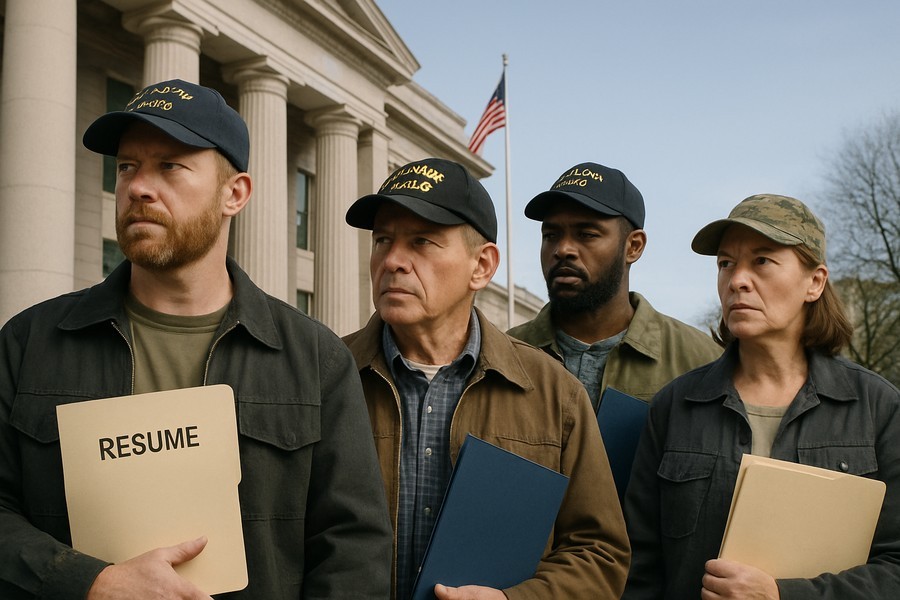
Increasing Challenges for Veterans Seeking Government Jobs
It appears that the challenges that veterans face are far from over. Even after their commendable service to the country, they are now being confronted with an additional hurdle - securing jobs in the government sector. The current administration seems to be in favor of reshaping the hiring practices in the federal government, which might make it difficult for veterans to get a job or keep one.
History of Veterans' Employment in the Federal Government
Going back in history, after the end of World War I, when veterans felt they were not being compensated adequately for their service, they protested on Capitol Hill. This led to the creation of the Veterans Preference Act of 1944 by President Franklin Roosevelt and Congress. The Act was designed to ensure that veterans never faced such a situation again.
Since its inception, the Act has been fortified, providing veterans, especially those with disabilities, with stronger preferences in hiring and additional protections during job reductions. The introduction of the Veterans Recruitment Appointment provided further incentives for veterans to seek federal employment and for the government to hire them.
A Shift Towards Merit-Based Hiring
However, the current administration wants to change this scenario. A recent proposal suggests replacing the Veterans Preference Act and Veterans Recruitment Appointment with hiring, firing, and rehiring practices based on "merit".
The proposed changes imply that layoffs would be primarily based on performance ratings rather than service duration. Even though veterans would still have some advantage, they would lose the significant protection they used to enjoy. This means a veteran with 20 years of service could potentially lose their job to a newer employee with marginally higher performance scores. The years of experience, vast institutional knowledge, and service to the nation would be reduced to mere tie-breakers. This change could lead to the prioritization of political hires over veterans.
Reduction in Hiring Preferences for Disabled Veterans
At present, disabled veterans receive three tiers of hiring preference in the federal government. Depending on the tier, additional points are added to a veteran's application score, with a 30-percent or higher disability rating placing a veteran at the top of a hiring list. This also provides stronger consideration for promotions. More importantly, if there is a reduction in the workforce, the government must provide a valid reason before firing a veteran. If rehiring occurs in the future, the veteran must be the first to be considered.
Proposed Changes Could Disrupt Established Standards
The new proposal threatens to disrupt this standard. The proposal also aims to facilitate agencies in excluding certain employees from layoff protections and simplify the process for workforce reductions. This means the proposal doesn't just change who gets laid off, but also makes it easier to lay off employees in the first place.
The most disheartening part is, if a laid-off veteran reapplies after the workforce reduction period, the federal government, which employs a significant number of veterans, doesn't necessarily have to rehire them. For a veteran with many years of service and a debilitating condition, this could potentially lead to a life of financial hardship.
Impact on Veterans
These changes seem to be a reaction to court rulings that have forced the current administration to honor labor agreements made through collective bargaining. However, the warning signs have been visible for a while, in the form of subtle policy changes and technical rule-making notices. The overall picture is clear - veterans are facing a tough time.
For decades, federal service has provided veterans a smooth transition into civilian life. The government values their skills, recognizes their service, and allows them to continue their public service careers. By weakening veterans' preference in layoffs, this pathway is being disrupted.