
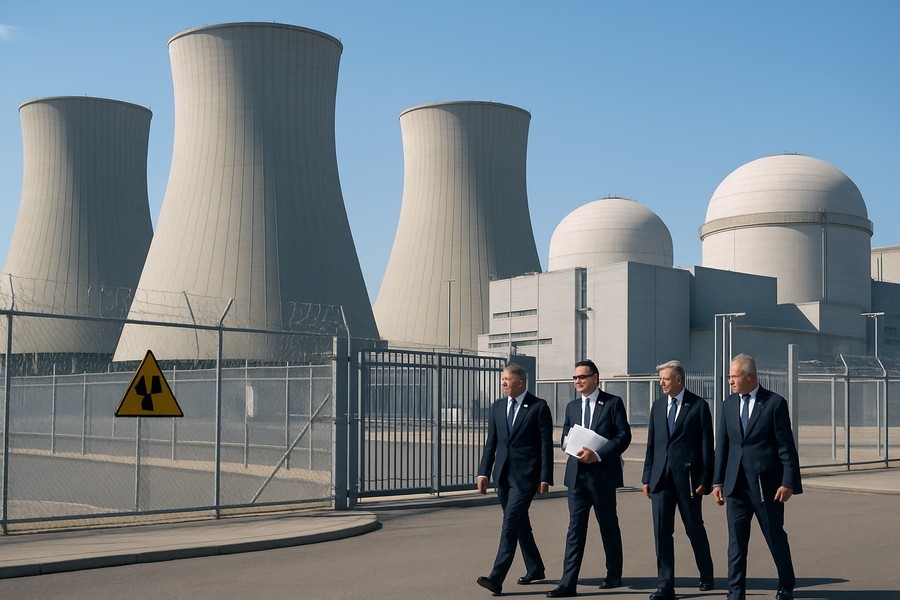
Secret Alterations to Nuclear Safety Guidelines
Recent changes have been made to nuclear safety protocols, affecting the companies responsible for managing them. These new rules have not been made readily available to the public.
These significant modifications were implemented to speed up the development of new nuclear reactor designs. These changes took place at the Department of Energy, which is currently supervising a project to construct at least three new experimental commercial nuclear reactors.
Changes to Departmental Orders
The alterations affect departmental orders, which regulate almost all aspects of reactor operations, including safety systems, environmental safeguards, site security, and accident investigations.
Over a dozen new orders have been obtained, none of which are publicly accessible. These orders reduce hundreds of pages of security requirements for the reactors, loosen protections for groundwater and the environment, and remove at least one key safety role. They also reduce record-keeping requirements and increase the amount of radiation a worker can be exposed to before an official accident investigation is initiated.
Over 750 pages were removed from the previous versions of these orders, leaving only about one-third of the original documents.
New Generation of Nuclear Reactors
The next generation of nuclear reactors, known as small modular reactors, are receiving support from billions in private equity, venture capital, and public investments. Supporters of these reactors, including major technology companies, hope to use these reactors to provide affordable, reliable power for artificial intelligence in the future.
The decision to revise these rules without public knowledge has been criticized by experts. Some argue that loosening nuclear safety and security standards in secret doesn't encourage public trust, which is crucial for the broader success of nuclear energy.
Others suggest that these changes undermine the system of nuclear safety and regulation that has prevented nuclear accidents in the U.S.
Origins of the Changes
The changes originate from a series of executive orders on nuclear energy. One of these orders sought to establish a new program at the Department of Energy to construct experimental reactors. The document explicitly stated the goal of achieving nuclear criticality in each of the three reactors by a specific deadline.
This aggressive timeline has raised concerns among experts, as research reactors typically take at least two years to build from the onset of construction. Few, if any, have been built on such a short timescale.
The Department of Energy then met with the heads of several companies at a nuclear energy lobby group. They informed the CEOs, lawyers, and nuclear engineers about the department's new "Reactor Pilot Program."
This program promises a fast-tracked approval process for new test reactor designs rather than offering funding. The goal is to reduce government barriers and facilitate the regulatory approval process.
Reduced Safety Standards
The new orders strip out some guiding principles of nuclear safety, notably a concept known as "As Low As Reasonably Achievable" (ALARA), which requires nuclear reactor operators to keep levels of radiation exposure below the legal limit whenever possible. The ALARA standard has been a staple in both the Department of Energy and the Nuclear Regulatory Commission for decades.
Removing this standard could result in new reactors being built with less protective shielding, and workers potentially receiving higher doses of radiation. This could lead to lower construction and operation costs for nuclear plants.
However, not everyone agrees with the decision to rethink ALARA. Some argue that the costs of reducing radiation exposure have been worth it and have not posed significant problems.
The new orders also remove a requirement to use the "best available technology" to protect water supplies from the discharge of radioactive material. In addition, they remove a requirement to have an engineer designated to each of a reactor's critical safety systems, a crucial role for understanding each part of a reactor that could lead to a severe accident if it failed.
Consequences of the New Rules
The implementation of the new rules could potentially lead to companies violating other environmental and safety laws. It's also questionable whether they will help to achieve the goal of building three new reactors by the set deadline.
While these changes might offer more flexibility, they make it less clear how to comply with the rules. This could result in more confusion and potentially more accidents in the future.