
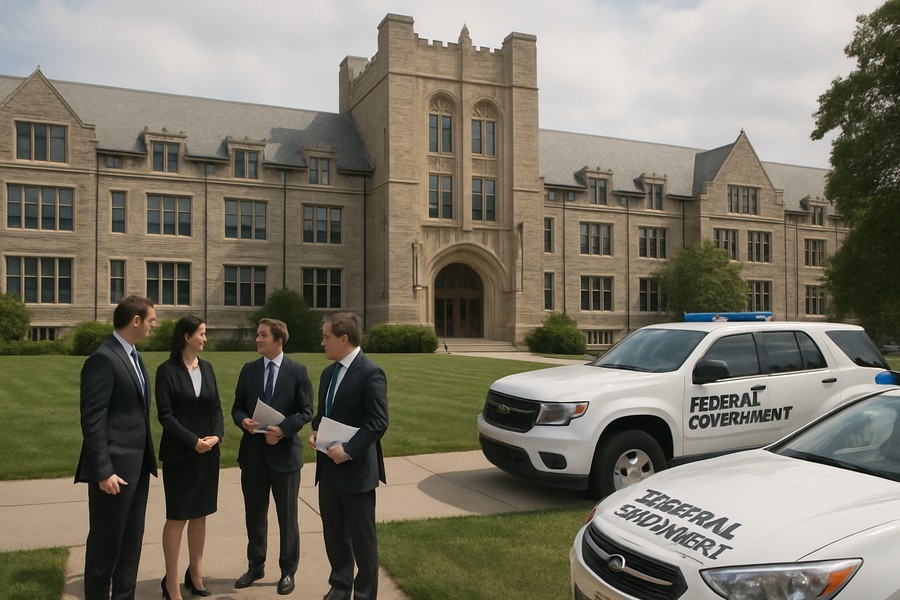
Legal Action against Prestigious Institutions by the President: An Overview
Last year saw a dramatic shakeup in the higher education sphere when the President issued an executive order targeting antisemitism at universities across the nation. This order sparked investigations at a handful of schools, which eventually expanded to 60 institutions.
Not long after the order, federal authorities began to hold back billions of dollars in contracts and grants from several prominent universities. The government pressed these institutions to align their policies with the President's stance on various issues, extending beyond antisemitism.
Settlements and Challenges
Elite universities began to settle, with notable schools in Pennsylvania and New York being the first to reach agreements in the middle of the year. One university in Massachusetts, however, chose to challenge the administration’s actions in court. Despite a federal judge ruling in favor of the university, stating that the government unlawfully froze over $2 billion in federal grants and contracts, more schools decided to settle.
Institutions either paid the government millions of dollars or agreed to policy or personnel changes without admitting to any wrongdoing. The common thread throughout these settlements was the administration's attempt to change the culture at these institutions, such as preventing them from supporting programs aimed at diversity, equity, and inclusion.
Academic Freedom vs. Government Intervention
The use of federal funds to enforce changes has raised legal questions about whether these tactics violate the law. Critics argue that the government shouldn't use its power to influence how schools operate. They believe that this constitutes a violation of the First Amendment, suggesting that the government can't force someone to give up a constitutional right, such as free speech, in exchange for a benefit like federal funding.
Examples of Settlements
Notwithstanding the controversy, the government secured significant payments and concessions from several prestigious universities last year. For example:
- A well-known university in Illinois agreed to pay $75 million to the government over three years, unlocking approximately $790 million in frozen federal funds and ending civil rights investigations. The university had been accused of enabling antisemitism on campus, related to protests against attacks in the Middle East. The institution also agreed to policy changes such as terminating a previous agreement with demonstrators.
- An Ivy League university in New York agreed to pay a total of $60 million over three years after being threatened with the loss of over $250 million in federal funds. The settlement closed civil rights investigations focusing on the university's compliance with anti-discrimination laws in its admissions procedures.
- A university in Virginia struck a deal with the government a few months after its president resigned amidst threats of funding cuts. The institution, which received more than $400 million in federal research funds the previous fiscal year, agreed to follow civil rights laws and adopt government guidance on what constitutes discrimination.
- A university in Rhode Island agreed to pay $50 million over 10 years to local workforce development organizations. The deal was struck after the government threatened to freeze over $500 million of federal funding due to allegations of antisemitism and the school's work on diversity, equity, and inclusion. The university also committed to adopting definitions of "male" and "female" as outlined in the executive order, and to not consider race in its admissions and programming.
This series of settlements and policy changes has sparked a national conversation about the role of government in shaping educational institutions, the rights of universities to uphold their own values and policies, and the potential impacts on the future of higher education in the country.
