
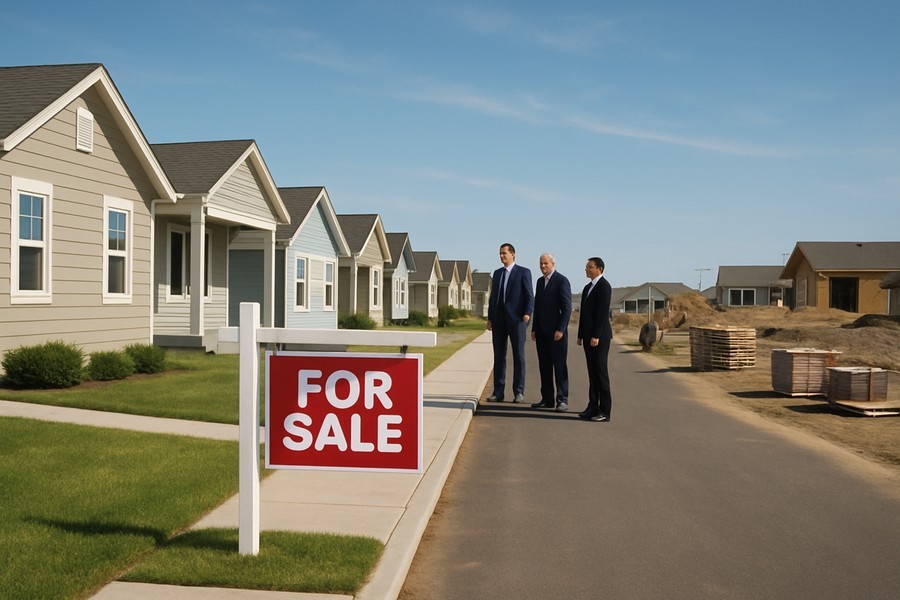
Misattributing the Housing Affordability Crisis
The current financial struggle of homeownership in America has led to a quest for culprits. The U.S. President has recently targeted Wall Street as the root of the problem, suggesting that their influence has caused the nation's housing affordability crisis.
However, the real issue seems to be a lack of housing supply rather than the actions of Wall Street. The president's new suggestions to tackle the problem, while appearing to be a step forward, may be overlooking the bigger picture.
Proposed Solutions to the Housing Crisis
The president recently made a couple of proposals to address the affordability of housing. His first proposal was to prohibit large investment firms from purchasing more single-family homes. This idea mirrors popular progressive strategies. His second proposal was more cryptic, suggesting that the government should buy $200 billion in mortgage bonds to reduce interest rates and monthly payments.
Although these suggestions seem promising in theory, they fail to address the primary factor causing high home prices: a shortage of homes on the market. The country needs approximately 4 million additional homes to regain affordability in the housing market.
The Role of Large Investors
While it seems convenient to blame large institutional investors for the current housing affordability crisis, the reality is that they play a relatively small role in the housing market. Despite their significant presence in the media, these large investors are not the primary cause of the housing shortages and affordability issues that have plagued America for over a decade.
Naturally, the term "institutional investors" refers to large investment firms, some of which are owned by billionaire allies of the president. These firms own a plethora of properties across the nation, including apartment complexes, mobile homes, and single-family houses.
Since the housing market crash in 2008, real estate has proven to be a profitable investment for these firms. They purchased attractive properties at low prices and then generated income by renting them out. From 2012 to 2019, an estimated 240,000 single-family homes were owned by these institutional investors. However, these investors represent only a small fraction of the overall market.
The Reality of the Housing Market
Large institutional investors, defined as those owning over 1,000 properties, accounted for between 1% and 3% of all homes bought in 2025. This figure is relatively small and has been decreasing in recent years due to rising interest rates. The majority of real estate investment purchases come from smaller landlords who own one or two additional homes that they rent out for extra income.
It is true that in specific markets, particularly in some Sun Belt cities, institutional investors own a larger share of rentals. However, even if all institutional ownership was halted, it's unlikely to significantly impact affordability because housing inventory in these cities is already steadily increasing, keeping prices balanced.
Addressing Mortgage Bonds
The president's other suggestion for addressing the housing crisis is to have the government purchase $200 billion in mortgage bonds. This approach would essentially involve the federal government buying mortgage-backed securities to prevent interest rates from skyrocketing.
While many economists agree that increasing the purchase of mortgage bonds could potentially reduce mortgage rates, this move doesn't address the primary issue of housing supply. Moreover, it's unlikely to encourage homeowners to sell their current homes and seek out new ones - a phenomenon known as the "lock-in effect."
Addressing the Real Issue
So, what could the president or Congress do to genuinely improve housing affordability? The answer lies in addressing the lack of housing supply rather than focusing on large investors. This solution may lack the populist appeal of "taking on Wall Street", but it's a more effective way to address the issue at hand.
Addressing the housing supply shortage is a complex task. The federal government could incentivize state and local governments to increase housing supply and meet demand. This could involve standardizing and streamlining permitting processes or allowing housing to be built more densely.
While these solutions might not make for a catchy campaign slogan, they could significantly improve housing affordability across the nation.