
Concerns Rise Over Potential Use of Emergency Powers to Control Upcoming Elections
Recent actions by the administration have raised concerns among election experts and sparked discussions among supporters about whether a national emergency could be declared to influence the upcoming voting process. Government offices have released several documents, including contested reports about noncitizen voting and older security memos. These moves have led some to believe the government is trying to gain more control over the upcoming elections.
During a national address, the country's leader repeated claims that voting systems are weak and vulnerable to outside influence. He also repeated his belief that the previous presidential election was not decided fairly. Following this speech, a former political adviser suggested that a national security emergency might be declared to protect the voting process. When asked directly by a talk show host if he would take this step, the leader did not rule it out, stating that unusual things have happened before.
The Legal Limits of Emergency Powers
While some supporters hope for a federal intervention, legal experts emphasize that the Constitution limits the president's power over elections. Historically, no president has ever used a national emergency to take control of how people vote. Legal experts who have successfully challenged previous voting rules believe the administration is looking for any excuse to create a federal emergency, even though there is no legal basis for doing so.
To prepare for any unexpected actions, voting rights groups and lawmakers are developing backup plans. A leader of a youth voting organization explained that their main goal is to help as many people vote as possible so that the results are clear and cannot be easily questioned. Meanwhile, lawmakers have been discussing how to handle potential challenges, including:
- Fake videos created by artificial intelligence to spread misinformation.
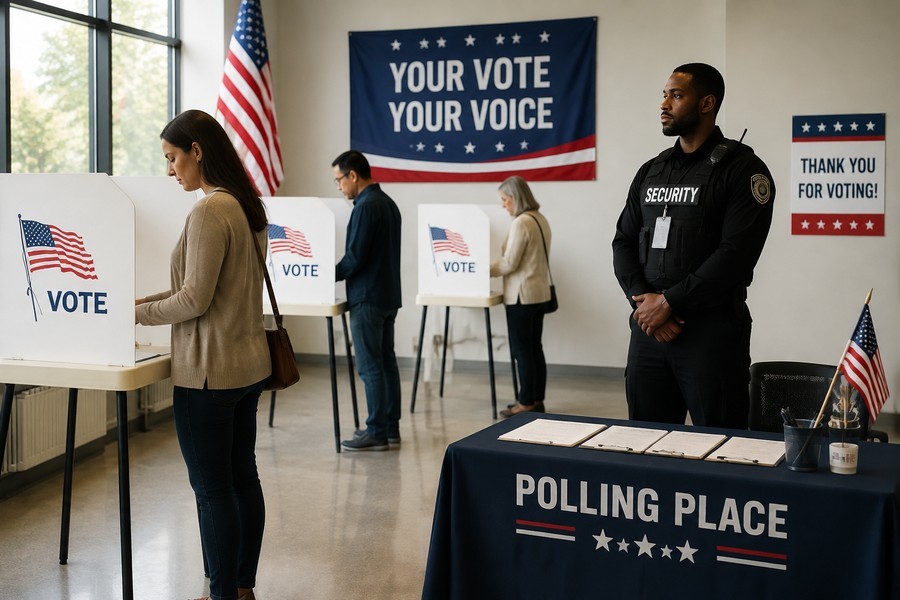
- The deployment of federal immigration officers or military guard officers to polling places, which critics worry could frighten voters.
- Attempts by federal officials to seize voting machines.
Controversy Over Government Security Reports
A special government task force made up of security and intelligence agencies has started releasing previously private documents about voting security. The first group of documents detailed older concerns about electronic voting machines, foreign access to voter records, and digital manipulation. However, these documents also confirmed that there was no evidence of foreign governments changing votes in the previous presidential election.
The debate grew when a state governor announced that a computer error had mistakenly registered thousands of noncitizens to vote. Although only a very small fraction of those registered actually cast a ballot, the incident was used to argue that noncitizen voting is a major problem. Shortly after, federal security officials argued that such state-level mistakes show a need for national oversight.
The task force also released files from other investigations, including:
- An inquiry by federal investigators into a voter registration group in a Midwestern state, which ended without any criminal charges.
- An investigation into a data security issue in a Southwestern state.
- A report about a former lawmaker who had been in contact with a foreign national suspected of trying to influence local politics.
Additionally, a government statistics office released a brief claiming to have found thousands of noncitizens voting in the last presidential election. However, the report did not explain how it reached these numbers, leading election research experts to criticize its accuracy. Another federal report claimed that hundreds of thousands of noncitizens were registered to vote, but the tool used to make this calculation is known to be unreliable. Voting experts argue that noncitizen voting is extremely rare and that the current focus on this issue is meant to create fear and justify future executive actions.
Proposed Federal Voting Rules
To address these concerns, the administration is supporting a proposed voting security bill. This bill would make major changes to how elections are run across the country. If passed, the law would:
- Require states to submit their voter lists for federal inspection.
- Give federal security agencies the power to remove people from voter lists.
- Significantly limit the use of mail-in voting, even though the leader himself has used mail-in voting in recent local elections.
- Require strict physical proof of citizenship to register to vote.
- Limit the types of photo identification allowed at polling places.
Supporters of the bill argue that these rules are necessary to make sure only citizens can vote. However, opponents point out that the nation's founders intentionally kept election power decentralized. By leaving the control of voting to individual states, the Constitution prevents any single leader in the federal government from controlling the entire election system. Legal experts plan to use these constitutional protections to challenge any federal attempts to take over the voting process.