
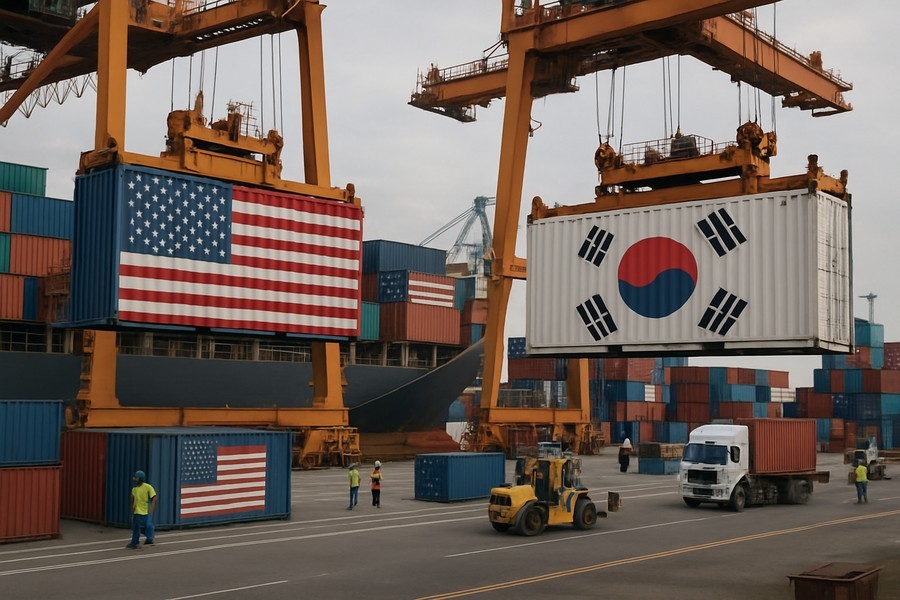
A Surge in Import Duties on Goods from South Korea
It has been announced that import tariffs on South Korean products to the US will be increased to 25%. The decision has been taken in response to allegations that South Korea is not fulfilling its commitments from a trade agreement reached last year.
Tariffs Across a Variety of Products
The rise in import duties will affect a wide array of South Korean goods. Everything from automobiles and lumber to pharmaceuticals and other products that are reciprocally taxed will see a tariff hike. The previous tariff rate stood at 15%.
The accusation has been made that South Korean lawmakers have been dragging their feet to approve the deal while the US has quickly reduced its tariffs in accordance with the agreed terms.
South Korea's Reaction
South Korea has expressed that it has not received official communication regarding the decision to raise tariffs on some of its goods. The country is seeking immediate discussions with the US over this matter.
South Korea's Industry Minister, currently in Canada, plans to make a quick trip to Washington to meet the US Commerce Secretary.
South Korea's Trade with the US
South Korea's exports to the US last year were valued at around $123bn. This makes the US the second largest export market for South Korea, right behind China. Automobile exports constituted approximately $30bn of the total.
Upon the announcement of the tariff increase, shares in Korean automakers initially dipped by up to 6%, but later recovered to close only around 1% lower. South Korea's main stock index also managed to recover from early losses, ending the day 2.7% higher.
Market Response and Speculation
Financial analysts suggest that investors doubt the tariff increase will actually go through, pointing to recent instances where similar threats were not carried out. This includes a previous threat to increase tariffs on European trading partners that was later reneged.
With a team from Seoul en route to Washington, market watchers suggest this latest development is more of a negotiation tactic than a definitive move.
Previous Trade Deal
Last October, Seoul and Washington reached an agreement that included a promise from South Korea to invest $350bn in the US, with a portion designated for shipbuilding. The following month, it was agreed that the US would lower tariffs on some products once South Korea began the process to approve the deal.
The agreement is currently being reviewed by South Korea's National Assembly and is expected to be passed soon.
Impact of Tariffs
It is important to remember that tariffs are paid by companies that import products. Therefore, in this case, US firms will end up paying a 25% tax on goods they purchase from South Korea.
Increasing tariffs has been a common strategy used to influence foreign policy during the current US administration. This tactic was recently employed against Canada, with a 100% tariff threatened if a trade deal with China were to be reached.
However, Chinese officials have stated their agreement with Canada is not intended to undermine other countries. This has been echoed by the Canadian Prime Minister, who confirmed that Canada is not seeking a free trade deal with China.
Previously, there were threats of imposing import taxes on eight countries, including the UK, who opposed the US's plans regarding Greenland, a territory of Denmark. However, this threat was later withdrawn, citing progress towards a "future deal". Despite this, the incident did strain US relations with Denmark and other NATO allies.