
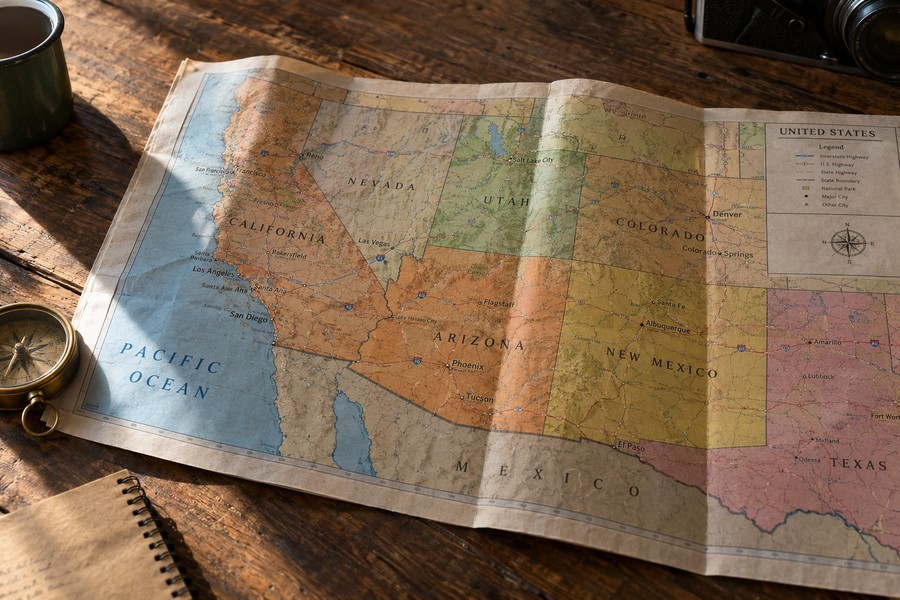
A New Map Sparks Debate Over State Names
A recently shared map has sparked a lot of discussion across the country. The image shows the outline of a southwestern state, but with a major change. On the map, the word "Mexico" in the state's name is crossed out with a bright red line. Written right next to it is the word "America." This change suggests that the state should be called "New America" instead of its official name.
The image was posted online by the president and was later shared again by the White House. No caption or explanation was provided with the picture. So far, there has been no official announcement or formal plan from the government to try to change the name of the state. However, the post has already created a lot of conversation about what the president can and cannot do when it comes to naming places.
What the President Can and Cannot Rename
Many people are wondering if a president actually has the power to rename a state. The answer comes down to the rules set up by the government. The president does have the authority to change the names of certain geographic features. This includes things like:
- Lakes and rivers
- Mountains and valleys
- Other natural landmarks
These official names are kept in a national database of geographic names. By signing an executive order, a president can change how these landmarks are listed in federal records. However, renaming an entire state is a completely different matter. Under the rules of the country, a president does not have the power to legally change the name of a state. That type of change would have to be decided and approved by the people and the government within the state itself.
A History of Changing Names
This map is part of a larger pattern of renaming geographic areas. Not long ago, the president signed an executive order to change the name of Lake Ontario to "Lake America." This decision was made during a time of difficult trade negotiations with Canada. Before that, another executive order was signed to rename the Gulf of Mexico to the "Gulf of America."
The president has often talked about his desire to rename famous landmarks as a way to show national pride. During a speech, he even mentioned the possibility of renaming the oceans that border the United States. He suggested that after renaming a gulf and a lake, the next step could be renaming the Atlantic Ocean, the Pacific Ocean, or even both of them.
Local Leaders Respond to the Post
The suggestion to rename the state did not sit well with local leaders, who quickly spoke out against the idea. The state's governor criticized the post. She suggested that the map was simply a distraction from more serious issues facing the nation, such as rising gasoline prices and international conflicts. She made it clear that the state's name is not up for debate and that her administration is focused on doing real work for the community rather than coloring on maps.
A United States senator representing the state also shared his thoughts. He listed three specific places—the Gulf of Mexico, Lake Ontario, and the state itself—and declared that he would always refer to them by their original, traditional names.
The Deep Roots of the State's Name
The name of the state has a very long history that goes back much further than the United States itself. According to official historical records, the name was first used in the sixteenth century. This means the name has been in place for hundreds of years, representing a deep cultural heritage that existed long before the state officially joined the union. For many residents, the name is an important part of their identity and history, making any suggestion of a change highly controversial.