
Surge in Cases of a Deadly Infectious Disease in the US
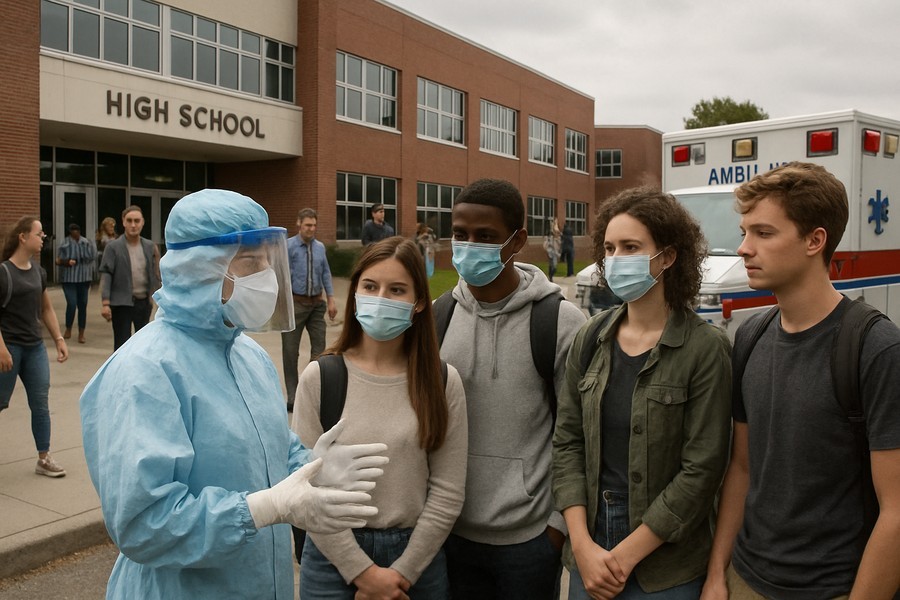
Something unexpected happened at a high school in the Bay Area last fall. A student who had been struggling with a persistent cough was eventually diagnosed with tuberculosis, a disease not commonly associated with such educational establishments.
Following this discovery, the local health department investigated and found an unusually high number of dormant tuberculosis cases at the school. To date, four individuals within the school community have been confirmed as having active tuberculosis, with three additional active cases suspected.
Tuberculosis - A Global Issue
Tuberculosis is primarily considered a disease of poverty and marginalization, predominantly affecting developing countries. However, it was once a global menace. In fact, the disease, identifiable by different names such as consumption or the white plague, is experiencing a resurgence in affluent countries.
In spite of being temporarily overtaken by Covid-19, tuberculosis has reclaimed its title as the leading cause of death from infectious disease worldwide. Annually, it infects approximately 10 million people and results in 1.5 million deaths, even though it is both preventable and curable. An estimated one-fourth of the global population may be infected with the bacteria, including both dormant and active cases.
“If we fail to address the global burden of tuberculosis, we will continue to see it everywhere. We’ll even begin to see it in the least expected places,” warned a medical professor and tuberculosis researcher.
Tuberculosis in the US
The US has the infrastructure for testing and treating tuberculosis, yet the disease is far from eradicated. After three decades of declining rates, tuberculosis is increasing in the US. In a single month, it has emerged in high schools across the country, from the Bay Area to Long Island, New York, and Seattle.
Several factors are contributing to the persistence of tuberculosis in the US, including disinvestment in public health infrastructure, medication shortages, diagnosis delays due to the Covid pandemic, and difficulties in detecting and treating dormant cases. All of these issues make tuberculosis a disease worth worrying about in the United States.
Although ambitious, the theme of this year’s World Tuberculosis Day is “Yes! We Can End TB!” This is a significant undertaking considering it’s an ongoing problem even in the world’s richest nation. However, advocates are pushing for sustained investment in tuberculosis research and fighting back against funding cuts, and scientists are working to develop new treatments for this very old disease.
Challenges in Combatting Tuberculosis
Tuberculosis spreads through the air, and it doesn’t require a cough to infect someone else — normal breathing can do the job. Approximately 13 million people in the US have dormant tuberculosis, which progresses to active disease in about 5 to 15 percent of cases when left untreated.
Left untreated, someone with active tuberculosis can infect 15 people a year. To complicate matters, the distinction between dormant (and non-infectious) and active (and contagious) tuberculosis may not be a binary but a continuum. It’s not always clear at what point someone becomes infectious, and people can be contagious without having the traditional tuberculosis symptoms.
Another major barrier to combatting the disease in the US is cost. Treating a patient with active tuberculosis costs significantly more than treating a patient with dormant tuberculosis. If TB and multidrug-resistant TB in the US were to reach current global average rates, the cost of treating TB cases in the US would surge to over $11 billion annually.
Preventing the Spread of TB in the US — and Beyond
Prevention is the ideal when it comes to tackling tuberculosis. However, the further gutting of US public health infrastructure and research funding jeopardizes our ability to keep the incidence of this disease so low.
If you’d like to do something about this global threat, there are numerous organizations you can donate to. Developing new medications, better diagnostics, vaccines that protect adults from transmission, and advocating for sustained funding into tuberculosis research, prevention, and treatment are the most powerful tools to someday end TB in the US and beyond.
