
An Unexpected Presence at the Global Flu Strategy Gathering
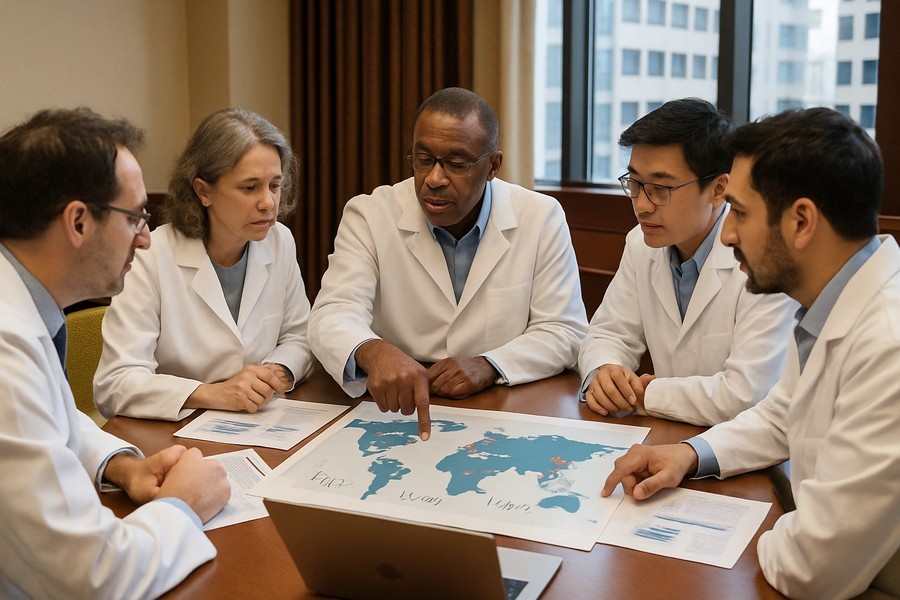
A group of around 50 scientists globally dedicated to researching influenza have been spending their time in a meeting room in a hotel in Istanbul, Turkey. Their mission? To develop a flu vaccine that will be most effective for the coming flu season, forecasted to start in the fall of 2026.
Every day, they dig into a wealth of data. They analyze how the flu virus is changing globally, evaluate the performance of last year's vaccine, and figure out which flu strains can be easily mass-produced for a vaccine.
This meeting, which happens twice a year, is crucial for the Global Influenza Surveillance and Response System. It's a challenging and time-consuming process, as per Dr. Dan Jernigan, who previously headed the National Center for Emerging and Zoonotic Infectious Diseases. He stated that making the best choice for the vaccine composition requires thorough review.
The Role of U.S. Scientists
In past meetings, scientists from the National Center for Emerging and Zoonotic Infectious Diseases have played a significant role. However, after the U.S. officially pulled out from this global health organization earlier this year, it was uncertain if they would participate in any future meetings. This month, it was confirmed that they would be participating, albeit virtually.
"The representatives from the National Center will partake in the meeting to foster international technical collaboration," a statement from the Department of Health and Human Services read. "Their involvement is strictly about providing technical knowledge, sharing surveillance data, and contributing to scientific discussions that guide vaccine strain recommendations. This engagement does not alter the U.S. stance on its withdrawal."
The Importance of International Collaboration
"This highlights the irreplaceable value of these multi-nation networks," noted Jennifer Nuzzo, an epidemiologist and the director of the Pandemic Center at a prominent university. She added that, despite initial resistance, they eventually face the reality that there's no other way to ensure national protection.
Nevertheless, the U.S. withdrawal has tested this global system and could potentially decrease U.S. influence over the flu vaccine formulation.
The Collection of Global Data
Flu affects around 1 billion people worldwide annually and is always present somewhere on the planet. Every year, the Surveillance system collects data from patients in about 130 countries.
These samples are then sent to seven larger labs, including one in the United States. These labs, referred to as collaborating centers, analyze this virus data to identify strains suitable for vaccines.
This global system relies on a steady stream of samples from various countries to these bigger labs. However, when its primary funder - the U.S. - withdrew, the flow of flu samples largely slowed down due to funding constraints. Fewer samples mean less insight into the flu's evolution, making it challenging to decide which strains should be included in the next season's vaccine.
Despite these challenges, shipments around the world have resumed, as per Maria Van Kerkhove, interim director of the department of epidemic and pandemic threat management. However, there is concern about the system's long-term sustainability given its current funding issues.
U.S. Officials' Absence from the Table
Another significant change is the lack of U.S. officials physically present at the conference room table. "Although the process should be objective and quantitative, the interaction among different researchers is crucial," says Jernigan. He adds that researchers from the National Center have always had significant influence in picking which strains to include in the vaccine. But with U.S. officials only participating virtually and the U.S. distancing itself from international collaboration, representatives from other countries may be less likely to follow the U.S.'s lead.
According to Jernigan, it's crucial for your country's issues to be represented in the flu virus selection to ensure the best match. He adds that there's less incentive for participants to choose a vaccine virus that represents what may be circulating in the U.S. when the U.S. is only virtually present.
On Friday morning, the committee will announce the strains recommended for next year's flu vaccine. Following this, manufacturers will begin the production process, which usually takes about nine months until the vaccines are ready for use.
