
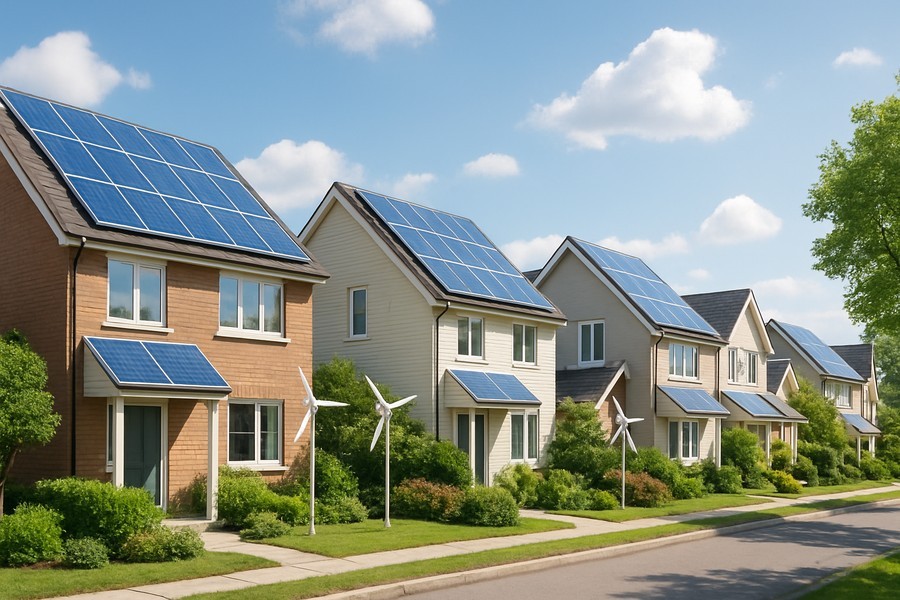
A Major Boost for Green Technology in Homes
A new initiative is set to inject billions into the provision of solar panels and other eco-friendly technologies in homes, with the aim of lowering energy costs. The plan, dubbed the Warm Homes Plan, is expected to roll out over the next half-decade across a certain western country. It also introduces new protections for renters.
The government's goal is to spark a "rooftop revolution", tripling the number of residences equipped with solar technology and lifting a significant number of people out of the hardship of high energy costs. The initiative has already received a warm welcome from the energy and finance sectors, but opposition parties warn of potentially high ongoing costs for households.
The Warm Homes Plan in Detail
The Warm Homes Plan, first mentioned two years ago, was designed as a response to the national crisis of rising energy costs. The government has now released the plan's final details. The focus will be on funding solar panels, heat pumps, and batteries for households via low-interest loans and grants.
However, even with the aid of grants, the cost of installing such technologies is likely to be substantial for many households. For example, after subsidies, a heat pump could still cost around £5,000. But, on a brighter note, for an average three-bedroom house, installing these technologies could save roughly £500 each year on energy bills.
Measures of the Plan
The plan includes a variety of measures:
- Extending the Boiler Upgrade Scheme for an additional year, offering substantial grants for air source heat pumps
- An additional £600m for low-income households to fully fund the cost of solar panels and batteries
- Low and zero-interest loans for households irrespective of income
The plan has been enthusiastically received by the energy sector, workers' unions, and finance industry, who view the government's long-term financial commitment as crucial for driving private investment into green technologies.
Criticism and Concerns
Despite the largely positive response, the plan has also faced criticism. Some critics argue that the plan represents a wasteful spending of billions of taxpayer money, primarily purchasing foreign-made solar panels, batteries, and heat pumps. A particular concern is that this could negatively impact domestic industry.
There are also concerns about the high cost of electricity. Despite heat pumps being significantly more efficient than gas boilers, the high cost of electricity can make them just as expensive, if not more so, to run. As a result, shifting households from gas heating to electric heating remains a priority for the government.
The Potential Impact on Jobs and Industry
The government anticipates that the initiative will lead to the creation of 180,000 new jobs in the clean heating sector. However, it is expected that some of these jobs will come from retraining existing engineers. The government's hope is that by moving households from oil heaters and gas boilers to electric heat pumps powered by renewable energy, it can significantly reduce the country's greenhouse gas emissions.
Insulation Funding and Renters' Rights
Initial plans to increase insulation in homes to reduce heat loss were dropped due to controversy surrounding a government-funded insulation scheme involving botched installations. However, the Warm Homes Plan does include recent changes to renters' rights. From 2030, landlords will be required to ensure rental properties meet a minimum energy efficiency score.
There is optimism that the new measures will help improve standards for new buildings, but some environmentalists are concerned that the requirement for solar panels on new homes could be dropped. Nonetheless, the government has confirmed that under the new standards, new homes will have low-carbon heating, high levels of energy efficiency, and solar panels as the default option.