
Ukraine Surpasses Russia in Cross-Border Drone Attacks
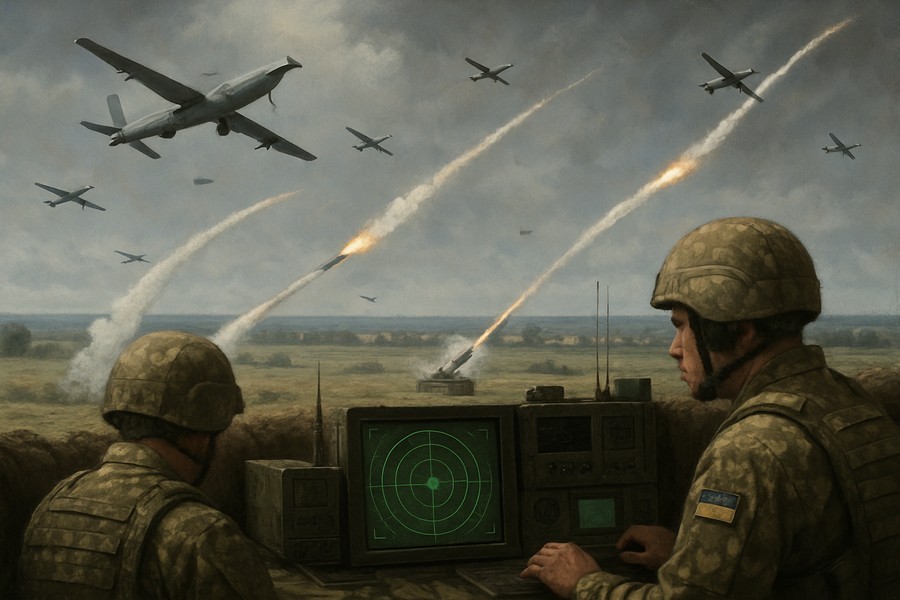
In a surprising turn of events, Ukraine has reportedly launched more cross-border drone attacks than Russia in a recent one-month period. This marks a significant shift in the ongoing conflict, as this is the first time Ukraine has outpaced Russia in this regard.
Drone Statistics
Russian defense authorities claim to have shot down as many as 7,347 Ukrainian drones during this period. This is the highest count ever reported by Russia, translating to an average of 237 drones per day. However, these figures only include Ukrainian drones that Russia says were shot down.
On the other hand, Ukraine's air force reports confronting 6,462 Russian drones and 138 different types of missiles throughout the same month. Of these, they claim to have intercepted or suppressed 5,833 drones and 102 missiles. This means that approximately 90% of drones and 74% of missiles were intercepted or suppressed.
Therefore, according to these figures, Ukraine was dealing with an average of just over 208 drones and four missiles each day.
Unverified Data
Unfortunately, these figures are not independently verifiable. There is a chance that both sides may be inflating the effectiveness of their air defenses or exaggerating the attacks against them to show that their enemies are not interested in peace negotiations.
Record-Breaking Attacks
The combined count of 6,600 Russian drones and missiles reported by Ukraine's air force is a new record for a single month of long-range attacks. In one 24-hour period, Russia launched the largest attack, with Ukraine's air force reporting 948 drones and 34 missiles launched into the country.
Both Ukraine and Russia are heavily using long-range drone and missile strikes in an attempt to weaken each other's economy and ability to continue the conflict. These strikes have continued despite the resumption of peace talks.
Shifting Balance
For the majority of the conflict, Russia has been able to launch more drones and missiles into Ukraine, which has been a significant threat to Ukraine's strategic position. However, these recent figures suggest a shift in balance, with Ukraine's ongoing efforts to expand its drone and missile capabilities starting to bear fruit.
Ukraine's President has been very open about their plans to expand the country's long-range strike capabilities. According to him, "Our production potential for drones and missiles alone will reach $35 billion next year. Despite all the difficulties, Ukrainians are creating their national defense product that, in certain parameters, already surpasses many others in the world."
He added, "We must make the cost of war absolutely unacceptable for the aggressor -- and we will."
Ukrainian Drones and Missiles
Up until now, most Ukrainian strikes have been conducted using relatively cheap, locally-made drones. However, Ukraine is also increasingly using interceptor drones designed and built by local companies to intercept incoming Russian strike drones.
Although Ukraine has begun producing its own cruise missiles, its drone arsenal still makes up the majority of the projectiles reported shot down by the Russian defense ministry.
Targeting the Oil Sector
Over the past year, Ukraine has been focusing on attacking Russian oil refining and transport facilities in an attempt to cut into a primary funding source for Russia and its military.
Ukraine's most high-profile attacks during the last month were on Russia's Baltic Sea ports, which are key oil export hubs. These strikes were denounced by Russian officials as "terrorist attacks."
Ukraine's President has stated that Russia's energy sector is a "legitimate target" for attacks, given that Russia uses the revenue from oil sales to purchase weapons used to attack Ukraine.
Russian Response
Russian officials have generally sought to downplay these attacks, often attributing damage or casualties to falling debris from intercepted drones rather than successful strikes. However, a significant amount of video footage and photos of the attacks suggest that a considerable number of Ukrainian drones are penetrating Russian air defenses and hitting sensitive military and industrial sites.
Concerns About Drone Incursions
Drone incursions into neighboring countries have raised concerns about the conflict spilling over into non-combatant nations. NATO aircraft are often scrambled in response to Russian drone attacks along Ukraine's western borders, and Russian drone violations have been reported in Romania, Poland, Lithuania, and Latvia. Russian officials deny responsibility for these incursions.
Stray Ukrainian drones have also been reported falling in Finland, Estonia, Latvia, and Lithuania, adding to these concerns.