
Ukraine Struggles to Maintain Power Amidst Conflict
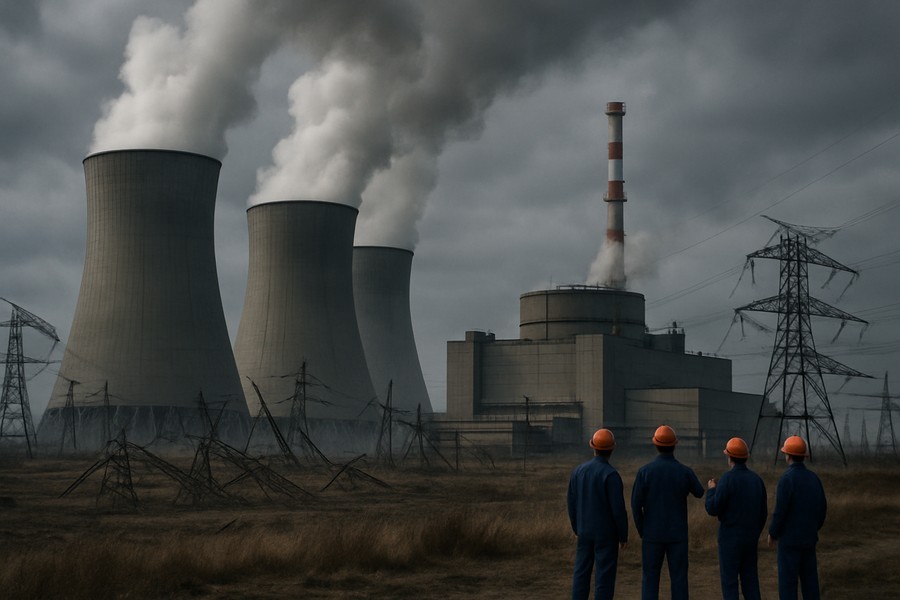
In the western region of Ukraine, a large nuclear power plant plays a crucial role in powering the nation and supporting its defense efforts. A small team of technicians manages the plant, which has become increasingly important due to the ongoing attacks on the country's infrastructure.
With the relentless attacks causing a severe energy crisis, the country now relies heavily on this plant and two others for 60% of its power supply. The head of the country's National Nuclear Energy Company warns that these plants are under serious threat of attack.
Threats to Nuclear Power Plants
Specifically, there are attempts to attack substations that connect nuclear power plants to the power grid, aiming to shut down nuclear energy. This has been classified as nuclear terrorism, as the links between the systems and the nuclear power plant are crucial for their safe and reliable operation.
Nuclear power stations are extremely secure, with access highly restricted. Despite the heavy protection, the country accuses its adversary of launching hundreds of missiles and drones at its critical energy infrastructure every night. The attacks are said to exploit the harsh winter conditions, leaving thousands of people without power, heating, or running water.
Reliance on Nuclear Power
Most of the country’s traditional power plants have been damaged or destroyed in the airstrikes, making nuclear power plants like this one crucial for fulfilling the country’s energy needs. Unfortunately, the country's largest power plant, located near the Dnipro River, has been controlled by the enemy since the start of the conflict.
Not only is this plant the largest in the country, but it is also the largest nuclear power station in Europe. It has the capacity to generate enough electricity to power a country the size of Portugal. But currently, it is in a "dormant" mode, not generating any electricity and is being managed by enemy technicians and troops.
The Future of the Largest Nuclear Plant
The future of this site becomes a critical point in any potential peace deal between the two countries. Reports suggest that the country wants to have shared control of the plant with the US, with half the energy going to them and the other half distributed by the US - potentially even to the enemy.
During our tour of the plant, we met staff members who formerly worked at the largest plant when it was attacked. Their stories are terrifying, describing explosions, gunfire and eventual occupation. They continued to work at the plant for a few weeks under occupation until the situation became unbearable.
The couple managed to escape, leaving behind all their belongings for inspection by their captors. They now reside in a modular home provided by a European government while working at their new plant.
Chaos and Neglect at the Occupied Plant
According to workers still operating the occupied plant, the environment is chaotic. Maintenance work on the equipment is practically nonexistent and military equipment is being stored at the complex. The biggest concern is what will happen if the plant remains under enemy control after a ceasefire agreement.
Despite the plant being non-operational, its nuclear reactors still need to be maintained and cooled to prevent overheating and rising radiation levels. However, the substations providing power for cooling have been damaged by the war. Additionally, the ponds supplying water for the cooling process have sometimes been allowed to run dangerously low.
Moreover, four of the plant's energy blocks use American-made fuel systems, a transition begun by the country in previous years. However, the enemy technicians are not trained or capable of operating these systems in the event of the plant being restarted.
An International Concern
Officials from the International Atomic Energy Agency occasionally inspect the plant, supervising repair work to damaged power lines and maintaining critical cooling systems. However, the country's officials claim that the enemy is dangerously neglecting the site and warn of a potential nuclear disaster.
On a sobering note, the National Nuclear Energy Company's director warns that if the situation leads to core melting and fuel melting in the spent fuel pools, the contamination could be worse than a past nuclear disaster. While the contamination would not be explosive, it could be stretched out over time and could be greater.
There's evidence that the enemy has started building power lines from the plant towards occupied territories and its own country, in preparation for the plant to restart and generate electricity under their control. The country's leaders and nuclear officials firmly believe that this cannot be allowed to happen. The implications of a nuclear accident would not only affect the country's energy needs but could also have repercussions far beyond its borders.