
Tensions Escalate as Sea Strikes and Blockades Disrupt Global Shipping
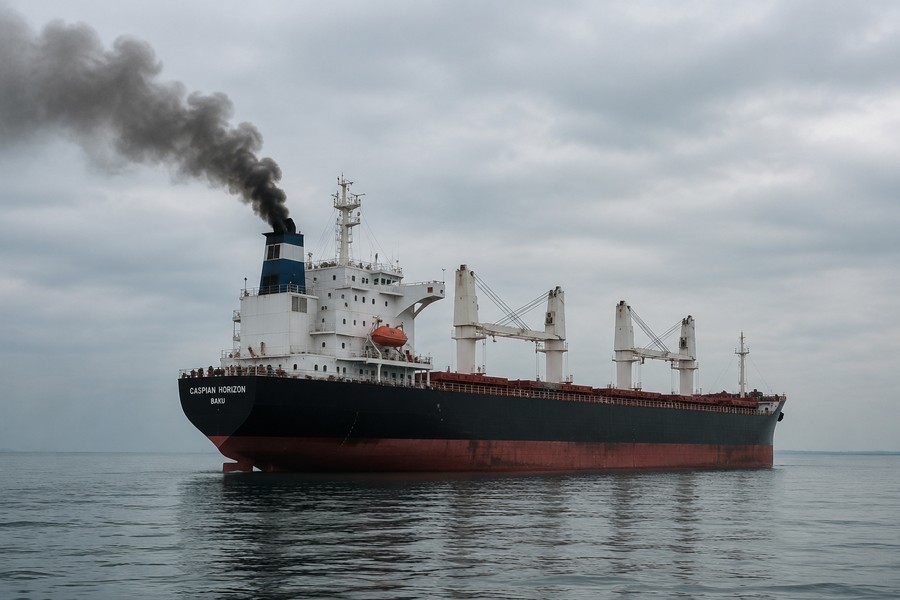
A sudden attack on a cargo ship in the Caspian Sea has sparked a major diplomatic dispute, highlighting how regional conflicts are beginning to overlap and impact global safety. The incident took place in a body of water that is usually far from the main battlefields, raising concerns about the spread of international violence.
The strike on the commercial vessel resulted in one sailor being killed and several others wounded. In response to the incident, government officials in Tehran summoned a diplomat representing Kyiv to voice a strong protest, calling the strike a hostile and lawless action.
Long-Range Strikes Target Military Cargo
Shortly after the incident, leadership in Kyiv announced that their forces had successfully carried out highly effective, long-range strikes in the Caspian Sea region. These actions targeted vessels carrying military cargo connected to foreign defense partnerships, as well as at least one warship.
The region has been closely watched because of the growing military cooperation between certain nations. For example, specific types of unmanned aerial vehicles, often referred to as low-cost cruise missiles, have been frequently deployed in ongoing European combat zones. The recent strikes represent an effort to disrupt the supply chains that deliver these weapons.
Conflict Spreads to the Red Sea and Yemen
The situation in the Caspian Sea is not the only area experiencing a surge in military activity. Farther south, the conflict in the Middle East has expanded into critical shipping lanes. Military forces from Saudi Arabia recently launched strikes against rebel targets in Yemen. These actions were taken after rebels repeatedly targeted commercial shipping vessels in the Red Sea.
The threat to regional safety remains high, as demonstrated by recent defense actions:
- Saudi air defenses successfully intercepted two ballistic missiles fired from Yemen.
- Commercial ships in the Red Sea continue to face threats from regional rebel groups.
- International naval forces are working to keep vital trade routes open and safe.
United States Pauses Air Strikes But Keeps Blockade Active
These developments occurred during a temporary pause in military operations by the United States. Prior to this break, American forces had conducted air strikes for thirteen consecutive nights. While the active bombing has stopped for now, government leaders emphasized that the pause does not mean a change in overall strategy.
The administration has made it clear that while peaceful diplomacy is always the preferred option, military action remains on the table if negotiations fail. However, there are also practical reasons for the pause. Inside the government, leaders have expressed concern about shrinking supplies of crucial defense equipment, particularly Patriot anti-missile interceptors and other air defense ammunition. This has led to a temporary hold on plans to increase military actions.
Even though the air strikes have stopped, the naval blockade remains fully active. Military commanders confirmed that their forces are strictly monitoring the waters. Recent actions taken under the blockade include:
- Turning away twelve commercial vessels that tried to pass through the restricted area.
- Disabling two ships that refused to follow instructions.
- Boarding two additional vessels to ensure they were complying with international rules.
Strait of Hormuz and the Global Oil Market
At the same time, regional naval forces claimed they have established complete control over the Strait of Hormuz, which is one of the most important water passages in the world for energy transport. Local naval commanders forced six ships to drop anchor after issuing warnings to them.
Despite the high tensions, some quiet diplomatic efforts are still happening. Technical discussions regarding the Strait of Hormuz have continued through neutral mediators. Additionally, international efforts are underway to help restart formal talks between major global powers.
These peace efforts had an immediate impact on the global economy. As news spread that a neighboring nation, with support from a major Asian superpower, was trying to bring the opposing sides back to the negotiating table, global oil prices saw a noticeable drop:
- Brent crude oil, the international pricing standard, fell by nearly 4% to settle at $96.78 per barrel.
- West Texas Intermediate, the main U.S. oil benchmark, dropped by 3% to close at $89.31 per barrel.
While the situation on the water remains tense and unpredictable, these diplomatic initiatives offer a small glimmer of hope for stabilizing both international relations and global trade markets.