
Drones Become Vital for Ukrainian Defense Against Aerial Threats
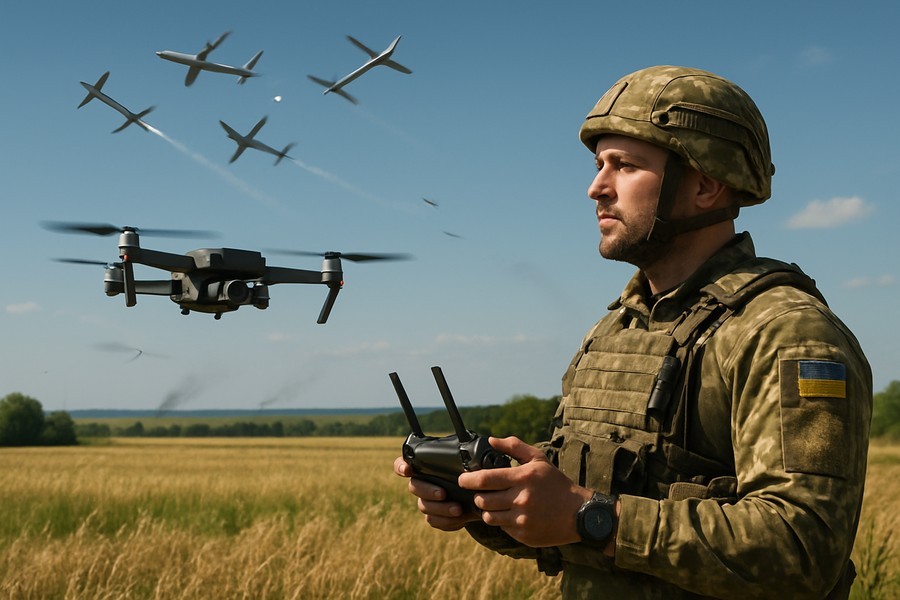
The Ukrainian defense forces have found a potent weapon in their fight against aerial threats - interceptor drones. These devices now account for eliminating almost one-third of all airborne threats, a significant achievement in the ongoing conflict.
A senior officer in the Ukrainian uncrewed air defense division recently stated that "30% of enemy airborne targets are taken down by our interceptor drones. Essentially, for every three enemy drone targets destroyed in our airspace, one is downed by an interceptor drone."
A New Milestone for Ukrainian Defense
These statements mark a significant advancement in the Ukrainian defense strategy. Interceptor drones, often small and inexpensive quadcopters, have been optimized to fly swiftly, matching and neutralizing enemy one-way attack drones.
While these defense drones were initially a novel concept in the early stages of the conflict, the accelerated development in recent years has been propelled by the need for a cost-effective response to increasing drone attacks on Ukrainian cities.
Production Rates and Attack Frequencies
By the end of last year, the production of interceptor drones had reached an impressive rate of 950 drones per day. Meanwhile, the enemy has been known to send thousands of long-range drones into Ukraine every month, sometimes deploying over 800 drones in a single night. Their primary weapon of choice is a locally built version of a loitering munition.
Interceptor drones are designed to neutralize these threats either by colliding with them or deploying an explosive warhead. The success of these missions largely depends on the skills of the pilot and crew who need to quickly spot the enemy drone, predict its path, monitor its position, and direct their drone to intercept the enemy device.
Interceptor Drones: Design and Function
Although not all interceptor drones are quadcopters, many are built with four propellers and a dome-like frame that allows them to attain high speeds - a necessity considering the enemy munition can reach speeds up to 115 mph, with some advanced versions even hitting 230 mph.
The increased frequency of attacks has been a major concern for Ukrainian officials. Initially, they were preparing for 350 attacks a month. Now, they face the same number of attacks every single day.
Advanced Threats and Preparations
Comparing the current situation to a few years ago, when the first drone was spotted over a major city carrying a 40-kilogram warhead, the defense officer noted, "Now, we are dealing with 14 different types of warheads on the enemy's strike drones."
He also expressed concerns over the enemy incorporating artificial intelligence into their drones and using mesh networks for guidance. Earlier this year, it was revealed that enemy troops were regularly accessing certain networks through black market terminals, including for guiding their attack drones. This led to the connectivity being cut over the war zone, with access only granted to terminals on an official whitelist.
The senior officer acknowledged the increasing capabilities of the enemy's drone industry, stating, "We know this isn't the end. They will continue to enhance their capabilities. In fact, this year, they have doubled their drone production."