
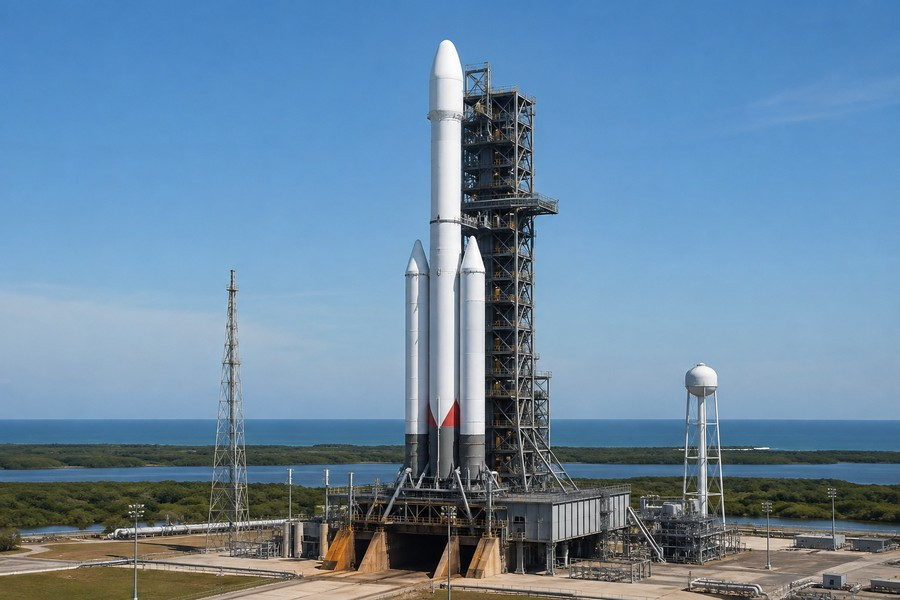
Vulcan Rocket Set for Return After Booster Trouble
A heavy-lift rocket is preparing to return to service after a booster problem raised concerns about its future. The upcoming mission will carry 40 broadband satellites into orbit from a launch site in Florida. The launch still requires approval from the local range team.
A Major Test for the Rocket
The mission will be an important test for the rocket and the company that built it. The rocket has experienced nozzle failures on its solid rocket boosters during two of its first four flights. In both cases, the vehicle continued flying and completed its mission.
Even though the rocket reached its goals, the booster problems reduced confidence among its main government customer. Military space officials will watch the return flight closely before allowing the rocket to carry more national security spacecraft.
The rocket has been selected for about half of the military’s major launch work for many years. These missions include satellites used for communications, navigation, missile warnings, and surveillance.
Changes Made to the Booster
Engineers have studied the most recent booster problem and identified several possible causes. They have made changes to the nozzle’s design and updated parts of the manufacturing and testing process.
The upcoming flight will use the improved nozzle. Engineers will continue testing and reviewing data while the mission moves forward. The flight is expected to provide useful information about whether the changes work under real launch conditions.
The companies involved have not publicly named one final cause for the most recent failure. An earlier nozzle problem was linked to a manufacturing flaw in an insulating material. That material was designed to protect the metal structure of the nozzle from the rocket’s extremely hot exhaust.
Satellites Waiting for a Launch
The mission will begin a large launch campaign for a broadband satellite network operated by a major online retailer. The company has reserved 38 flights on the rocket to place most of its satellite system in orbit.
Many of the satellites are already built and waiting for transportation into space. The network is intended to compete with another large satellite internet service. The first flight in this campaign will carry 40 spacecraft at once.
The rocket will also use a longer protective nose cone to fit the satellite group. Its upper stage has been shortened and adjusted for missions that place spacecraft into low Earth orbit.
Military Missions Were Moved
Delays linked to the rocket’s booster problems caused military planners to move six missions to other launch vehicles. The goal was to keep important spacecraft programs moving while the rocket remained grounded.
Some navigation satellites were shifted to another company’s medium- and heavy-lift rockets. One lunar research mission for the military was also reassigned to a heavy rocket. A large missile-warning satellite was moved in a similar way.
The launch provider will receive other future work in exchange for several of these changes. The trades did not reduce the total number of missions awarded to either major launch company. Instead, they changed which rockets will carry specific spacecraft.
- Three navigation satellites were moved to a different rocket family.
- A lunar research mission was reassigned to a heavy-lift vehicle.
- A strategic missile-warning satellite was also moved.
- Six missions in all were shifted to speed up military launches.
More Flights Before Military Clearance
The military wants to review data from commercial flights before the rocket returns to national security work. At least two broadband satellite missions are planned before another military launch can take place.
Those flights will use many solid rocket boosters, giving engineers a chance to examine how the updated nozzles perform during launch. Ground tests will remain important, but flight data will provide the clearest evidence about the changes.
The return mission will be the first flight to use a full set of six solid rocket boosters. That makes the mission especially important because it will place the greatest number of the updated booster nozzles under operating conditions at the same time.
The rocket’s future depends on the results. A successful flight would help rebuild confidence among commercial and military customers. Another serious booster problem could lead to more delays, additional investigations, and further changes to the launch schedule.