
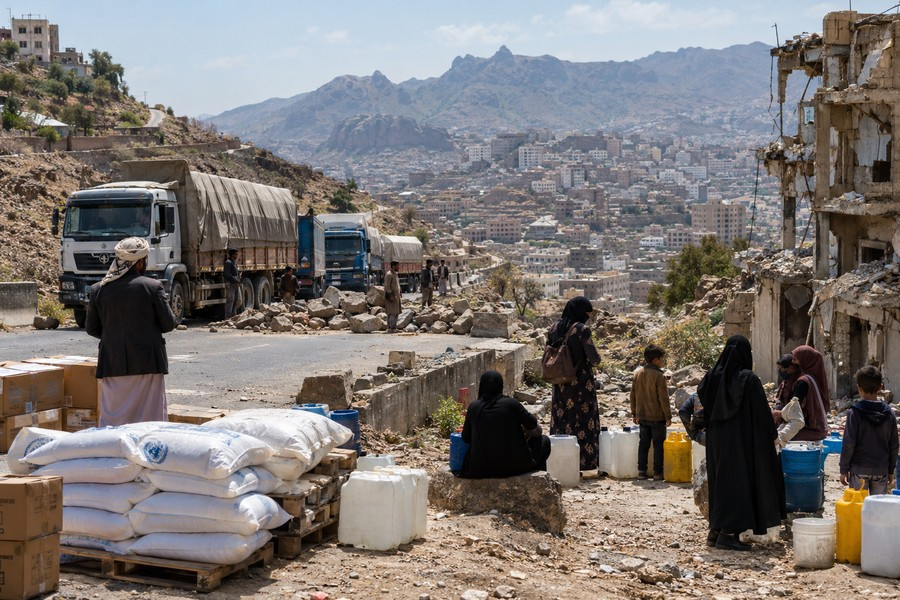
Taiz Faces a Growing Humanitarian Emergency as Supplies Run Low
City Cut Off From Vital Supplies
A serious humanitarian crisis is growing in Yemen’s Taiz after nearly three weeks of fighting and a blockade blocked most supplies from reaching the city. Armed Houthi forces have surrounded Taiz since early October, cutting the main road that connects the city with Aden, the temporary seat of Yemen’s internationally recognized government.
Food, fuel, cooking gas, medicine and other basic goods have barely entered the city since the road was closed. More than 800,000 people are now cut off from aid. About three out of every four residents depend on humanitarian assistance. At least 200,000 women and children are among those affected.
People in Taiz rely heavily on water delivered by trucks. The price of that water has tripled, making it difficult for many families to get enough for drinking, cooking and cleaning. Cooking gas is also mostly unavailable, putting pressure on community kitchens that prepare meals for people who cannot feed themselves.
Hospitals and Water Systems Under Pressure
Local aid groups have used their remaining supplies to keep water pumps and hospitals operating. Those supplies, however, are quickly running out. Without new deliveries, basic services could stop.
Health facilities across Taiz are facing severe shortages of fuel, oxygen, medicine and other medical equipment. Forty-two facilities are dealing with critical supply gaps. Hospitals are struggling to treat people wounded in the fighting while also caring for patients with serious illnesses and hunger-related health problems.
The lack of fuel creates another danger. Ambulances may be unable to reach injured people, generators may stop powering hospitals, and water pumps could shut down. A break in any of these services would place thousands of lives at risk.
Fighting Intensifies Across the Province
Violence has increased in several parts of Taiz province. Clashes have been reported in the Jabal Han highlands and in the districts of Dhubab and al-Masrakh.
Government forces carried out raids and counterattacks during a recent 24-hour period. A military spokesperson claimed that 620 Houthi fighters had been neutralized and 190 vehicles destroyed. Those figures could not be independently confirmed.
The fighting makes it dangerous for aid workers to enter the city and for residents to leave. Roads remain blocked or unsafe, preventing families from reaching safer areas and stopping relief teams from bringing in food, medicine and fuel.
Children Face Severe Hunger
The conflict has worsened an already serious food crisis. Health screenings in Taiz have found more than 52,000 children with acute malnutrition. About 11,500 of them are suffering from severe acute malnutrition, a condition that can become deadly without quick treatment.
Children who do survive severe hunger may face long-term problems with growth, learning and overall health. Families often have little food, unsafe water and no way to reach medical care. The blockade has made each of these problems worse.
Humanitarian groups are trying to reopen access to Taiz while continuing relief work in other parts of Yemen. Their efforts include supporting hospitals, maintaining water systems and distributing food to families in need.
More Aid Promised as Displacement Grows
European officials have announced an additional 22.5 million euros, or about $25.2 million, in emergency aid for Yemen. This brings the total amount allocated for the country to 110 million euros, or about $123.1 million.
The new funding is expected to support food assistance, health care, clean water and other emergency services. Aid workers say money alone will not solve the crisis unless supplies can safely reach the people who need them.
Yemen’s conflict began to expand after Houthi forces seized the capital, Sanaa, and other areas. A military coalition later entered the war to support Yemen’s internationally recognized government. A ceasefire negotiated through international efforts later reduced some violence, but it eventually collapsed after the Houthis announced a blockade on ports in Saudi Arabia.
Thousands Forced From Their Homes
The renewed fighting has forced nearly 260,000 people to flee their homes. Most of the displaced people come from Taiz and nearby Lahij province. More than 3,800 others have crossed the sea or traveled to neighboring Djibouti for safety.
Many displaced families are living without stable housing, regular meals or reliable medical care. Some have lost their homes, jobs and access to schools. Others remain trapped in areas where fighting and blocked roads prevent them from getting help.
Since the latest period of conflict began, at least 1,574 people have been killed and 6,939 wounded. With Taiz still surrounded and supplies running low, the humanitarian situation is expected to become even more dangerous unless access is restored soon.