
Crucial Developments in Global Politics: Discussions and Military Exercises
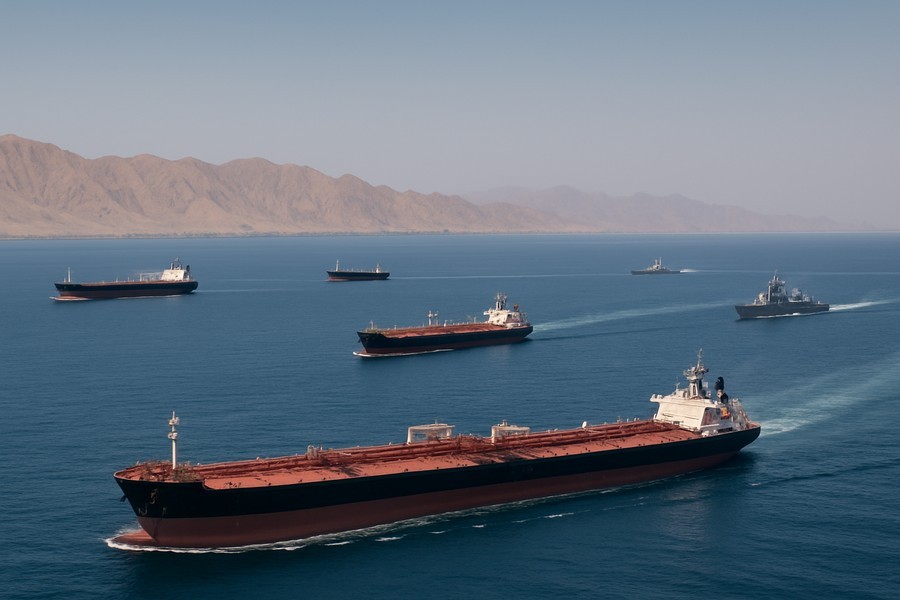
Recent news reveals that a vital waterway in the Middle East, the Strait of Hormuz, will be temporarily shut down due to naval exercises conducted by a Middle Eastern country. This strategic waterway, situated between the Persian Gulf and the Gulf of Oman, is the only route to transport crude oil from the oil-abundant Persian Gulf to the rest of the globe.
The northern side of the Strait is under the control of the said country, and it has previously threatened to close off the strait amidst escalating tensions with the West. Such a move could severely disrupt global shipping. Approximately 20 million barrels of oil, accounting for one-fifth of the world's daily production, are transported through this strait each day.
High-Stakes Diplomatic Talks
Meanwhile, indirect talks have commenced in Geneva, Switzerland, between the United States and this Middle Eastern country, with the goal of resolving the ongoing dispute over the latter's nuclear program. The said country has reiterated its desire to enrich uranium for civilian purposes, but the United States and its allies are cautioning that the regime could use the purified uranium to develop a weapon.
However, the United States' demands extend beyond merely curbing the other country’s nuclear program. The U.S. also seeks to include the Middle Eastern country’s ballistic missiles and regional proxies in any future agreement. The country has previously rejected these demands, and the progress made in the recent talks remains unclear.
Conflict in Eastern Europe
At the same time, another region in Eastern Europe has been subject to an aggressive series of attacks. In response, the affected country has launched a counterstrike on one of the largest oil refineries in the offending country, resulting in a significant fire outbreak on the premises. These events are unfolding alongside ongoing trilateral talks aimed at achieving a peace deal to end the years-long war.
People's Cry for Freedom
The son of the last monarch from the Middle Eastern country involved in the talks in Geneva has appealed for "humanitarian intervention" by the U.S. following a severe crackdown on protests against the regime.
At least 6,490 protesters have lost their lives during the mass demonstrations that began in late December. The son, who is based in the U.S., has attempted to position himself as a de facto leader of the protesters who have challenged the Islamic Republic like never before. Some protesters have even chanted his name and displayed signs with his image.
A Potential Agreement
Despite the tensions, former negotiators representing both the U.S. and the Middle Eastern country believe that an agreement remains achievable if the Islamic Republic offers firm guarantees to suspend its nuclear program. They suggest that a "short-term, fragile arrangement" could give both sides "a victory”. Under this agreement, the Middle Eastern country’s uranium enrichment and number of centrifuges would be limited without completely eliminating the program.
After a series of strikes on the country’s nuclear facilities, decades of harsh economic sanctions, and the weakening of its regional proxies, the country is in a vulnerable state. This situation gives the U.S. an opportunity to obtain commitments from the country that it will indefinitely suspend uranium enrichment or face additional military action.
A Decline in Oil Exports
As high-stakes talks with the U.S. begin in Geneva, Switzerland, data from a commodities intelligence firm reveals that the Middle Eastern country's crude oil exports have fallen to their lowest level in two years. The decline in exports is a result of a significant slowdown in the amount of oil shipped to China, the largest buyer of the country's oil. This decline comes amidst the U.S.'s efforts to reduce the country's oil exports to China. These economic pressures aim to push the country towards a deal that could potentially lift all sanctions and provide relief to its economy.
As these critical negotiations continue, both the U.S. and the Middle Eastern country will need to be open to compromising on their respective demands to prevent escalating conflict.