
Rising Measles Cases Across the Country Spark New Health Concerns
Measles is making a comeback in the United States. Communities across the nation are seeing a sudden rise in infections, marking the highest number of cases in three decades. This surge is putting a lot of pressure on local health workers who are trying to stop the virus from spreading further.
Within a few months, the count of confirmed measles infections reached 2,371. This is already higher than the total number of cases from the entire previous year. While major clusters of the virus have popped up in states like Arizona, South Carolina, and Utah, the risk of new outbreaks is growing everywhere. This is especially true because fewer people are getting vaccinated, leaving communities vulnerable.
A Close Look at a Local Outbreak
Recently, Delaware announced its first case of measles in over ten years. Just two days later, health officials had to declare an official outbreak after four more people caught the virus.
This sudden spike is tied to a drop in vaccination rates. In Delaware, the percentage of kindergartners who received the measles, mumps, and rubella (MMR) vaccine fell from 98.5% in previous years to 94.1% recently.
Why does this small drop matter? Medical experts explain that communities need at least a 95% vaccination rate to keep everyone safe. This level of protection is called herd immunity. When a community stays above this line, it protects vulnerable people who cannot get the vaccine, such as:
- Very young babies who are not old enough for the shot
- Cancer patients with weakened immune systems
- People who do not get a strong immune response from vaccines
When rates drop below 95%, the risk rises that an unprotected person will catch this highly contagious disease.
Why Are Vaccination Rates Dropping?
Health professionals point to a few reasons why parents are choosing not to vaccinate their children. One major factor is old, incorrect information that falsely linked vaccines to autism. Even though many scientific studies have proven this link is completely false, the rumor still causes confusion.
Other parents have started making up their own vaccine schedules because they worry children are getting too many shots at once. This idea has been shared by public figures, including Donald Trump.
The recent global pandemic made these doubts even worse. Many people who had strong feelings about pandemic-era vaccines began to distrust all other vaccines as well. This led some to reject routine childhood shots that have been used safely for decades.
At the same time, because vaccines have been so successful at wiping out diseases in the past, many people have never actually seen how bad measles can be. This makes some parents view the vaccine as optional rather than necessary.
The current health secretary, Robert F. Kennedy Jr., has also spent years sharing doubts about vaccines. During the pandemic, his views reached a much larger audience. He has described getting vaccinated as a personal choice and has claimed that healthy children rarely die from measles. However, medical experts emphasize that science strongly supports the safety and effectiveness of the standard two-dose vaccine.
The Real Danger of Measles
Measles is not just a simple rash. It is a severe illness that can make people very sick. Doctors describe several serious symptoms:
- High fevers and extreme tiredness
- Severe breathing difficulties
- Swelling of the brain, known as encephalitis, which can cause permanent damage
- In some cases, death—which can happen even years after the initial infection
Understanding these dangers is a key part of educating the public. The good news is that the measles vaccine is one of the most effective medical tools ever made.
How Health Workers Are Responding
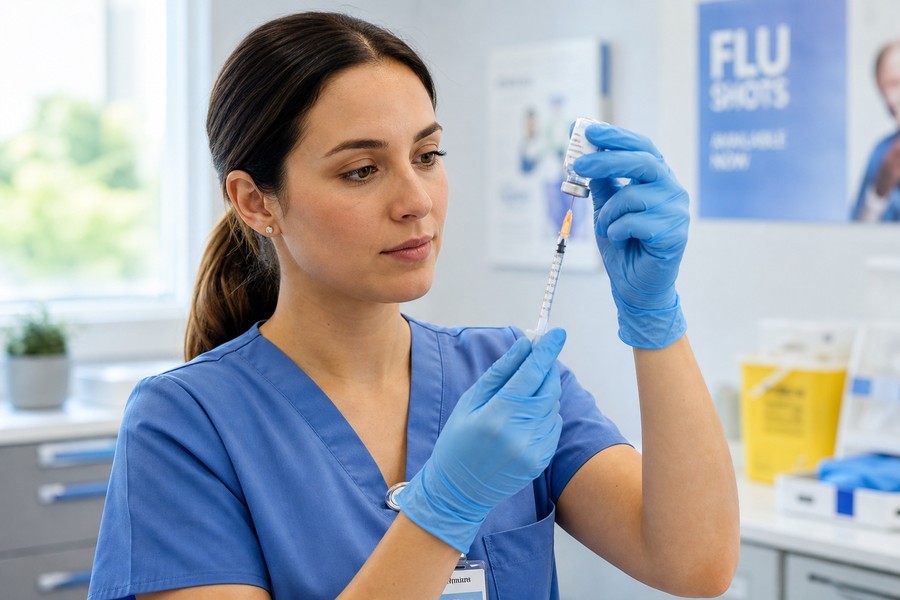
When the recent outbreak started in Delaware, local clinics took quick action. The day after the first case was found, more than 60 people went to mobile health units and public clinics to get their shots. Often, when a disease appears close to home, it prompts people to ask their doctors if they need to update their vaccinations.
Vaccination guidelines depend on age:
- People born before the late 1950s are usually safe because they likely caught measles as children.
- People born between the late 1950s and the late 1980s may only have received one dose and might need a second shot.
- The two-dose system: One shot is about 93% effective, but two doses are about 97% effective.
Currently, health leaders are not changing vaccine schedules for very young babies unless they have been directly exposed to someone with the virus.
In the Delaware outbreak, the first four patients were unvaccinated men. The fifth patient had been vaccinated and only had very mild symptoms, showing how the vaccine protects people even if they do get sick.
To stop the spread, public health workers use two main tools: vaccination and contact tracing. Contact tracing involves finding everyone who spent time near an infected person. Workers pay special attention to high-risk individuals, like pregnant women and unvaccinated children.
Health teams are also working hard to reach people who do not have health insurance or easy access to medical care, ensuring that anyone who wants a vaccine can get one. By finding cases early and tracking exposures, communities have a strong chance to stop outbreaks before they grow.