
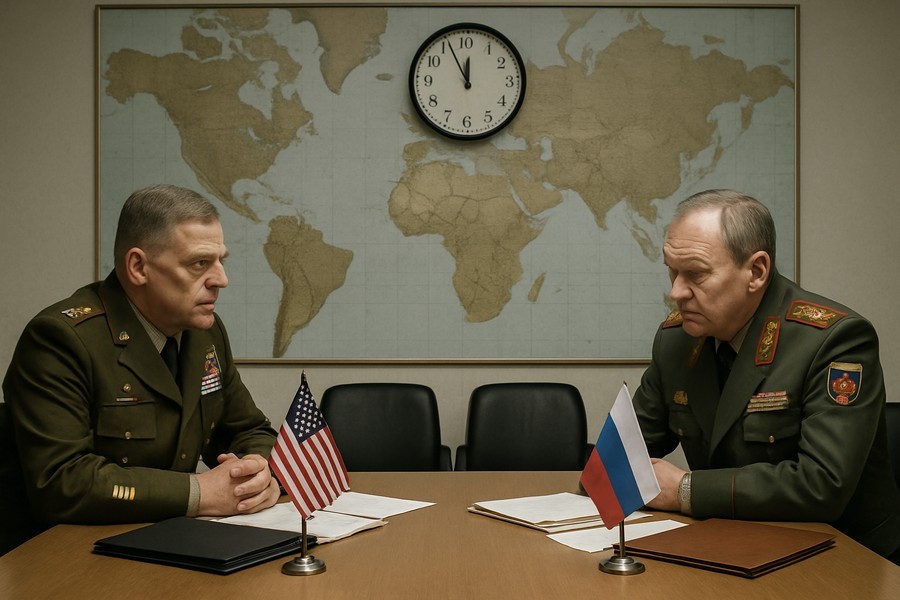
Nuclear Arms Agreement Between Two Major Powers Expires, Sparking Concerns of Potential Arms Race
A significant treaty focused on controlling nuclear weapons between two global superpowers has ended, causing many to worry about the possibility of a new arms race. This treaty, known as the "New START" and signed a decade ago, was among a few agreements aimed at averting a disastrous nuclear conflict.
The United Nations' chief expressed that the conclusion of this treaty represents a serious point in international peace and security. He urged the two nations to promptly arrange a follow-up agreement. Its termination marks the conclusion of the arms control collaboration between these two countries, which was crucial in resolving the Cold War.
Implications of the Treaty's Expiration
The treaty had limited each nation to 1,550 deployed strategic nuclear warheads and established certain transparency measures, including data exchange, notifications, and onsite inspections. Without this treaty, the world faces an environment with no binding restrictions on the strategic nuclear arsenals of the two countries that hold the vast majority of the world's stockpile of nuclear weapons.
The UN chief advised the countries to establish a new arms control system suitable for a quickly changing context, as the risk of a nuclear weapon being used is at its highest point in decades. He expressed his relief that both countries' leaders had recognized the need to prevent uncontrollable nuclear proliferation and urged them to transform words into action.
Also, the Pope recently encouraged the two nations to renew the treaty, noting that the current global situation necessitates doing everything possible to prevent a new arms race.
Historical Perspective and Future Concerns
The original agreement, signed three decades ago, prohibited the two countries from deploying more than 6,000 nuclear warheads. This was followed by the New START signed ten years ago in Prague. Although the treaty was suspended three years ago due to escalating tensions over a war in Eastern Europe, both countries are believed to have adhered to the treaty.
The treaty had curbed the reckless accumulation of nuclear weapons and provided the two countries with the largest nuclear arsenals with transparency measures to avoid misinterpretation of each other's intentions. Its expiration follows a disturbing trend as other long-standing arms control treaties have also been abandoned.
These include a treaty that largely eradicated the deployment of shorter-range nuclear weapons within Europe, a treaty permitting signatories to conduct unarmed reconnaissance flights over each other's territories to monitor military forces, and a treaty limiting the numbers of tanks, troops, and artillery systems both countries and their allies could station within Europe.
Voices of Concern
Experts around the world, including a former head of a major nation's armed forces, have warned that the structures and frameworks that have kept the world secure are now at risk of coming undone. The downfall of these essential arms control treaties is described as one of the most dangerous aspects of our current global security, along with the increasing prominence of nuclear weapons. A former president who signed the New START treaty expressed that its expiration should alarm everyone.
While one of the countries involved expressed a less concerned attitude, the other stated its intention to act responsibly and in a balanced manner if the treaty expired. Though the sentiment was echoed that any future arms control treaty should also include other nuclear-armed nations, both the U.S. and Russia are currently modernizing their nuclear forces and increasing their strategic capabilities, indicating that a new arms race may already be in progress.
While a new agreement is still possible, the termination of the New START signals the beginning of a more unstable, perilous period.