
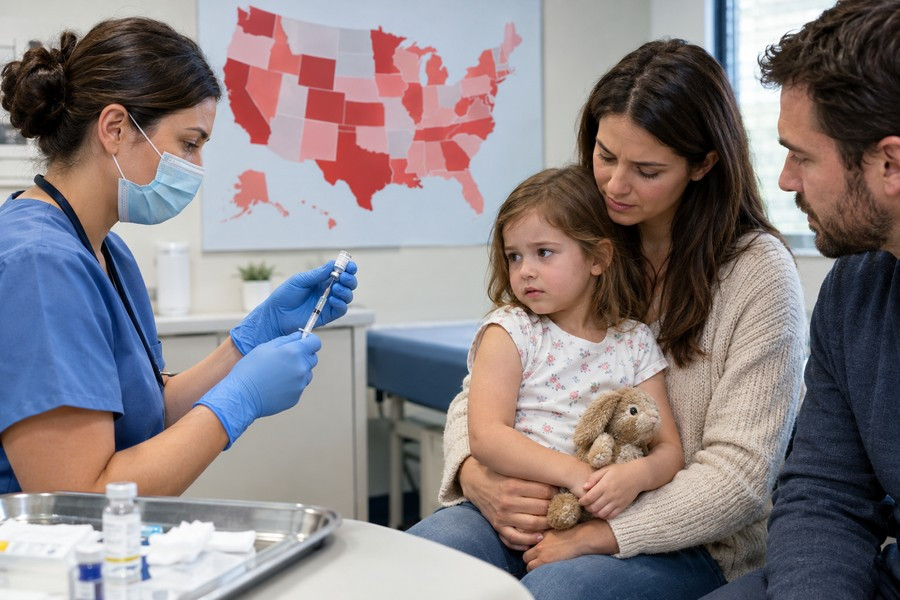
Measles Cases Pass 4,000 as Vaccination Rates Fall
Measles cases in the United States have climbed past 4,000, with infections recorded in 45 states and Washington, D.C. The outbreak has also included 18 people who traveled to the country from other nations.
Deaths and Hospitalizations Reported
Five measles-related deaths have been confirmed in Pennsylvania. However, the national health agency has officially listed two deaths so far. That number may rise as health departments review additional cases and possible connections to the outbreak.
Children and teenagers ages 19 and younger make up most of the confirmed cases. Young children face a higher risk of serious illness. About one in every 10 children under age 5 with measles has been hospitalized.
Measles can cause high fever, cough, runny nose and a widespread rash. It can also lead to pneumonia, brain swelling and other severe health problems. Infants, young children and people with weakened immune systems face the greatest danger.
Most Patients Are Unvaccinated
About 95% of people diagnosed with measles were either unvaccinated or had no recorded vaccination status. About 2% had received only one dose of the measles, mumps and rubella, or MMR, vaccine. Another 2% had received the recommended two doses.
Health experts say this breakdown shows how strongly vaccination affects the spread of measles. The virus is highly contagious, but most vaccinated people have strong protection against infection and severe illness.
The official case count may not include every infection. Some families may not seek testing when symptoms appear, especially if the illness is mild or the family has trouble reaching a clinic. This means the number of infections, hospital stays and deaths could be higher than the confirmed totals.
How the MMR Vaccine Protects Children
Children are advised to receive two MMR vaccine doses. The first dose is recommended between 12 and 15 months of age. The second dose is recommended between ages 4 and 6.
One dose is about 93% effective against measles. Two doses raise protection to about 97%. The vaccine also helps protect babies and people who cannot be vaccinated by reducing the virus's ability to spread through a community.
Even with a highly effective vaccine available, vaccination rates among young students have fallen. About 92.4% of kindergartners received the MMR vaccine during the most recent school year measured. That was below the 95.2% rate recorded before the coronavirus pandemic.
Lower Vaccination Rates Create Openings for the Virus
Measles spreads quickly when too many people lack protection. Communities generally need vaccination coverage of about 95% to limit large outbreaks. When coverage drops below that level, the virus can move from person to person and reach children who are too young to be fully vaccinated or who cannot receive the vaccine for medical reasons.
Public health specialists say several issues are driving the rise in cases:
- Fewer children are receiving routine vaccinations.
- Some people no longer view measles as a serious threat.
- Trust in public health institutions has weakened.
- Families may receive unclear or conflicting health guidance.
- Some people face challenges finding clinics, paying for care or getting time away from work.
Concern Over the Nation's Measles Status
The United States was recognized as having eliminated ongoing measles transmission in 2000. That status depends on stopping the virus from spreading continuously within the country.
Specialists warn that the nation could lose that achievement if infections continue to spread from one community to another for a long period. Repeated outbreaks and record case totals suggest that measles may be becoming established again in parts of the country.
Experts say the situation is especially troubling because measles can be prevented with a safe and effective vaccine. The main challenge is closing vaccination gaps before the virus reaches more schools, families and communities.
Clear Guidance Is Needed
Health specialists say national, state and local leaders should provide simple, consistent information about vaccination. Communities also need support that helps families understand when children should receive each dose and where they can get the vaccine.
Parents and caregivers should check whether children have received both recommended MMR doses. People who are unsure of their vaccination status can ask a health care provider about their records and whether another dose is needed.
With thousands of cases already confirmed, public health leaders face growing pressure to improve vaccination rates and prevent more severe illnesses. The spread of measles can be limited, but doing so requires strong vaccine coverage across every community.