
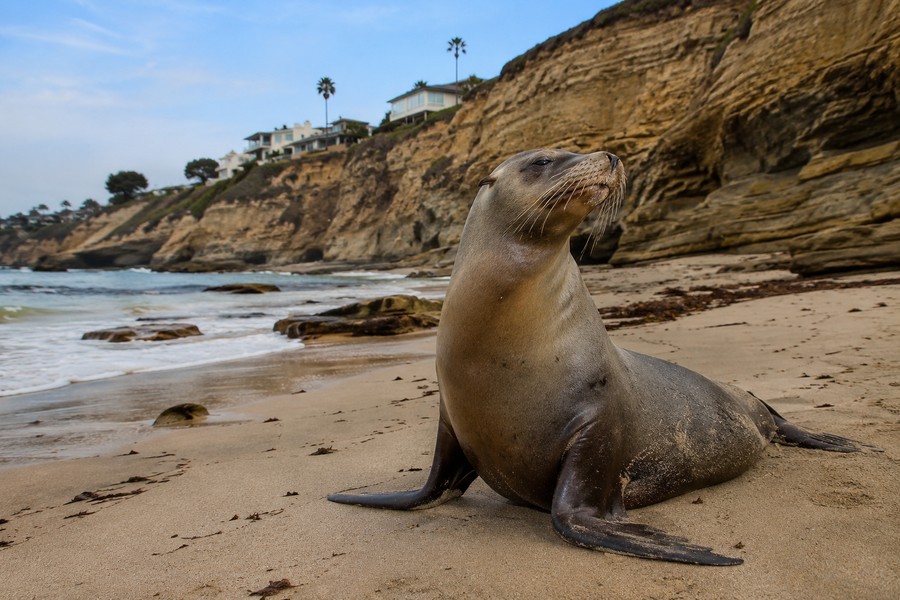
Federal Investigation Opened After Video Captures Person Kicking Sea Lion on Southern California Beach
A federal investigation is underway after a video surfaced online showing an individual repeatedly kicking a wild sea lion at a popular beach in Southern California. The footage has sparked widespread outrage among community members and animal welfare advocates who work to protect the local marine life.
The incident occurred at a well-known coastal cove where sea lions frequently rest on the sand and rocks. Authorities who oversee the protection of marine mammals are actively looking into the footage to identify the person responsible for the abuse.
What the Video Shows
The short video clip, which was shared widely on social media platforms, captures a disturbing interaction between a beachgoer and a defenseless animal. In the recording, a person can be seen stepping toward a sea lion resting on the shore and launching multiple kicks at it.
As the animal attempts to slide away across the sand to escape the danger, the individual continues to follow it, throwing more kicks in its direction. In the background of the footage, at least one other person can be heard laughing while the event takes place. The video cuts off as the sea lion tries to find safety away from the individual.
Strict Laws Protect Coastal Wildlife
Sea lions are protected under strict federal laws designed to keep marine mammals safe from human interference and harm. Under these regulations, it is illegal to harass, capture, feed, or kill wild marine mammals like sea lions and seals.
The rules set by wildlife conservation agencies are very clear about how humans should behave around these creatures. Visitors are instructed to keep a safe distance of at least 50 feet from sea lions and seals at all times. This distance helps prevent the animals from becoming stressed or feeling threatened, which can lead to defensive behavior or cause them to flee their natural resting areas.
Breaking these federal protection laws carries severe penalties. Individuals found guilty of harassing a protected marine mammal can face:
- Heavy financial fines of up to approximately $36,000.
- Significant jail time of up to one year in prison.
- Potential additional penalties from state and local authorities.
The Challenge of Monitoring the Shoreline
Keeping watch over the vast California coastline is a difficult task for wildlife protection agencies. The federal office responsible for enforcing these marine laws has only four active officers assigned to cover the entire state of California. Because of this limited staff, federal authorities must rely heavily on partnerships with local park rangers and state wildlife officers to maintain a presence at busy beaches.
Local volunteer groups also spend time at the cove to educate the public and keep an eye on the animals. However, these volunteers have no legal authority to enforce the law or arrest anyone. They cannot be on the beach at all hours of the day, leaving gaps in supervision where incidents of harassment can occur without immediate intervention.
Local Officials and Community React
The video has drawn strong criticism from local leaders. The city's mayor publicly condemned the behavior, calling the incident a disgusting act of animal cruelty that is completely unacceptable. The mayor confirmed that local law enforcement has been instructed to carefully review the video footage to assist with the ongoing federal investigation.
Community members and visitors have also expressed deep concern over the event, noting that the beach should be a safe space where humans and wildlife can coexist peacefully from a respectful distance.
The Deadly Impact of Human Interference
Harassing marine wildlife is not just a legal violation; it also has deadly consequences for the local ecosystem. Conservation advocates estimate that at least 10 sea lion pups have died at this specific cove this year alone.
Experts explain that these tragic deaths are often directly linked to human behavior. When beachgoers get too close, take photos, or scare the adult sea lions, the mother sea lions often panic and flee into the water. In many cases, the frightened mothers abandon their young pups on the shore. Without their mothers to nurse and protect them, these young pups cannot survive on their own.
The ongoing investigation aims to hold the individual in the video accountable and raise awareness about the importance of giving wild marine animals the space they need to survive.