
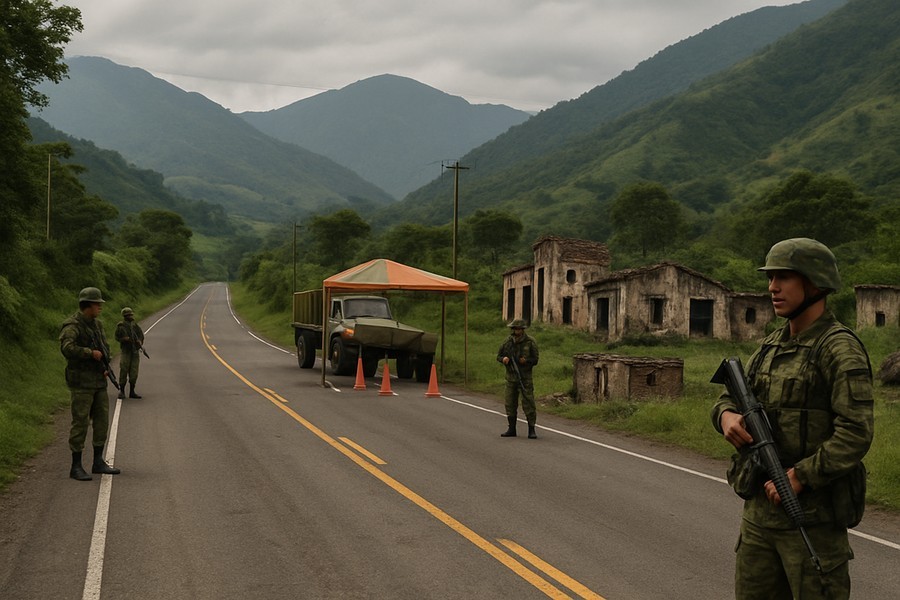
Presidential Election in Colombia Marred by Violence and Chaos
As the date for Colombia’s presidential election draws nearer, the nation is plagued by a surge in violent attacks. Both the public and military installations in the southwestern region of the country have been targeted, causing growing concern about security. The issue of crime is expected to be at the forefront of voters’ minds during the election.
Since the end of last week, there have been 26 reported incidents of violence involving drones and explosives. One of the deadliest incidents, a highway explosion, resulted in 21 deaths. This region has long been a hotspot for violence, with various illegal groups vying for control over the region due to its strategic importance for unlawful activities such as drug trafficking and illegal mining.
Who's Behind the Violence?
Authorities believe the group FARC-EMC, led by Nestor Vera, also known as Iván Mordisco, is responsible for the highway explosion. Mordisco, a former member of the Revolutionary Armed Forces of Colombia (FARC), is a known dissenter to the 2016 peace agreement with the Colombian government.
Some analysts suggest that Mordisco’s group might be conducting these violent acts to prove its power and establish a strong negotiation position with the incoming government. It seems their actions are designed to demonstrate their strength and resilience for future talks.
Government's Peace Efforts and its Fallout
Under the leadership of President Gustavo Petro, a former guerilla group member, the Colombian government has been trying to broker peace with remaining rebel factions. This strategy, dubbed "total peace", involved offering ceasefires to various groups in hopes of encouraging peace talks.
Despite these efforts, critics argue that this approach has backfired as the rebel groups have used the ceasefires as opportunities to regroup, re-arm, and solidify their control over communities. Groups like FARC-EMC have been known to impose taxes on residents in the territories they control and recruit youngsters forcefully.
Some experts argue that the government’s peace policy has been overly optimistic, expecting positive responses from these groups despite their history of violence and lawlessness.
Failed Peace Talks and Continued Violence
In late 2023, FARC-EMC began peace talks with the Colombian government. However, Mordisco's faction withdrew in April 2024 and has been in conflict with the Colombian government ever since.
Analysts point out that Mordisco’s group has a strong presence in the provinces of Cauca and Valle del Cauca, where they are engaged in battles for control of drug trafficking paths and illegal gold mines. Over the past two years, the group has resorted to drone attacks and car bombings, particularly in response to offensives from the Colombian military.
The recent surge in attacks is seen as a way for the group to demonstrate that it can sustain its war against the government. Despite this, the government has reported a decrease in kidnappings and community lockdowns enforced by rebel groups in the Cauca region over the last year, attributing this to their efforts.
The Political Landscape and the Path Ahead
President Petro claimed in a recent address that his government has fought against drug trafficking and managed to slow down the cultivation of coca crops. However, his "total peace" strategy has drawn criticism from the opposition, who are expected to capitalize on the nation’s security issues and are promising a harder line against crime.
While Petro is constitutionally barred from seeking re-election, his party’s candidate, Iván Cepeda, has pledged to continue peace talks with rebel groups. Cepeda has strongly condemned the recent attacks in southwest Colombia and has called for investigations to uncover potential attempts to disrupt the election.
Colombian voters will have the choice of 14 presidential candidates in the upcoming election. While Cepeda supports continuing with Petro’s “total peace” strategy, his conservative opponents are advocating for a more confrontational approach towards rebel groups and increased military pressure before resuming peace talks.
Regardless of the outcomes, it's clear that the recent wave of violence has further complicated the security situation in Colombia — a country where a presidential candidate was assassinated last year. These incidents will undoubtedly be used by both sides of the political spectrum to justify their respective stances on how to deal with the ongoing rebel activity.