
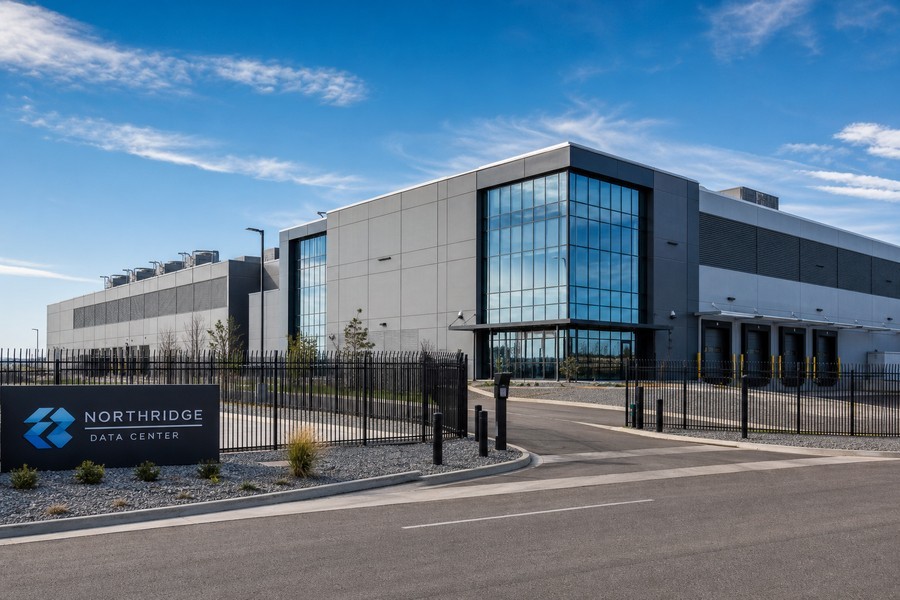
Why Data Centers Are Vital for Our Economic Growth and National Security
During the early 1940s, factories across the country worked day and night to build the equipment needed to keep the nation safe. If local communities had protested outside those factories or forced them to shut down, the country would have been left undefended. Today, a new kind of global competition is taking place. Instead of physical battlefields, this conflict is happening in the digital world, and the main focus is artificial intelligence. The factories of this new era are data centers.
Currently, a global race is underway to develop and control this technology. The way this technology is built will shape the future. One approach seeks to use these digital tools to make communities more prosperous and individuals more independent. Another approach aims to use these same tools for total state control and monitoring of citizens. To ensure a free and successful future, having the right digital infrastructure is absolutely necessary.
The Balance of Global Computing Power
Only two major nations are currently positioned to lead the world in advanced technology development. Together, they control 90% of the world's computer processing power. However, the distribution of this power is highly unequal:
- The United States controls 75% of this computing capacity.
- China controls 15% of this computing capacity.
While one side has focused heavily on using technology for state control and military strength, the other has led the way in creative and consumer-focused innovations. However, maintaining this lead requires a massive amount of physical infrastructure and electrical power. If the creation of new facilities is blocked, this technological advantage could quickly disappear.
The Rise of Local Obstacles and Bans
Despite the clear benefits of these digital facilities, a growing movement across the country is trying to stop them from being built. Currently, 78 local communities have put temporary pauses or complete bans on new data centers. While only one state has officially put a pause on new construction so far, 14 other states are currently debating similar restrictions. These states include Florida, Oklahoma, and Georgia.
If these temporary bans become permanent, the economic damage could be severe. For example, in Georgia alone, blocking these facilities could prevent the creation of 552,000 jobs and lead to a loss of $850 million in tax revenue. This trend does not just threaten local economies; it also harms national security and technological progress.
Addressing Common Misconceptions About Data Centers
Many of the arguments used against building these facilities are based on incorrect information. Here is the reality behind the most common myths:
- Electricity Costs: Some argue that these facilities will cause power bills to rise for regular families. In reality, building new facilities can actually lower electricity rates. This is because the overall cost of maintaining the power grid is shared among a much larger group of users, reducing the individual burden.
- Water Usage: There is a common belief that these facilities waste valuable drinking water. However, many modern facilities use zero water 96% of the time, and some do not use any water at all. On a national level, data centers use about 230 billion gallons of water per year, while golf courses use more than 500 billion gallons annually.
- Job Creation: Critics often claim these facilities do not help local workers. However, data shows that when a new facility is built, local construction employment rises by 11%. Additionally, jobs in the technology, software, and telecommunications sectors grow by 22%. These projects also raise wages by 3% to 4% for both new and existing workers.
- Tax Revenue: Rather than being a drain on public money, these facilities generate massive amounts of tax revenue. This extra funding helps local governments pay for public schools, road repairs, and emergency services without raising taxes on residents.
Broad Economic and Security Benefits
The advantages of these facilities are not limited to large technology corporations. By driving productivity and lowering costs, advanced computing power allows small businesses and startups to compete more effectively in the market. It also supports the growth of a modernized manufacturing sector. Overall, the expansion of artificial intelligence and its supporting infrastructure is projected to add between 1.5% and 3.7% to annual economic growth.
Beyond the economy, this infrastructure is critical for national defense. Advanced computing is used for practical military applications, such as autonomous defense systems and threat detection. It also helps analyze intelligence data, manage military supplies, and make defense manufacturing much more efficient. The choices made today regarding digital infrastructure will determine the balance of global power and freedom for decades to come.