
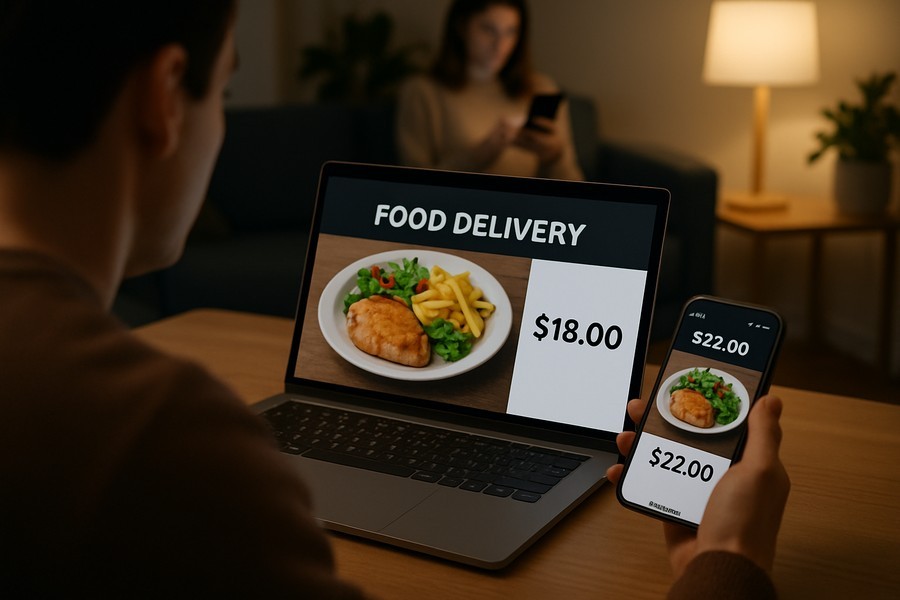
Unraveling the Mystery of Variable Pricing in Online Deliveries
Price tags on products are usually the final say on what consumers should pay. However, with the rise of technology, companies have started to shift their pricing strategies. With things like hotel rooms, flights, or concert tickets, the price often depends on supply and demand. While this might not always sit well with us, it's understandable in these particular circumstances.
But what about everyday items? Shouldn't we just pay the advertised price? Unfortunately, that's not always the case. With sophisticated technology, some businesses are starting to use variable pricing to maximize their profits. This involves using software to set personalized prices based on data they've collected about us.
The Experiment
To understand how this variable, personalized pricing might work, a group of colleagues and I decided to run an experiment with food delivery. We placed the same order from the same restaurant at the same time. The order was simple: a burger meal with medium fries and a drink.
When we compared our receipts, it was clear that none of us paid the exact same amount. The differences in our total bills ranged from 15 to 20 cents. The price of the meals remained the same, but the service fees varied. Even two colleagues who had the same delivery person paid different service fees. The question was: why?
The Explanation
When we reached out to the delivery company for an explanation, they said that while their fees can vary, they are "never based on a user's personal characteristics." They also mentioned that they are required by a state law to notify users when they use personalized data to set prices. But we were left with more questions than answers. We knew we paid different prices for our meals, but we didn't know why.
The Bigger Picture
Our experiment shed light on a larger issue. Companies have been investing a lot of money in collecting personalized data about their customers. The aim is to use this data to set variable prices. However, it's hard to tell exactly where and when this is happening because companies are not very open about it. Even when we think we've found instances of variable pricing, companies often deny it.
Is This a Bad Thing?
One might wonder whether variable pricing is a bad thing. After all, we do have a choice to buy or not. If someone else gets their meal for 20 cents less, should it matter? On the surface, it may seem like no big deal. But when you really think about it, it feels a bit unfair. Constantly changing prices can make customers feel uneasy and could damage a company's reputation.
Companies often argue that variable pricing can benefit customers. Who doesn't love a discounted ticket to a sporting event or a happy hour deal? But when prices fluctuate too much, customers often feel like they're being taken advantage of.
The Future
The world of personalized pricing is likely our future. The question is not just why your burger costs more than mine, but also why your coat, hotel, and even your apartment costs more. It's the mystery and unpredictability of it all that can be most frustrating. In the end, it's clear that companies need to be more transparent about their pricing strategies to maintain customer trust.