
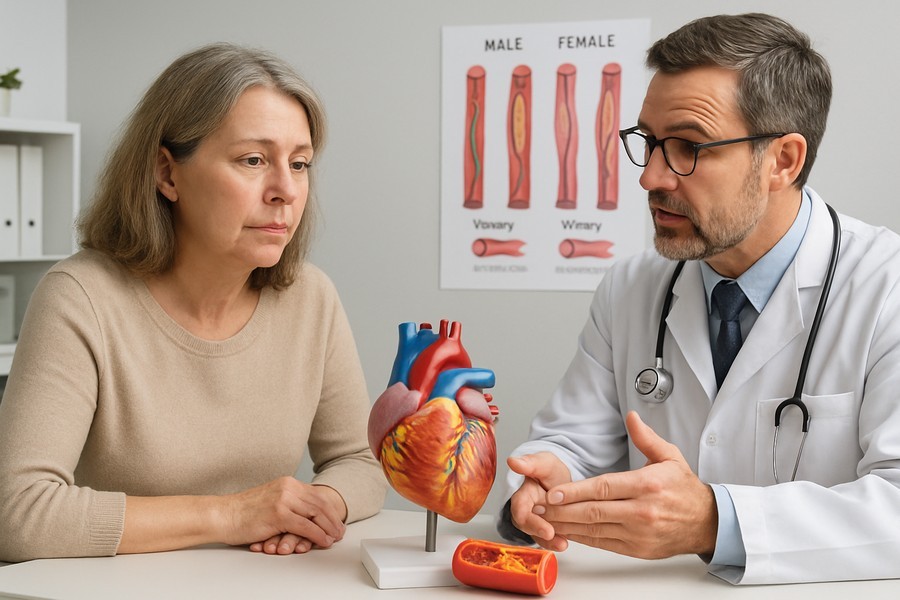
Understanding the Rising Risk of Heart Attacks in Women
While it's been long understood that men and women's bodies function differently, a new piece of research has shed light on how this can affect heart health. This research shows that women can be at an equally high risk of serious heart issues, even when their arteries don't seem as blocked as men's.
The Role of Plaque in Coronary Arteries
The recent study focuses on the role that plaque plays in coronary arteries. This plaque, a mix of fat and cholesterol, is also impacted by the size of the blood vessel. In general, women have smaller coronary arteries than men, but the amount of plaque built up in these arteries takes up a larger portion of the vessel. This can result in a higher risk of heart attacks and chest pain, even when the overall amount of plaque is less than in men.
While women typically have less plaque build-up than men, their risk of heart complications can increase more rapidly. This risk can start to rise even when their plaque burden is less than that of men.
Key Findings of the Study
The study analyzed over 4,200 people, half of them women over 50 and the other half men over 45. The participants did not have any history of coronary artery disease, but they were experiencing stable chest pain. The researchers found that fewer women (55%) had any coronary plaque compared to men (75%). However, despite having less plaque, women were just as likely as men to die from any cause during the two years of the study.
Interestingly, the risk of heart attacks or chest pain that required hospitalization for women started at a 20% plaque burden, whereas for men it started at 28%. This means that as the levels of plaque increased, the risk rose more steeply for women than for men.
Implications of Non-Obstructive Coronary Artery Disease
Most current studies and treatments focus on obstructive plaque that blocks coronary arteries. However, women are more often diagnosed with non-obstructive coronary artery disease. This condition, though it may sound less severe, is still serious. It involves the heart's arteries tightening, functioning poorly after branching into small vessels, or getting squeezed by heart muscle.
Non-obstructive coronary artery disease was found to be prevalent in most heart attacks and deaths, especially in women. This highlights the importance of focusing on sex-specific characteristics in heart diseases and gives priority to understanding and treating non-obstructive disease.
Factors Contributing to Sex Differences in Heart Disease Risk
The study did not pinpoint the exact reasons behind the sex differences in heart disease risk, but several factors could be responsible. These can include hormonal factors, variations in vascular biology, microvascular dysfunction, and inflammatory processes. It's also possible that the risk models, which are typically developed in male populations, may not fully capture the biology of atherosclerosis in women.
The researchers also pointed out that women often receive lesser preventive care compared to men, which can further exacerbate the issue. The interaction between medical therapies and plaque progression has not been fully explored, and it is suggested that the threshold for initiating various medical treatments should be adjusted according to the plaque burden in women.
These findings underscore the need for recognizing and understanding the fundamental biological differences between men and women regarding cardiovascular disease. These differences can influence everything from risk factors to symptoms to treatment response, and require greater attention and research.