
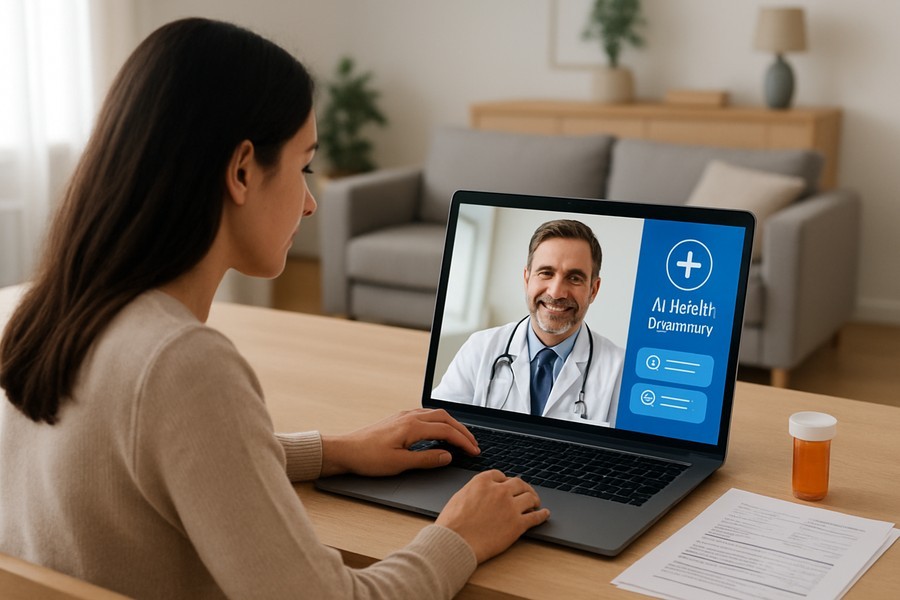
A New Age of Healthcare: Virtual Primary Care with AI Assistance
Imagine losing your primary healthcare provider and facing the daunting task of finding a new one. This is a reality faced by approximately 17% of American adults. One such individual found herself needing medication refills and an appointment for a breast cancer follow-up but had little success in finding a new doctor close to her home in Massachusetts.
She reached out to ten primary care practices in her vicinity, but none of them were accepting new patients. Some even told her it would take 18 months to two years to get an appointment. This was shocking to her since she lived in a region known for its top-notch healthcare facilities. The scarcity of primary care providers is a nationwide issue, but it's especially severe in Massachusetts.
Turning to AI for a Solution
In response to the primary care shortage, some health networks have turned to artificial intelligence (AI) for help. One such network launched an AI-supported program to provide patients with virtual healthcare services. This program, available through an app, allows patients to schedule telehealth appointments with a doctor after having a chat with an AI agent.
Our previously mentioned individual downloaded the app, requested an appointment, and spoke with an AI agent. Within a day or two, she had a virtual appointment with a doctor. This was a stark contrast to being told she would have to wait two years for an appointment.
Convenience and Accessibility
Health networks have found that AI tools can handle routine medical issues like colds, nausea, sprains, and even mild to moderate mental health concerns. After the patient describes their symptoms, the AI tool provides a suggested diagnosis and treatment plan to a doctor. These AI-assisted programs are staffed by physicians who log in from various locations in the U.S., making healthcare accessible around the clock, seven days a week.
This AI-support is also being used for note-taking, reviewing diagnostic results, billing, and ordering supplies. Proponents believe these AI programs can alleviate staff burnout and worker shortages by reducing time spent on administrative tasks. However, there's ongoing debate about the use of AI in improving diagnoses, as critics worry that AI agents might overlook crucial information about overlapping medical conditions.
Critics also argue that AI tools cannot assess a patient's ability to afford or attend follow-up appointments. They lack insight into family dynamics and caretaking needs, aspects that primary physicians understand through long-term personal relationships.
The Impact on Primary Care Doctors
Several factors contribute to the shortage of primary care providers. Many primary care doctors are dissatisfied with their pay; they earn significantly less than specialists like surgeons or cardiologists. At the same time, their workload has been increasing for the past two decades. They often describe their days as packed with complex patient visits, followed by evenings of updating medical records and responding to patient messages.
There's a growing fear among some primary care doctors that AI-assisted programs will gradually erode access to in-person primary care visits. They argue that less of the funds allocated for primary care should be spent on AI, and more should be used to attract and increase pay for primary care staff.
Looking Forward: Expansion and Limitations
Despite these concerns, plans are in place to expand AI-assisted programs and make them available to all residents of Massachusetts and New Hampshire who have health insurance. The program can be used like an urgent care service, and patients can even choose to make one of the remote doctors their permanent primary care provider.
However, these programs are not meant for patients who need emergency care or a physical exam. And while the remote doctors can manage some routine issues, patients with multiple chronic conditions or serious diseases like heart disease or cancer may still require the personalized care of a human doctor.
Despite these limitations, the consensus seems to be that AI-assisted healthcare is a step in the right direction. Ensuring that patients can access care, even if it's virtual, is preferable to them not receiving care at all. The company that developed the AI platform for one such program insists that the program is delivering safe, effective care to patients with complex, chronic ailments.
In a small study funded by the same company, researchers compared diagnosis and treatment recommendations made by AI to those made by physicians. The AI was found to be slightly better at identifying critical red flags and recommending care based on clinical guidelines. However, physicians were better at adjusting their treatment recommendations as they interacted more with the patient.