
Giant New Space Camera Takes Picture of Half a Million Galaxies
Astronomers have captured an incredible new view of deep space using the largest digital camera ever built. This massive camera took a highly detailed picture that reveals more than 500,000 distant galaxies scattered across a single patch of the night sky. The image offers a breathtaking look at one of the most studied regions in the entire universe.
The picture was created by combining hundreds of individual shots taken over time. By stacking these images on top of each other, scientists were able to bring out the faint light of half a million galaxies, each containing billions of stars. This achievement marks the beginning of an ambitious project to map the night sky in unprecedented detail.
The World's Largest Camera
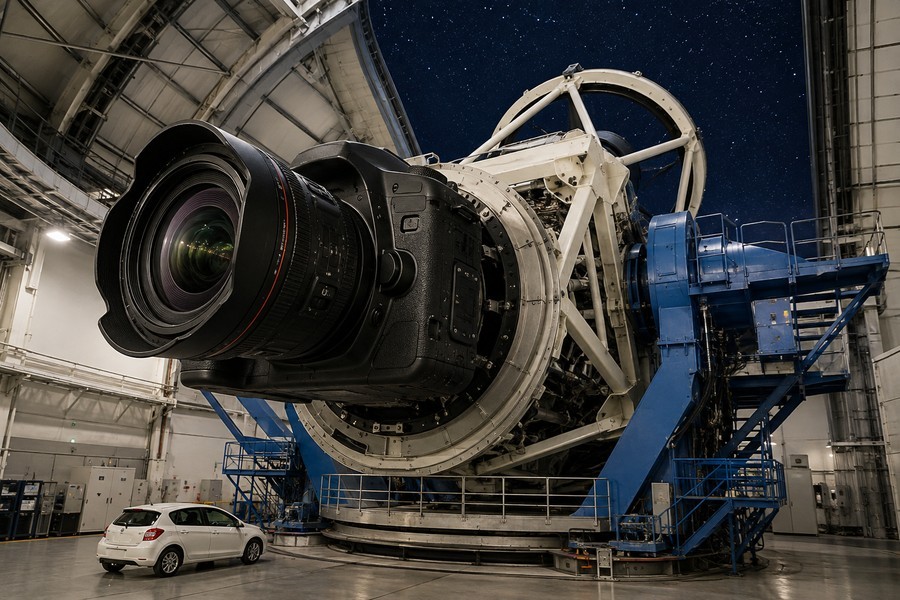
To take such a detailed picture, scientists needed a truly giant instrument. The camera used for this project is roughly the size of a small car and weighs about 6,600 pounds (or 3,000 kilograms). It is currently attached to a powerful telescope with a mirror measuring 8.4 meters across.
Inside this giant camera is a massive light sensor. Instead of a single sensor like the one in a smartphone, this camera uses 189 individual sensors arranged perfectly on a large grid. Together, they create a 3.2-gigapixel image, which means each photo has 3.2 billion pixels of information.
This camera has just started its main mission, which will last for a decade. Every single night for the next ten years, the camera is scheduled to take 700 high-resolution photos of the sky. This constant stream of images will help astronomers build a moving map of the universe.
Understanding the Scale of the Image
To understand how amazing this new photo is, it helps to look at the scale of our own galaxy, the Milky Way. Our galaxy is a massive spiral of stars, gas, and dust. Here are a few facts to help put the size of the universe into perspective:
- The visible part of our galaxy, the Milky Way, stretches about 120,000 light-years across.
- When scientists include invisible dark matter, the outer boundary of our galaxy might actually span up to 1.9 million light-years.
- Most of the galaxies in the new photo are dwarf galaxies, which are much smaller than the Milky Way.
- Despite their smaller size, seeing over half a million of these galaxies in one picture shows just how crowded and vast the universe really is.
Because light takes time to travel across these huge distances, looking at this photo is like looking back in time. The light from the most distant galaxies in the image has been traveling through space for billions of years before finally hitting the camera's sensor.
A Famous Cosmic Laboratory
The camera pointed its lens at a specific area of the sky known to astronomers as a deep-field survey zone. This particular patch of sky has been studied intensely. Previously, a famous space-based telescope spent two years focused on this exact spot.
Scientists chose this region because it acts like a giant natural laboratory. It has several unique features:
- It can be easily seen by telescopes on the ground and telescopes orbiting in space.
- It contains more than two million known galaxies of all different shapes, sizes, and ages.
- Because so much data already exists for this area, it is the perfect place for scientists to test new equipment and compare new pictures with older ones.
Watching the Sky Change
One of the most exciting parts of this new project is the ability to track how the universe changes over time. Most people think of the night sky as still and unchanging, but it is actually full of activity. Stars explode, asteroids move, and galaxies shift.
By taking photos of the same area night after night, the giant camera will allow scientists to watch these changes happen. Project leaders explain that this initial deep image is only the beginning. Over the next few years, repeated visits to this patch of sky will help researchers spot temporary cosmic events, such as supernovae (exploding stars) and other sudden outer-space explosions.
This rich history of past observations makes the region an ideal testing ground. Scientists can use the incoming data to practice analyzing the massive amount of information the camera will collect over its ten-year mission, paving the way for future discoveries about the history and structure of our universe.
