
Could a $50 Billion Fund Spell Trouble for Rural Hospitals?
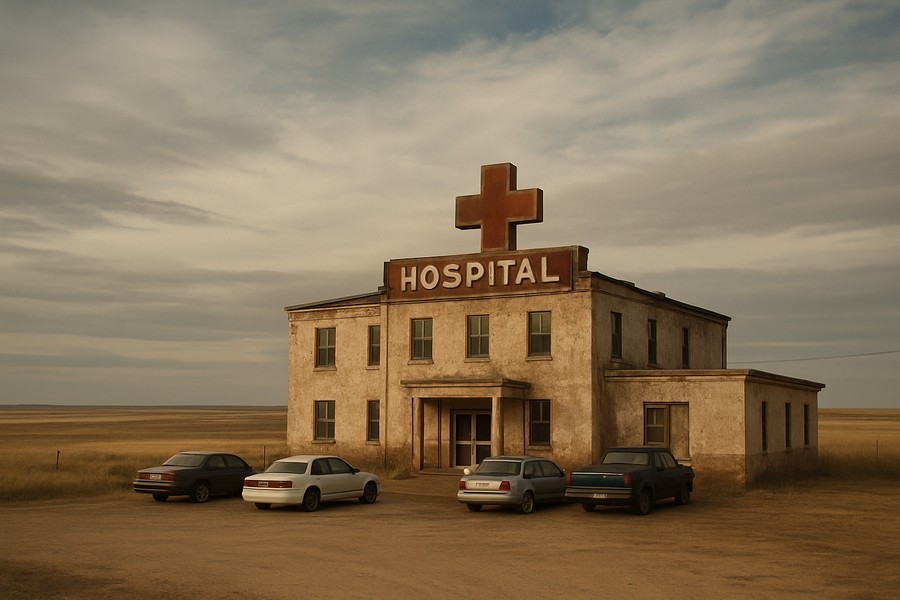
Imagine a hospital where the emergency room is just one room, separated by a meager curtain. This is the reality for a small-scale rural hospital in a town with fewer than 800 residents, nestled in the vast plains of north-central Montana. The hospital, built in 1965 by local farmers and ranchers, struggles to stay afloat and desperately needs a minimum of $1 million for deferred maintenance, including a failing HVAC system.
The hospital's CEO dreams of securing support from the $50 billion federal Rural Health Transformation Program. Montana, the state where the hospital is located, saw more than $233 million in the first-year award from this fund. However, the hospital may not benefit as the CEO hopes.
The Limitations of the Federal Program
The issue lies in the fact that the federal program is designed to enhance access to rural healthcare through innovative methods, rather than directly funding renovations or services. Furthermore, Montana is among at least ten states whose leaders are concerned that projects initiated under this federal program could force rural hospitals to reduce services just to be able to afford the provision of emergency and other essential care.
The fund was established by Congressional Republicans as an add-on to a significant bill, aiming to counterbalance the expected impact on rural communities from a new law predicted to cut Medicaid spending by nearly $1 trillion over a decade.
Montana's Funding Application
Montana's application for funding under the program includes plans to simplify access to medical care for rural residents and promote a healthy lifestyle. The funding could be used to start community gardens, train paramedics for home visits, open school-based clinics, or introduce mobile clinics to rural areas.
The application also suggests that rural hospitals in Montana could be compensated for implementing recommendations, which might include "right-sizing" or even "downsizing" certain inpatient services. This has led to uncertainty among hospitals, with many concerned about the potential for restructuring and reducing inpatient beds.
A Vital Lifeline
For locals like the rancher who credits the rural hospital with saving his life after a severe accident, the thought of any services being cut is worrisome. He fears that diminishing other services could trigger a detrimental spiral for the hospital and his town.
States' Plans and Concerns
Seven out of the ten states where rural hospital service reductions are being considered express their intent to assist hospitals in transforming into Rural Emergency Hospitals. This new federal designation requires hospitals to stop inpatient services and offers enhanced payments to help them maintain emergency and outpatient care.
However, there are concerns among rural hospital administrators that the funding may not be used as intended. They warn that eliminating services that lose money could have negative long-term consequences, such as driving more people out of small towns, leading to a further decrease in patient numbers and hospital revenue.
Many believe that if high-margin services are taken away from local hospitals without adequate compensation, it could have damaging financial effects. On the other hand, increasing outpatient care could potentially be beneficial for patients. It remains to be seen which states' plans will help stabilize rural hospitals.
A Call for Collaboration
Rural hospital leaders argue that they know best how to keep their facilities open and that states should not impose service reductions and other changes. They believe in finding efficiencies and are eager to collaborate, but insist that these decisions should not be made by state agencies.
A Matter of Survival
While some healthcare leaders in Montana are optimistic about the state's plan, others worry that the only way hospitals will receive their share of funding is by cutting services or becoming Rural Emergency Hospitals that do not offer inpatient services.
Despite the differing views, there is a shared understanding that rural hospitals are essential to their communities. For residents like the local rancher, the importance of having a hospital in remote towns is indisputable. "I always would say, 'Oh, they're nice to have,' but now I look at the hospital and say, 'That's essential to our community,'" he said.