
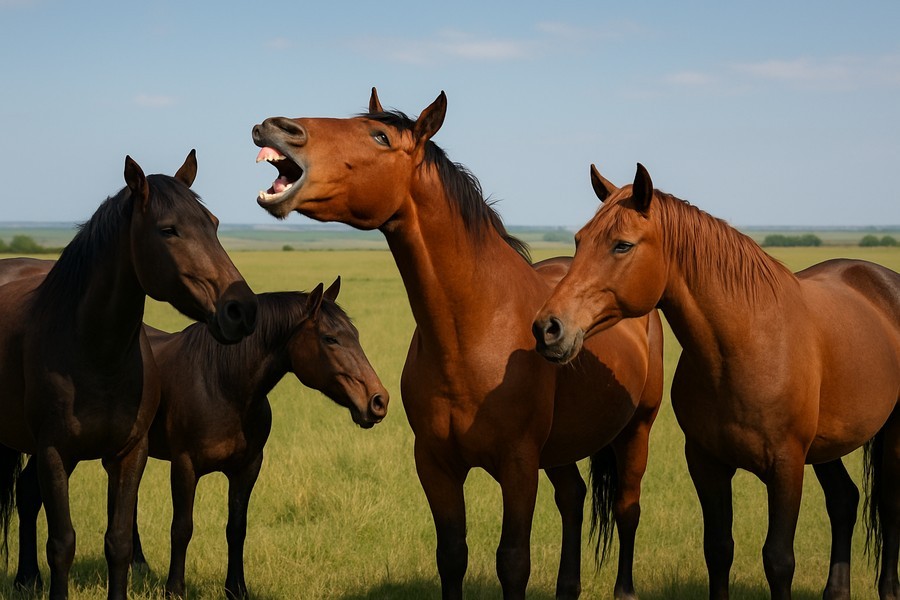
Unraveling the Mystery Behind the Unique Neigh of Horses
Horses have a unique way of communicating with each other. Whether they're meeting new companions, acknowledging old ones, or simply expressing joy during meal times, horses often rely on a distinctive sound – a neigh. But just how do they manage to produce this special sound? That's a question that has baffled scientists for a long time.
The neigh of a horse is a peculiar blend of both high and low pitched noises, a sort of fusion between a grunt and a squeal. These two sounds are emitted simultaneously, creating the characteristic neigh we all recognize.
The Low-Pitched Aspect of the Neigh
The lower pitched part of the neigh wasn't too hard for scientists to figure out. This sound is created when air flows over clusters of tissue in the horse's voice box. These tissues vibrate and produce noise - a process that's quite similar to how we humans talk and sing.
The High-Pitched Mystery
But the high-pitched part of the neigh was more perplexing. Generally speaking, larger animals have bigger vocal systems and as a result, they usually produce lower sounds. So, how do horses manage to create a high-pitched sound? As per a recent study, the answer is simple - horses whistle!
Discovering the Whistling Component
Scientists used a tiny camera, inserted through the horses' nostrils, to film what was happening inside their voice boxes as they neighed. They also examined detailed scans and sent air through the voice boxes of deceased horses.
What they discovered was that the higher pitched sounds in a neigh result from a kind of whistling that originates in the horse's voice box. Air causes the tissues in the voice box to vibrate while an area just above it contracts, leaving a small gap for the whistle to escape.
This whistling method is different from how humans whistle, which we do with our mouths.
A horse’s ability to whistle is unique among large mammals. While a few small rodents such as rats and mice can whistle in a similar manner, horses are the first large mammals discovered to have this talent. Moreover, they're the only creatures known to whistle through their voice boxes while making their distinct neighing sounds.
Two-Toned Calls and Their Possible Purpose
One question that still remains is how horses developed these two-toned calls. Some other animals, like wild Przewalski's horses and elks, can produce somewhat similar sounds. However, more distant relatives of horses, such as donkeys and zebras, are unable to create the high-pitched component.
Scientists speculate that the two-toned neighs could be a way for horses to convey multiple messages simultaneously. The variations in pitch might enable them to express a wider range of emotions during social interactions.
Understanding that a 'neigh' is not just a 'neigh', but is actually made up of two different fundamental frequencies created by two distinct mechanisms, is a fascinating new discovery. It offers a fresh perspective on how horses communicate and express their feelings.
