
Health Experts Enter the Political Arena in Record Numbers
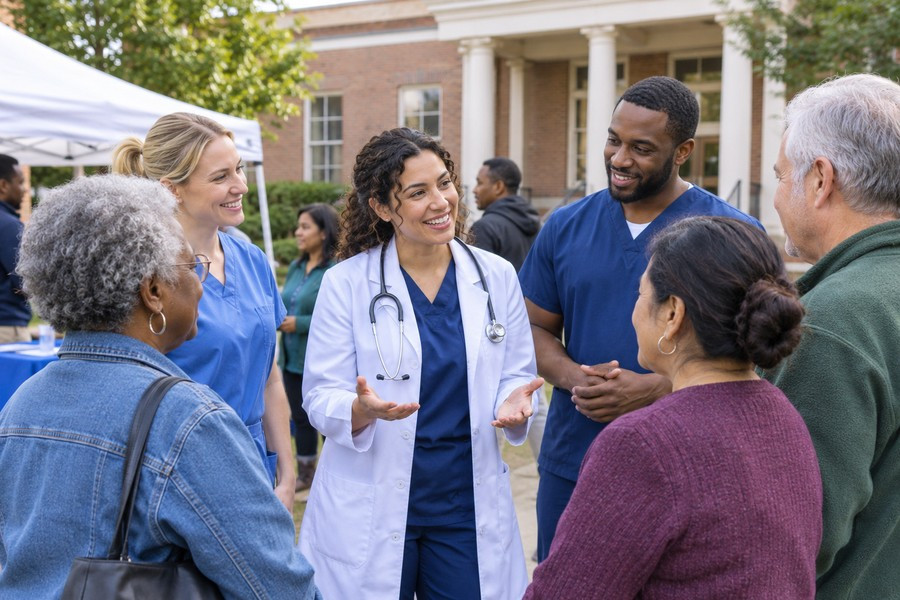
At least 125 doctors, nurses, and public health experts are running for office in the midterm elections. That is an unusually large group from fields that have often led more people toward hospitals, research, and courtrooms than elected office.
Many decided to run after the COVID-19 pandemic. Health workers were praised early on, then faced years of heavy workloads and loss. Some also became targets of anger as public health rules and messages turned into political fights. Several candidates say the crisis showed them how closely health, science, and government decisions are linked.
From Health Work to Campaigns
Abdul El-Sayed, a doctor and former health director in Wayne County, Michigan, is running for the U.S. Senate against Republican Mike Rogers. El-Sayed says medicine and politics have something in common: both require listening to people, understanding their problems, and helping them see possible solutions.
Amy Acton, a preventive medicine doctor who led Ohio’s public health response under Republican Gov. Mike DeWine, is running for governor as a Democrat. Her opponent is Republican Vivek Ramaswamy, a biotechnology billionaire. In California, former congressman and federal health secretary Xavier Becerra is seeking the governor’s office against Republican Steve Hilton.
South Carolina pediatrician Annie Andrews, a Democrat, is running for the Senate against Republican Sen. Darline Graham. Other candidates bring experience from the health industry. Democrat Cinde Warmington is a health care lawyer running for governor of New Hampshire. Republican Rick Jackson, who founded and leads a health care company, is running for governor of Georgia.
Historian Kristoffer Shields says the number of candidates is striking. The connection between science and politics has often been limited. Fewer than one in ten members of Congress have degrees in medicine, public health, or engineering. By comparison, 47% of senators and 31% of House members have law degrees.
Congress includes 17 doctors, four dentists, two pharmacists, a nurse practitioner, an eye doctor, and a rehabilitation therapist. Four doctors serve in the Senate: Republicans John Barrasso of Wyoming, Bill Cassidy of Louisiana, Roger Marshall of Kansas, and Rand Paul of Kentucky.
Health and science backgrounds are less common in state government. About 3% of state lawmakers had a medical, science, or engineering background in an analysis of state legislators, a drop of 25% from the prior year. Hawaii Gov. Josh Green is the only governor with a medical degree. No current governor has a public health degree, and no doctor has become president. William Henry Harrison studied medicine but left school when he could no longer afford it.
More People Want to Run
Erik Polyak, who leads a group that helps Democrats with science and technology backgrounds run for office, says interest has jumped. His group received more than 700 requests from people hoping to run. In a typical election cycle, it receives about 200.
Doctors’ groups have also offered political training for years, including workshops for candidates and campaign schools. Several current lawmakers with medical backgrounds have taken part. Doctors say they already speak up for patients when rules or delays make it harder to get care, and that this work can prepare them to push for change in government.
Public health workers have seen a similar rise in interest. Kristin Hook, a former federal health and government worker, lost her first run for a Texas congressional seat but is running for the same seat again. She says health workers from across the country have asked her for advice, including former federal employees who want to respond to changes they oppose.
Hook says cuts to research funding, the loss of federal health workers, and the removal of government data and health websites helped motivate her. She is also concerned about changes to public health practices, including water fluoridation and childhood vaccination.
Pandemic Disputes Still Matter
Health care is among the biggest household costs that worry voters. A major federal spending law is expected to leave 10 million more people without insurance, according to estimates described by experts in the original account. Many health-focused candidates also oppose the current direction of the federal health department.
The pandemic pushed public health leaders into the public eye. Some received threats and hateful messages, and many left their jobs. Others gained strong local support. Acton says she faced a small group of protesters outside her home but felt that support from Ohioans was much greater than the hostility. She says her work with DeWine focused on saving lives and putting people’s well-being ahead of politics.
Still, winning over voters may be difficult. Some people remain angry about vaccine rules, mask requirements, and the closing of schools and businesses. Republican political consultant Woodrow Johnston says many Republicans feel the government misled them about shutdowns, and distrust of doctors grew after the pandemic.
Trust in scientists differs by political party. Surveys have found that Democrats are more likely than Republicans to trust scientists. Trust fell during the pandemic and has since begun to rise. One survey found scientists were more trusted to act in the public interest than journalists, business leaders, or elected officials.
Science Has a Place in Government
Public health leaders work in communities across political lines, says Lori Tremmel Freeman, who leads a group for local health officials. She believes their experience could help with more than health programs. Better health, she says, can also support economic strength.
Shields says scientific knowledge is needed to tackle issues such as access to health care, safe use of artificial intelligence, renewable energy, and climate change. Acton argues that government can improve health on a broad scale. Medical care matters, but so do clean water, safe food, child labor protections, public schools, and traffic safety.
Acton says serving as governor is not as different from being a doctor as it may seem. Both involve improving the conditions that shape people’s health and well-being.