
Armed Soldiers on the Streets: Why the Long-Term Military Presence in the Nation's Capital Is Raising Alarms
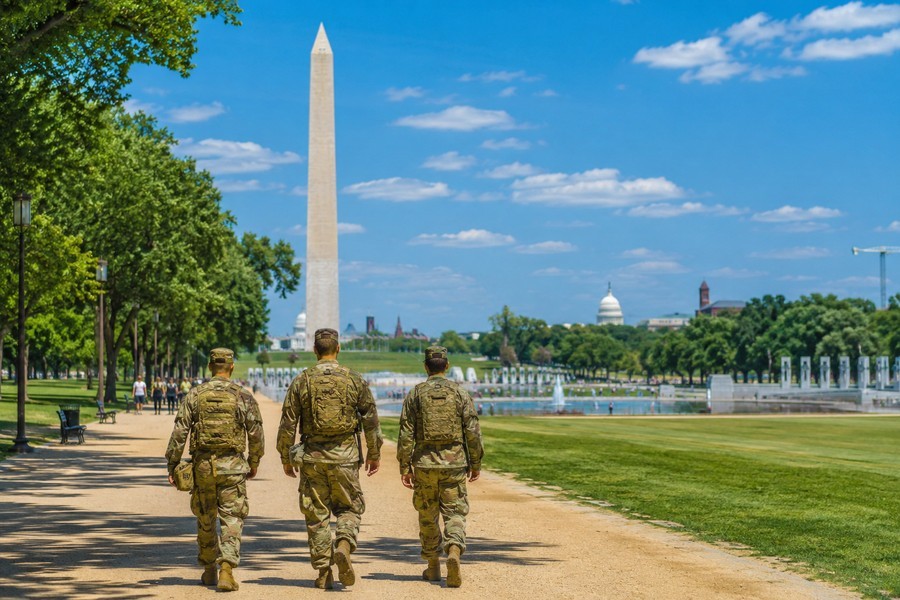
On a warm, sunny day at a neighborhood park in the nation's capital, life seemed peaceful and normal. People relaxed on blankets, laughed with friends, and enjoyed picnics. Dogs ran through the grass, and a father played catch with his child. But right through the middle of this scene walked four military members in full uniform. Each one carried a handgun.
The soldiers stopped at a corner, formed a circle facing outward, and scanned the crowd for a couple of minutes. Then, they continued on their way. Most people in the park did not even seem to notice them. This sight has become a regular part of daily life in the city.
Thousands of military troops have been patrolling the city streets for a year as part of an effort to fight crime. This mission was recently extended for several more years, meaning the soldiers will remain in place through the next presidential inauguration. Armed troops are now a common sight at busy intersections, outdoor markets, train stations, and national monuments. While some local residents have put up signs asking the military to leave, many others have simply gotten used to their presence.
A Historic and Controversial Move
This is the longest and largest domestic use of military forces by the current administration. Legal experts and former military leaders are raising serious concerns about using soldiers for local policing, a practice that has been challenged in court multiple times.
The deployment began after the president declared a safety emergency and created a special task force to combat crime. At the time, violent crime in the city was actually at its lowest point in three decades. While the number of homicides has gone down recently, overall violent crime is currently higher than it was when the soldiers first arrived.
National security experts worry that having armed troops on city streets is becoming normalized. Historically, the country has kept a strict line between the military and local police. In fact, early historical documents criticized foreign rulers for keeping standing armies among citizens during times of peace. Multiple studies have also shown that having the military on the streets has not actually reduced violent crime in the city.
What Powers Do These Soldiers Have?
The troops have been given temporary federal law enforcement powers. While they are not allowed to make arrests, they do have the authority to detain people. They also carry handguns, which is highly unusual for military forces operating inside the country. Some of the key facts about their role include:
- They are armed with handguns for their daily patrols.
- They can temporarily detain citizens but cannot formally arrest them.
- They operate alongside local law enforcement to monitor public spaces.
Civil rights advocates argue that the troops were sent under false pretenses and that there is no real emergency to justify their presence. Former military lawyers worry that using soldiers this way could set a dangerous precedent, allowing the government to use force to influence citizens during sensitive times, such as major elections.
A Rising Financial Cost
The cost of keeping these troops on the streets is growing rapidly. Because the soldiers are operating under federal status, the national government pays for the entire mission. However, individual state governors still hold technical control over their state's troops.
Financial analysts estimate that the deployment costs about $600 per day for each soldier. With thousands of troops currently on duty, the daily cost is around $3 million. Extending the mission for several more years is expected to cost billions of dollars. Former military officials warn that this massive spending takes away money needed for essential military training, equipment, food, and fuel, which hurts overall military readiness.
Troop Numbers Continue to Rise
When the mission first started, there were only about 800 soldiers on duty. Over the past year, that number has grown five-fold to around 4,700. The largest increase happened during a summer push ahead of major national celebrations. Most of these soldiers are volunteers who chose to join the mission because it offers extra pay.
Initially, only a few states sent troops to assist with the patrol. Over time, more states joined the effort. Even some states that previously argued in court that the mission was illegal ended up sending their own troops to help during the summer peak.
Legal Battles and the Fight for Local Control
The deployment has faced strong opposition in court. Local legal officials sued to end the military patrols, and nearly two dozen states supported the lawsuit. A judge initially ruled that the deployment was illegal and ordered it to stop. However, an appeals court stepped in and allowed the patrols to continue while they review the case. The court noted that because the capital is a federal district rather than a state, the president has unique authority over military deployments there.
This decision has frustrated local residents and leaders. It has led to stronger demands for the city to become a state, which would give local officials the power to make their own decisions and hold leaders accountable.
Concerns About Future Elections
The president has praised the patrol program, claiming it has successfully reduced crime in the city. Similar programs have already been started in other major cities. Legal experts worry that these long-term patrols could lead to soldiers being deployed in other communities across the country, especially during upcoming elections.
While there are strict laws that prevent the military from operating near voting booths, former military lawyers are keeping a close eye on executive orders that might bypass these rules. They worry that citizens are assuming soldiers will automatically refuse illegal orders, which may not be the case. For now, the armed patrols continue, and the debate over the role of the military in American communities remains unresolved.