
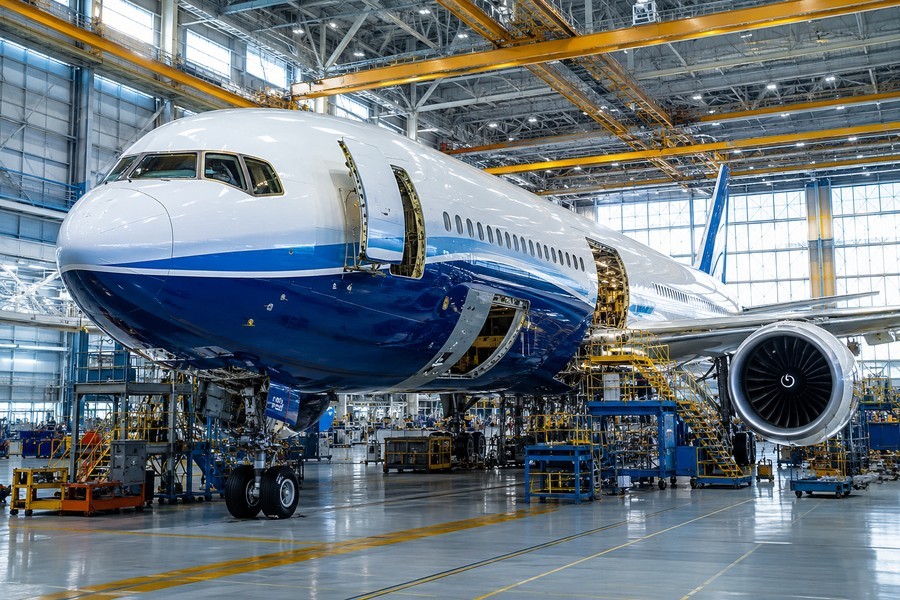
Presidential Jet Program Costs Lead to Larger Losses for Major Airplane Maker
A major American aerospace company recently shared its latest financial results, showing a larger-than-expected financial loss for the second quarter of the year. The main reason for this setback is the rising cost of building the new custom airplanes that will serve as the next official transport for the United States president.
The High Price of the New Presidential Jets
The aircraft manufacturer experienced a $280 million loss on the special program to build two heavily modified jumbo jets. These planes are designed to serve as the highly secure, next-generation flying offices for the U.S. government. The company explained that it had to spend a lot more money on these aircraft recently to keep the project moving forward.
Even with these financial hurdles, the company’s leadership still believes the first of these new presidential jets will be delivered on schedule. The current target for the first delivery is set for 2028. The company's chief executive officer shared in a message to employees that while the team is making good progress on these major building projects, the work is not truly finished until the planes are fully delivered.
The chief executive noted that the design phase for the new government jets is now complete. Because it is incredibly important to the government customer that these planes arrive on schedule, the manufacturer is dedicating additional workers and resources to make sure the project stays on track.
This project has faced intense scrutiny, especially as the nation's leader recently used a different luxury jumbo jet that was provided as a gift from a foreign government. That temporary plane was used while the official new jets are being built. However, safety concerns were raised after a recent trip abroad, which led to the leader returning home on the older, existing government plane instead.
A Look at the Financial Numbers
Despite the heavy losses from the government jet program, the manufacturer actually saw some positive signs in other parts of its business. Here is a breakdown of how the company’s financial performance compared to what financial experts had predicted for the quarter:
- Loss per share: The company had an adjusted loss of 76 cents per share, which was worse than the 30 cents per share loss that experts had predicted.
- Total revenue: The company brought in $24.56 billion, which was slightly better than the $24.25 billion that analysts expected.
- Overall net loss: The total net loss for the quarter was $428 million, or 67 cents per share. This is an improvement compared to the same period last year, when the company lost $612 million, or 92 cents per share.
- Available cash: The company surprised experts by ending the quarter with $631 million in free cash. Analysts had expected the company to burn through about $177 million in cash during this time, compared to a cash loss of $200 million during the same period last year.
Boosting Commercial Airplane Production
One of the brightest spots for the manufacturer was its commercial airplane division. The company, which is one of the largest exporters in the United States, managed to increase its overall revenue by 8% compared to the same period last year. This growth was largely driven by a rise in the number of passenger planes delivered to airlines.
During the three-month period, the company delivered 171 commercial planes to its customers, which is a 14% increase from the 150 planes delivered during the same timeframe last year. A major factor in this boost was the increased production of its most popular single-aisle passenger jet. The company has been working hard to build 47 of these popular planes every month, and it plans to increase that number even more in the future.
Looking Ahead to Future Goals
The company’s leadership emphasized that while a few good months do not guarantee a successful year, staying focused on key goals will help the business improve. The chief executive urged employees to concentrate on safety, manufacturing quality, and on-time deliveries to set the company up for a much stronger performance in the second half of the year.
Moving forward, the manufacturer has several major goals on the horizon. The most important next step is getting official government safety approval for several delayed airplane designs. The first model expected to receive this safety certification is the smallest version of its popular single-aisle passenger jet family.
Company leaders are also preparing to answer tough questions from financial analysts regarding the safety approval process for two other major projects. These include a larger version of their popular single-aisle jet and a brand-new, wide-body commercial airplane designed for long-distance flights.