
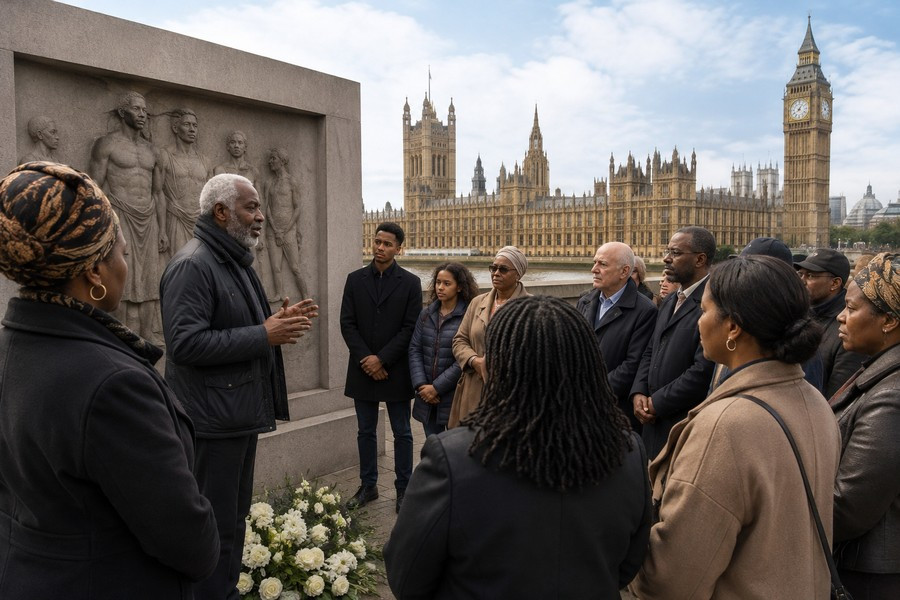
British Leader Open to Slavery Apology but Rejects Financial Reparations
Prime Minister Andy Burnham has said Britain should be willing to discuss a formal apology for its role in the transatlantic slave trade. However, he has ruled out paying financial reparations for the harm caused by slavery.
Burnham said the British government should begin a serious and respectful conversation with people and nations affected by the slave trade. He said that listening to requests for an official apology could be an important part of that process.
A Call to Face the Past
Burnham described the transatlantic slave trade as a brutal and barbaric violation. Millions of Africans were captured, transported across the Atlantic, and forced into slavery in the Americas.
He said Britain must confront its history instead of avoiding difficult questions about the role it played. Burnham also said Commonwealth nations have been asking for an honest discussion about slavery and its lasting effects for many years.
“I am open” to calls for a formal apology, Burnham said. He added that a structured dialogue could give affected countries a chance to explain their concerns and discuss what they believe Britain should do next.
Why Reparations Are Being Rejected
Although Burnham is willing to consider an apology, he does not support financial payments. He said reparations are not the right answer to historical crimes.
Burnham argued that people living in Britain today should not be held personally responsible for actions that took place in a different period, under different laws. He said many people today had no personal connection to slavery or any role in the decisions that allowed it to continue.
The British government has never issued a formal national apology for slavery. It has also never agreed to pay reparations to countries and communities affected by the trade.
Burnham’s position keeps the government opposed to financial compensation while leaving the door open to discussions about an apology. That approach has drawn both support and criticism.
Caribbean Leaders Seek Recognition
The issue is expected to receive attention at a gathering of Commonwealth leaders in the Caribbean, which Burnham plans to attend. Caribbean nations have renewed their demands for Britain to acknowledge its role in the slave trade.
Some leaders are also seeking reparations. They argue that slavery damaged their economies, weakened their communities, and created unfair systems whose effects can still be seen today.
Barbados Prime Minister Mia Mottley has been one of the strongest voices calling for reparatory justice. She welcomed Burnham’s willingness to discuss an apology and said she would take part in the conversation in good faith.
At the same time, Mottley made clear that Barbados would continue to seek broader action to address the effects of slavery. For her government, an apology would be only one part of a larger effort.
Critics Say an Apology Is Long Overdue
Not everyone believes Burnham’s position goes far enough. Denis O’Brien, the founder of a campaign focused on reparations, said the statement was disappointing because it rejected financial payments.
O’Brien said Britain should stop delaying the issue and provide a full, formal apology. He described an apology as a meaningful symbolic step toward repairing the damage caused by slavery.
Supporters of reparations say an apology alone would not address the economic and social harm linked to the slave trade. They want Britain to consider financial support, development programs, debt relief, or other forms of assistance for affected nations.
Britain’s Wider Commonwealth Goals
The debate is also connected to Britain’s relationship with Commonwealth countries. The British government believes stronger ties with these nations are important as China and Russia work to expand their influence around the world.
A more open discussion about slavery could help Britain build trust with Caribbean nations and other Commonwealth members. But the issue remains sensitive, especially because many countries want more than words.
For now, Burnham supports a formal conversation about whether Britain should apologize. He remains firmly opposed to financial reparations, leaving a wide gap between the British government’s position and the demands of Caribbean leaders.