
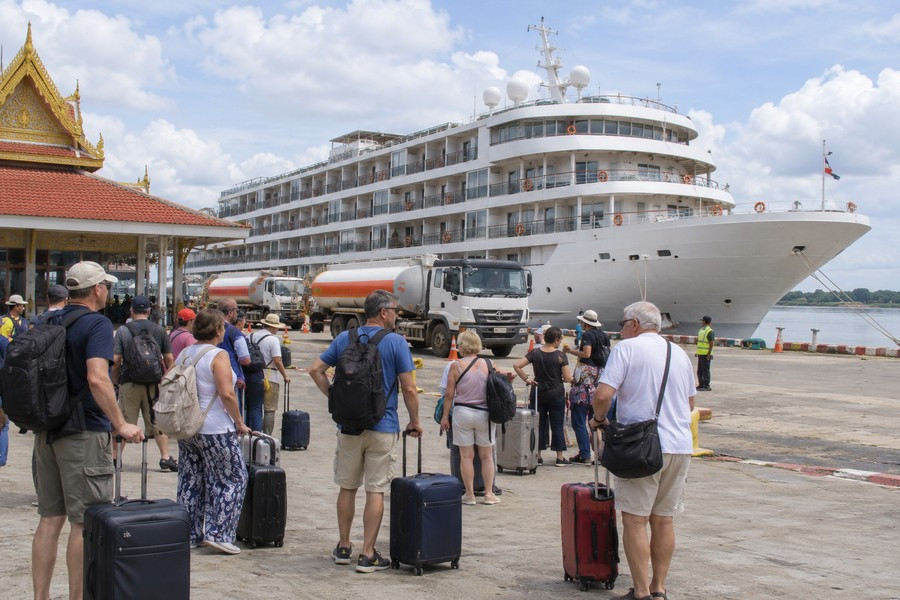
Passengers Left Stranded After Residential Cruise Suspends Service
Two sisters from California are among 203 passengers left in Cambodia after a residential cruise ship suddenly stopped operating. Most of the passengers are Americans who had planned to live at sea for long periods, with some expecting to remain aboard for as long as 15 years.
Rising Fuel Costs Put Pressure on the Company
The company behind the ship said it suspended service because of a sharp rise in fuel costs. It is now reviewing its finances and considering ways to restructure the business and raise new money.
Fuel expenses for travel across Asia reportedly increased by about $5,000 per cabin each month. The cost rose from about $1,800 per month to as much as $8,000. The company said passing the entire increase on to passengers was not a practical answer.
Diesel prices in the United States also climbed sharply. The average price rose from $3.68 per gallon to $6.32 per gallon. The company said the increase created financial pressure that it could no longer manage.
Passengers were told the business was trying to help arrange short-term housing and other needs. However, several people who left the ship said they received little or no help with hotels, flights, or other travel plans.
A Long-Term Home at Sea
The ship, called the MV Odyssey, was designed as a floating residential community. It offered people the chance to travel around the world while living aboard the vessel.
The company promoted the ship as a new way to live and encouraged customers to make it their permanent home. A suite for the lifetime of the vessel began at about $230,000.
Carol Larson and her sister, Crystal Lavering, were among the passengers required to leave the ship in Cambodia. Larson said she had paid $120,000 toward her cabin through installment payments. She also paid monthly maintenance fees. Lavering bought a separate cabin for herself.
Larson said she was promised the chance to live aboard the ship for up to 15 years. Even after losing her planned home at sea, she said she did not regret taking part in the project.
“Even though we put a lot of money into it, I am not at all sad that I did it,” Larson said. She described the experience as a wonderful opportunity and said the idea could have succeeded under better conditions.
War and Oil Costs Add to the Crisis
Larson said she believed President Trump was partly responsible for the company’s financial trouble. She pointed to the conflict with Iran, which began with U.S. involvement and placed greater pressure on oil shipments from the Middle East.
The conflict helped push petroleum prices higher and made long-distance travel more expensive. For a company whose business depends on constant ocean travel, the increase created a major challenge.
Larson said the residential cruise industry could still grow in the future if fuel prices become more stable and companies can manage their costs.
Passengers Describe a Sudden End
Sharon Lane, who lives in Orange County, had spent months aboard the ship before leaving for health reasons. While she was still on board, she said she noticed signs that the company was having money problems.
Passengers were asked to pay extra fuel fees, and some food services were reduced. After Lane left, friends still aboard told her the company was not doing enough to arrange temporary hotels or flights.
Lane said the passengers felt they had been pushed off the ship without enough preparation or support. She described the experience as both upsetting and infuriating.
The passengers now face the difficult task of finding places to stay and making new travel plans. Many had invested large amounts of money in the promise of a permanent home at sea. The sudden suspension has left them uncertain about their cabins, their payments, and the future of the residential cruise business.