
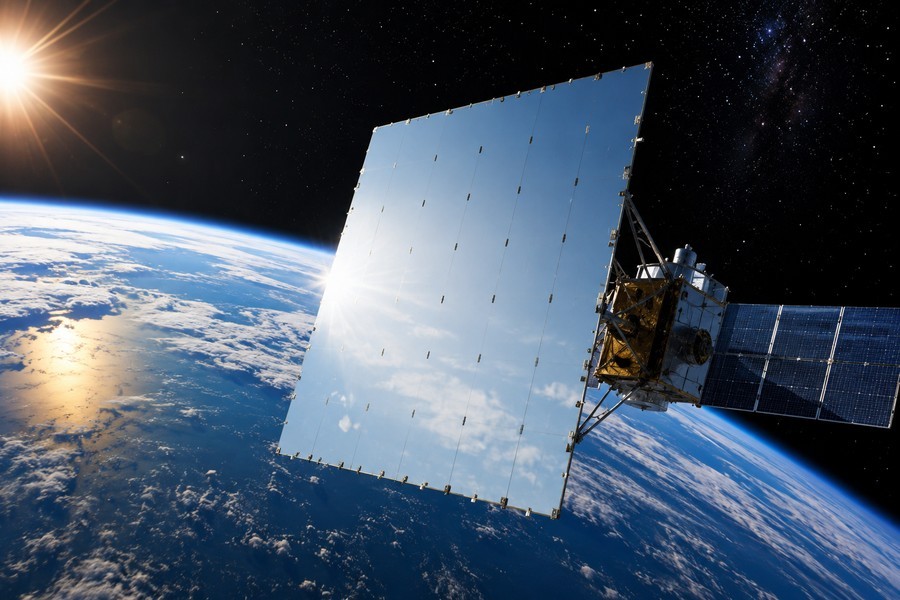
A New Plan to Beam Sunlight from Space at Night Raises Safety Concerns
Imagine having access to sunlight even after the sun has set. For more than a hundred years, people have dreamed of putting giant mirrors into space to bounce sunlight down to Earth during the night. In the 1990s, researchers even tried a quick experiment with this idea. Now, a private space company based in California wants to make this dream a reality by launching a test satellite equipped with a large mirror. Eventually, they hope to launch a massive fleet of up to 50,000 mirror satellites.
How the Space Mirrors Would Work
The company's first step is to launch a single test satellite carrying a mirror that is about 18 square meters in size. Government regulators who oversee communications have already approved this launch. This test mirror is designed to reflect a beam of light about five kilometers (three miles) wide down to Earth. The company believes this technology could be highly useful for several reasons:
- Boosting solar energy: Solar panels on Earth could catch this reflected light at night to keep producing clean electricity.
- Assisting in emergencies: The light could help rescue teams search for lost people during nighttime disasters.
- Helping farmers: Extra light could help crops grow faster.
- Lighting up cities: Towns and construction crews could use the light to work safely after dark.
Why Scientists Are Worried
While the idea of extra solar power sounds helpful, space scientists are deeply concerned. These mirror satellites would be incredibly bright. From outside the main beam, the satellite would look as bright as the planet Venus. Inside the beam, the light would be four times brighter than a full moon. This extreme brightness could cause serious problems for our skies.
First, the extra light would make it very difficult for scientists to study space. When bright satellites pass in front of telescopes, they leave bright white streaks that ruin photos of distant stars and galaxies. But the problem goes beyond simple streaks. Because Earth's atmosphere scatters light, having tens of thousands of these mirrors in orbit would create a constant glow. Experts estimate this could make the night sky three to four times brighter than normal in some areas. This extra glow could make it impossible for ground-based telescopes to see distant galaxies or spot dangerous asteroids heading toward Earth.
Real Risks to Human Eyesight
It is not just professional scientists who are at risk. Backyard stargazers who use their own telescopes could face severe physical harm. The company itself admitted in official government filings that if an amateur astronomer accidentally looks at one of these satellites through a standard 12-inch telescope, it could cause permanent eye damage. This size of telescope is very common among hobbyists.
Other experts have compared the danger of looking at these space mirrors to looking directly at the sun during an eclipse. Despite these warnings, government regulators approved the test launch. The regulators stated that eye safety is outside their authority, arguing that the small risk to hobbyists is worth the benefit of testing new technology.
To make matters worse, the company has not shared plans to warn the public about when or where the light beams will be active, leaving stargazers with no way to know when they are in danger. There are also concerns that the moving beams of light could temporarily blind drivers or airplane pilots.
A Lack of Rules in the Sky
The debate highlights a much larger issue: there are very few laws regulating light pollution in space. While there are agencies that oversee space launches, they do not have the power to regulate how bright a commercial satellite can be. Currently, protecting the night sky relies almost entirely on the goodwill of private companies.
This is a growing problem because the number of satellites in orbit is skyrocketing. Ten years ago, there were only about 1,400 satellites circling the Earth. Today, there are around 16,000, and future plans could bring that number to over 1.7 million. Many of these newer satellites are closer to Earth, making them appear even brighter.
While some satellite companies have worked with scientists to make their spacecraft less reflective, space mirrors are different. Their entire business model relies on being as bright as possible. Because of this, some international space groups have suggested that space mirrors should be banned entirely if strict safety rules cannot be established.
Finding a Balance
The search for more renewable energy is important as global energy demands rise. However, many experts wonder if the tradeoff is worth losing our view of the stars. Some argue that we have plenty of other ways to generate solar power, such as building better batteries to store daytime energy or simply installing more solar panels on the ground. These options do not require altering the night sky or risking the eyesight of people on Earth.