
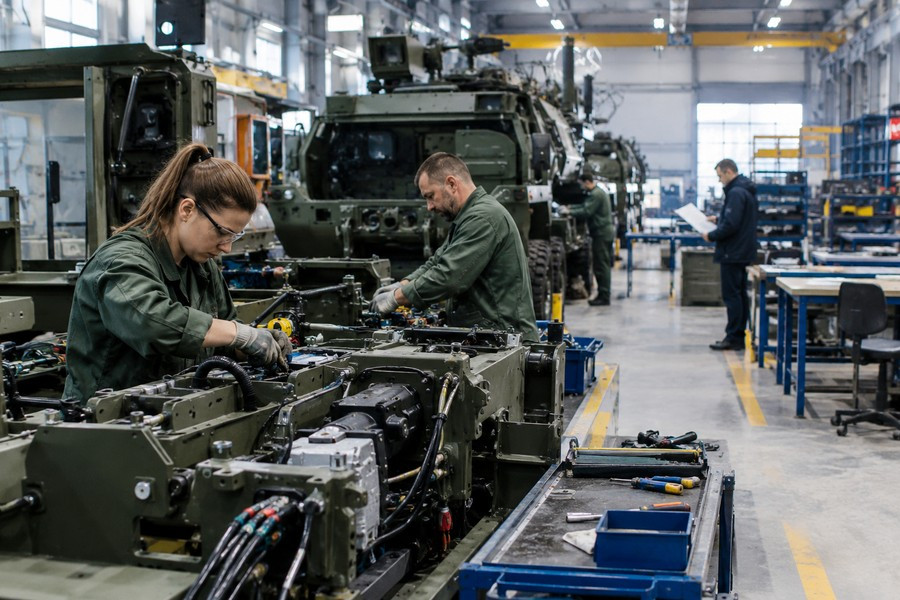
Defense Manufacturers Warn Worker Reserve Cuts Could Slow Military Supply
Ukraine’s defense manufacturers are warning that a proposed change to worker reservation rules could weaken the country’s ability to produce weapons and military equipment. The plan would reduce the share of protected workers at defense and energy companies from 100% to 85%.
Industry leaders say the change could force factories to lose highly trained employees, delay government contracts, and interrupt production lines. They argue that the expected gain in military recruitment would be small compared with the possible damage to the defense industry.
Proposed Changes to Worker Reservations
The government is reviewing changes to the rules for reserving employees who could otherwise be called into military service. The proposed rules would also reduce the reservation limit for public utility companies from 75% to 60%.
The draft removes a rule that kept people with other legal deferments, such as students and parents of large families, out of the calculation. The government also plans to create a coordination center involving security, intelligence, and law enforcement agencies.
The center would help review whether companies are critical to the country and decide how many workers they may reserve. Business groups are concerned that this could create another layer of paperwork and delay decisions that companies already depend on.
Company representatives say they were not included in discussions about the proposed changes. They also say they have not received clear information explaining why the government chose the specific reduction of 15 percentage points.
Manufacturers Say Every Skilled Worker Matters
Defense companies are under pressure to increase production, improve weapons, develop new technology, and reduce dependence on foreign parts. Industry representatives say those goals require more workers, not fewer.
Valentyna Vedrovska of the Ukrainian Arms Council said manufacturers must expand production while quickly adapting equipment to changes on the battlefield. Companies are also expected to design new systems, improve quality, build local supply chains, and develop their own technologies.
Vedrovska, who previously worked as a drone operator and crew commander, said she understands how shortages of weapons can affect military units. She recalled situations in which crews waited for aircraft or artillery ammunition before they could carry out missions.
Her main point is that soldiers cannot be expected to succeed without enough weapons and equipment. In the same way, manufacturers cannot be expected to produce more weapons if the state removes the people needed to build them.
A Small Staff Loss Could Stop a Whole Line
Andriy Demchenko, director general of the League of Defense Enterprises, said companies are already struggling to meet government orders. Air raid warnings often interrupt work, forcing factories to stop production and sometimes operate on weekends to catch up.
He warned that reducing the reservation limit could make those delays much worse. Defense production usually follows a chain of connected steps. In the production of armored vehicles, for example, workers prepare the armor before other teams assemble the vehicle and install its equipment.
If workers disappear at one stage, every later stage may be forced to wait. This means the loss of a small number of employees could prevent an entire contract from being completed on time.
Vedrovska said production would not simply fall by 15% if 15% of reserved workers were removed. Some jobs depend on only one or two specialists. Losing those employees could stop a production line completely or cause a major delay.
- Specialized engineers may take months or years to train.
- Factories already face shortages of mechanics, welders, electricians, and other skilled workers.
- Finding replacements for experienced employees is difficult because many companies are competing for the same people.
- Women can help expand the workforce, but they cannot immediately replace all missing specialists.
Contract Delays Could Bring Financial Penalties
Defense companies set their production plans and delivery schedules based on the number of workers they have. If employees lose their protected status after a contract is signed, a company may no longer have enough staff to meet its obligations.
This could create two problems at once. The government would still expect weapons to arrive on time, while the company might face penalties because it no longer has the workers needed to finish the order.
Industry groups say the defense sector supplies the military with more than $10 billion worth of weapons and equipment each year. Private manufacturers provide more than half of the military’s needs. Defense industry workers make up less than 10% of all people with reserved status who could be called for military service.
For that reason, manufacturers believe the possible recruitment benefit would be limited. They argue that the loss of production capacity could be far more serious.
Businesses Call for Targeted Inspections
Defense companies say they do not oppose inspections or efforts to stop abuse of the reservation system. Their request is that reviews focus on individual companies where problems may exist, rather than applying the same restriction across the entire industry.
Industry representatives also want a clear explanation of the proposed numbers. They say the government has not shown an assessment of how the change would affect production, delivery schedules, or military readiness.
Companies have already had to repeat reviews, submit documents, and confirm that they remain critical businesses. Industry groups say some companies failed to keep that status during the latest review, adding to uncertainty for manufacturers and their employees.
Concerns Extend Beyond Defense Factories
Other critical industries are also warning about possible effects. Businesses in energy, public utilities, food production, aviation, and related fields say worker losses could threaten important services and supply chains.
Volodymyr Semenov, director general of Ukraine’s aerospace association, said the government should improve parts of the system that do not work instead of disrupting companies that are meeting their responsibilities.
He said aviation companies rely on engineers and designers with highly specialized skills. If those workers leave because reservation limits are reduced, replacing them would be extremely difficult.
Manufacturers are asking the government to keep 100% reservations for defense industry employees, carry out focused inspections, and include business representatives in decisions that affect production. They say protecting the workforce is directly connected to keeping weapons and equipment moving to the military.