
A Peek Inside the New HQ of a Renowned American Automaker
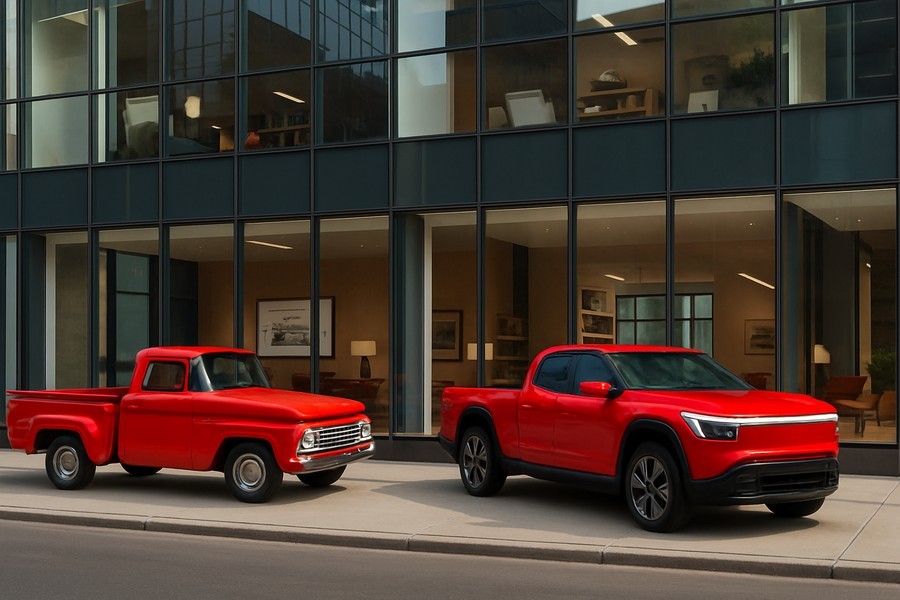
Between a 12-story building and the first new skyscraper to grace the city in over three decades, two red pickup trucks are on display. One is a classic 1963 model, while the other is a shiny new electric vehicle. This outdoor showcase serves as a visual representation of the evolution of a certain Detroit-based car manufacturer, which has just moved into this impressive new world headquarters.
The company has filled four of the six office floors with a blend of historical artifacts and contemporary designs, offering a unique perspective on its journey from the past to the present. The décor is dotted with hidden gems or "Easter eggs" that pay tribute to the company's rich heritage and the city it calls home.
Fusing History with Innovation
From blueprints of the company's iconic design dome to a wall adorned with 300 patented technologies, the office space embodies the spirit of innovation that has defined this automaker. Other subtle nods to the company's history include a decorative wall of cassette tapes featuring songs that mention the brand and playful references to prominent executives.
The office also pays homage to its roots, with references to well-known Detroit streets and artwork inspired by the company's renowned suburban design campus. The new work environment is not just about aesthetics, though. It is also designed to foster collaboration and adapt to the changing work dynamics in a post-pandemic world. The space will accommodate executive offices and various other corporate functions such as marketing, legal, and finance.
From a Towering Complex to a Modern Hub
The move to the new headquarters signifies a significant reduction in the company's corporate office space. The new location is less than a mile from the company's previous headquarters, a towering complex along the city's waterfront. This giant complex, known for its challenging navigation and concrete barriers, has been a symbol for the city since it was constructed in the 1970s.
The new headquarters, on the other hand, is a modern and inviting space designed to fit the company's evolving culture. As the world shifts towards remote working, the office space has been designed to be a place that employees would want to come to, offering more flexibility in terms of location and work dynamics.
The majority of the new executive offices on the top floor will be open for use by executives as they see fit. Only a few of the offices will be permanently assigned to top executives. The company has not disclosed how many employees are expected to work regularly at the new headquarters or the financial details of its 15-year lease.
More than Just an Office
Beyond office areas and executive rooms, the new headquarters will also feature a semi-public space on the first floor where the company can display its products and host events. Other amenities include social gathering areas, food and beverage services, and even a pickleball court and recreation area.
A Comparison with a Rival's Headquarters
Interestingly, the unveiling of the new headquarters comes just a few months after another Michigan-based automaker opened a new 2.1-million-square-foot global headquarters and product design and development center. The difference in size between the two headquarters can be attributed to location, employee count, and the car manufacturers' portfolios of offices and operations throughout the region.
The new headquarters for the Detroit automaker is not meant to be "a city within a city." Instead, it is envisioned as "a building within a city," offering a unique blend of history, innovation, and adaptability.