
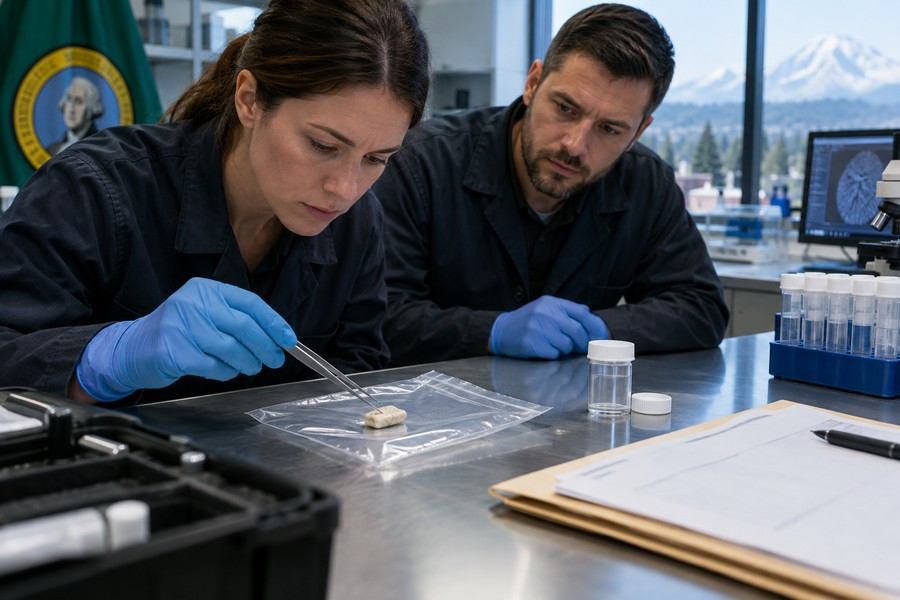
Chewed Gum Helps Solve a Long-Unsolved Washington Murder
A cold case in Washington state took nearly four decades to crack. The breakthrough came from DNA found on a piece of chewed gum and pointed investigators to a man with a history of violent sexual attacks.
A Murder That Haunted a Family
Judy Weaver was a 42-year-old mother and bar manager who was known for standing up to difficult customers. She had once been a local beauty queen and worked hard to support her two daughters, Cathy Myers and Colleen Kayser.
Weaver was engaged to Bill Richards, the owner of the bar where she worked. Her daughters disliked Richards because they said he treated their mother badly. They had seen bruises on Weaver, though they had not personally witnessed him hitting her.
One night, Weaver and Richards celebrated the sale of the bar with friends. Weaver drank too much to drive. She decided to walk home, leaving Richards behind. Her apartment was about half a mile away.
Investigators believe someone followed Weaver through the dark streets. When she reached her apartment, the back door was likely unlocked. The attacker entered and assaulted her.
A neighbor later noticed smoke coming from the apartment. Firefighters found Weaver in a bedroom filled with thick, black smoke. She had been tied up, sexually assaulted, and strangled. A pillowcase covered her head, and her clothing had been cut with a knife.
The fire appeared to be an attempt to destroy evidence. Weaver’s injuries suggested that the attacker may have taken time to frighten and hurt her before killing her.
Richards became the main suspect. However, investigators did not have enough evidence to charge him. He died years later while the case remained unsolved.
DNA Changes the Investigation
Detective Susan Logothetti spent years reviewing the case. She believed new DNA testing could finally reveal who killed Weaver.
Evidence from the apartment was tested again. The results produced a DNA match, but the name was not Bill Richards. It belonged to Mitchell Allen Gaff, a man listed as a highly dangerous sex offender and violent predator.
Gaff had a record of brutal attacks. His first known victim was Jackie Brown, a young police officer who was attacked at her home.
A Narrow Escape
Brown had just finished mowing her yard and was putting away the lawn mower when Gaff entered her garage. He pointed a gun close to her head, struck her, and threatened her.
Brown tried to keep him talking while looking for a chance to escape. Gaff wanted to take her inside the house, but Brown knew she kept a gun near her bed. She also remembered advice from her father: fight as hard as possible when attacked.
When Gaff lowered the gun to restrain her, Brown threw herself into him. He fell against a wall and threatened to kill her. He then pulled out a hunting knife and cut her hand.
Brown ran from the garage and screamed for help. Police soon stopped a man near railroad tracks, but Brown first believed they had detained the wrong person. Then the man spoke. She recognized his voice and identified him as her attacker.
Gaff was convicted of assault with a deadly weapon. Because it was treated as his first offense, he received a short period of work release followed by probation. Brown was deeply troubled that he could return to normal life while she continued to live with the effects of the attack.
Two Sisters Face a Terrifying Attack
Gaff was still under supervision when Weaver was killed. Soon afterward, he attacked teenage sisters Angela and Myra in their home.
The sisters were asleep when Gaff entered through an unlocked door. He found cords and a knife inside the house. He threatened Angela with the knife, then attacked both girls.
Gaff tied them up, placed cloth in Myra’s mouth, and covered her head. He sexually assaulted both sisters. Investigators believe he intended to kill them.
Gaff used a hair dryer cord to strangle Angela. Myra fought back by kicking him and shouting. He turned on her and beat her severely.
Angela managed to escape through the front door. She ran to a neighbor’s house while the cord remained tied around her neck. She used the attached hair dryer to strike the neighbor’s door and cried out that Gaff was killing Myra.
Neighbors called police. Gaff fled the house without clothing, but officers arrested him about a week later.
He was convicted of aggravated rape and spent years in prison. Officials later decided he was too dangerous to release and placed him in a secure treatment program. He remained confined for many more years while professionals evaluated whether he was still a threat.
A New Identity and a New Lead
Gaff was eventually released after completing treatment. He became a Buddhist, married a man, and changed his name to Sam Wise Price. Logothetti said he appeared to be living quietly, but his past remained deeply troubling.
The DNA match connected Gaff to Weaver’s murder. Investigators still needed a new DNA sample that could be used to confirm the match and support a criminal case.
The Chewing Gum Plan
Logothetti created a risky plan centered on discarded chewing gum. Instead of approaching Gaff with a large police team, investigators watched for an opportunity to collect something he had thrown away.
The discarded gum could provide the fresh DNA sample needed to compare with evidence from Weaver’s apartment. The method was simple, but the result could be powerful.
After decades of uncertainty, the investigation had finally moved beyond suspicion. DNA tied Gaff to the murder, while his earlier attacks showed a pattern of violence that closely matched what happened to Weaver.
For Weaver’s daughters, the case had caused pain for most of their lives. The new evidence offered a chance to replace years of unanswered questions with a clearer account of what happened to their mother.