
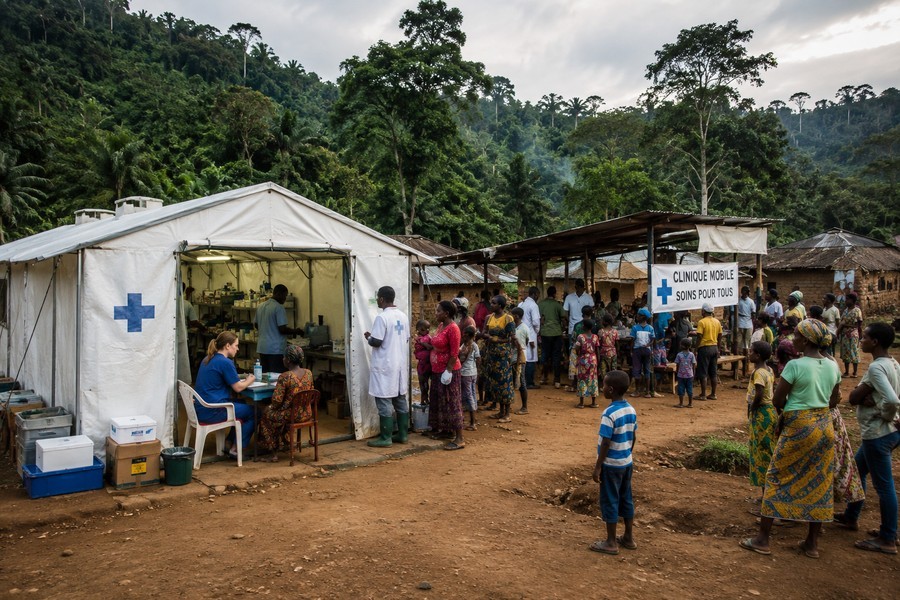
Dangerous Disease Outbreak Expands Rapidly in Eastern Congo
A fast-moving health crisis is expanding in eastern Congo. The dangerous virus has now reached two more health zones, bringing the total number of affected areas to 60. This outbreak is moving quicker than previous ones, making it very difficult for medical teams to keep up and protect local communities.
The two newly affected areas are Biena and Manguredjipa, located in the North Kivu province. In these specific locations, the percentage of people dying from the illness is much higher than the overall average of 48 percent. This high death rate is partly because help and medical responses arrived too late in these remote spots, allowing the illness to take hold before treatments could begin.
Rising Numbers and Fast Spread
The scale of this health emergency is clear from the rising numbers of sick people. The virus has caused a large number of illnesses and deaths in a short amount of time:
- There are 5,794 confirmed cases of the sickness.
- The virus has claimed the lives of 2,786 people.
- The disease is moving at an unprecedented speed, outrunning the efforts to find and isolate sick individuals.
The situation has become extremely difficult to manage. It is currently on a path to become even larger than the historic West Africa outbreak that occurred years ago, which caused more than 11,000 deaths in nations like Guinea, Liberia, and Sierra Leone. Because the virus is spreading so quickly, medical workers are struggling to track down every person who has come into contact with the disease.
Why the Situation is Hard to Control
Medical workers are facing a mountain of obstacles as they try to stop the virus from traveling to new towns. Several major problems in the region are making the situation much worse:
- Safety concerns and violence: Ongoing conflict and rebel attacks make it dangerous for doctors and nurses to travel and treat patients safely.
- People on the move: Many families are constantly fleeing their homes due to local violence, which can accidentally carry the virus to new areas.
- Worker strikes: Local health workers have gone on strike, leaving clinics understaffed when they are needed most.
- Lack of trust: Many people in the communities do not trust the medical interventions, which means they might not seek help when they get sick.
Because of these issues, most of the infections and deaths are happening deep within communities, far away from the medical networks that are trying to track the disease. This means many people are getting sick and dying at home without ever seeing a doctor.
Testing New Treatments and Vaccines
To protect those on the front lines, medical teams have started giving a vaccine called Ervebo to health workers and other people who work directly with patients. This vaccine has successfully stopped other outbreaks in the past. However, there is a major catch. The Ervebo vaccine was designed for a different, more common version of the virus known as the Zaire strain.
The current outbreak is caused by a much rarer version called the Bundibugyo virus. Right now, there are no approved vaccines or treatments specifically for this rare strain. Scientists are running clinical trials to find a vaccine that works against this specific type of the virus, but developing these medicines takes time.
Even though this outbreak was officially announced months ago, experts believe the virus actually started spreading silently much earlier in the year. It began in just three health zones and has now exploded into nearly 60 different areas. Because it spread silently for so long, it gained a massive head start on medical response teams.
Disrupted Lives and Border Threats
The efforts to stop the virus have completely changed daily life for families in six different provinces. Local governments have put several strict rules in place to stop people from gathering and spreading the sickness:
- Public gatherings have been limited to keep crowds from forming.
- Rules for social distancing have been enforced in public spaces.
- Airports have been closed to stop people from traveling long distances.
These changes are especially hard on the northeastern province of Ituri, which is already suffering from violence caused by rebel groups. Ituri is currently the hardest-hit region, holding more than 83 percent of all recorded cases. While the government has set up health and washing stations in some public areas, community groups say much more work is needed to help local residents feel safe and build trust with health workers.
The danger is also spreading beyond the borders of Congo. Even though neighboring Uganda recently declared itself free of the virus, there is still a high risk that the disease could cross the border again. The country currently facing the highest risk of the virus spreading into its territory is the Central African Republic, followed very closely by South Sudan, as the sickness moves closer to these international borders.