
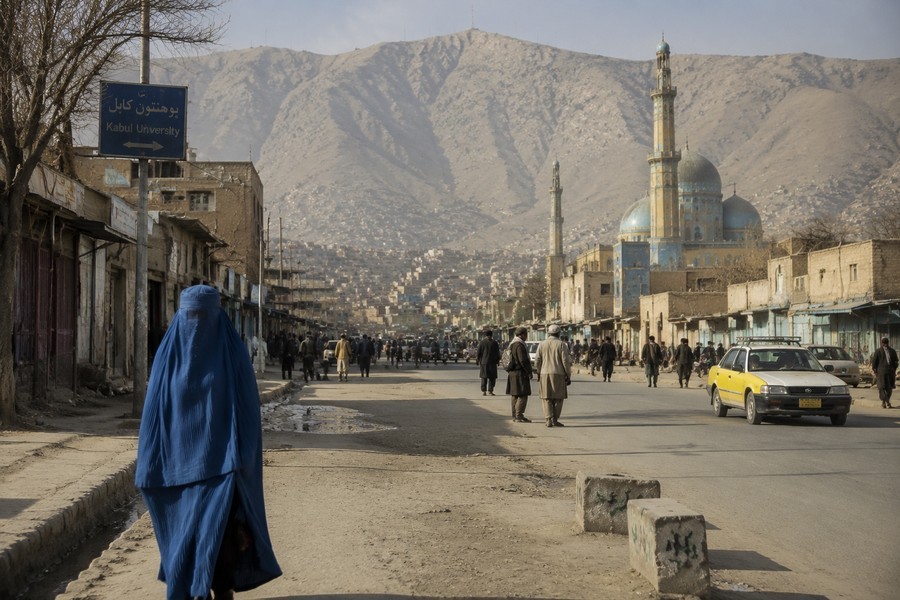
A Country Left Behind: The Quiet Crisis in Afghanistan
Five years after foreign troops withdrew and the ruling group reclaimed power, Afghanistan is facing one of the most severe humanitarian crises in the world. What was once a central focus of global politics—costing American taxpayers over $2.3 trillion during a twenty-year conflict—has largely faded from the world's attention. Today, millions of people are struggling to survive amidst a combination of economic collapse and severe social restrictions.
A Harsh Reality for Women and Girls
The daily lives of women and girls have changed drastically. The nation is currently the only place in the world where girls are not allowed to attend school past the sixth grade. This rule has lasted so long that an entire generation of girls has grown up without the chance to receive a high school education. It is estimated that about 2.4 million girls are currently locked out of the classroom.
In addition to school bans, women face many other strict rules:
- They are barred from working most jobs.
- They must cover their faces when out in public.
- They cannot travel long distances without a male family member to accompany them.
- Many women now leave their homes only once or twice a month, leading to a major mental health crisis where a large majority report feeling depressed or hopeless.
Legal protections for women have also disappeared. New rules allow husbands to physically abuse their wives as long as they do not break bones or leave permanent marks. Other changes have made it much harder for women to get a divorce and have removed the minimum marriage age, which used to be 16. This has caused a worrying rise in child marriages.
A Massive Drop in International Aid
These social changes are happening at the same time that vital foreign aid is disappearing. Nearly 45% of the population relies on humanitarian assistance to survive. However, overall funding has dropped by about 70% in recent years. The United States, which used to be the largest donor of aid, is no longer even among the top five contributing nations. A recent decision to cancel planned development contracts cut off more than $1.7 billion in assistance.
This loss of funding has had a devastating impact on local families:
- Over 10.7 million women and girls rely directly on aid to survive.
- More than half of the local charity organizations run by women expect to close down soon due to a lack of funds.
- One out of every ten children is now suffering from severe, life-threatening malnutrition.
- About 11 million children need urgent help, yet nearly 600 health clinics have been forced to close.
Economic Collapse and the Shift in Agriculture
With very few jobs available, most families try to get by through informal trade. In the past, many rural families survived by growing poppies to make opium. Foreign governments spent billions of dollars over two decades trying to stop this drug trade, but those efforts largely failed.
Under the current rulers, poppy farming was banned, causing opium production to drop by 95%. While this stopped the illegal drug crop, it also took away the main source of income for poor rural families without offering them any other way to make a living. As a result, the production of dangerous synthetic drugs, like methamphetamines, has started to rise in its place.
Previously, foreign aid paid for about three-quarters of the country's public spending. Today, that money is gone, and billions of dollars of the nation's central bank funds remain frozen by Western governments. These governments are holding the money to pressure the ruling group to restore rights for women and girls, meaning the very funds once used to support public services are now locked away.
A Changing Global Landscape
While Western nations have cut ties, other countries are stepping in. Russia has formally recognized the new government, and China has sent an ambassador and started investing heavily in natural resources, including oil, copper, and lithium. Meanwhile, extreme poverty and weak local institutions have allowed some dangerous militant groups to remain active in remote areas of the country.
Five years after a major turning point, the promises of a better future for the region remain unfulfilled. Instead, the people of the nation continue to face a daily struggle against hunger, illness, and a loss of basic human rights.