
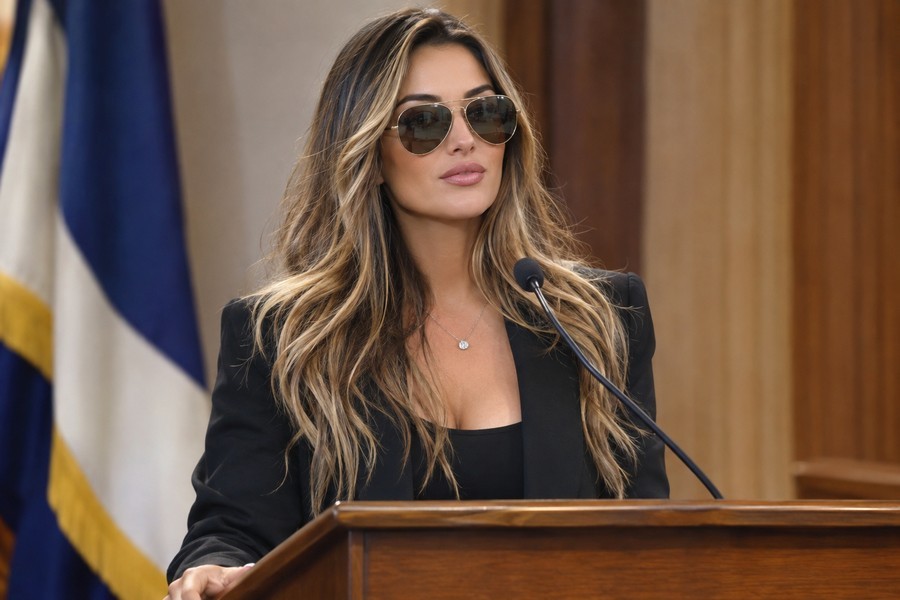
A Lifelong Champion for Equality: The Journey of an American Icon
For decades, a prominent leader with signature aviator glasses and long, highlighted hair stood at the center of the American struggle for women's rights. Gloria Steinem became a symbol of change, dedicating her life to advocating for equal pay, reproductive rights, and fair treatment for women everywhere. Her journey was filled with both historic achievements and intense public criticism, yet her impact reshaped the lives of countless individuals.
A Challenging Childhood
Growing up in Ohio, her early life was far from stable. Her father worked as a traveling salesman, which kept the family moving constantly in a small trailer. When she was just ten years old, her father left, leaving her to care for her mother, who struggled with severe mental illness. Because of these heavy family responsibilities, she was unable to attend school regularly until she was twelve years old. Reflecting on this time later in life, she mentioned that she never felt the need to have children of her own because she had already raised her own parent.
After finishing her college education, she traveled to India on a research scholarship. For two years, she worked alongside local women to help organize peaceful protests against unfair government policies. This eye-opening experience sparked her lifelong passion for community-level activism.
Going Undercover for Justice
As a young woman, she moved to New York to work as an independent writer. At the time, the publishing world was heavily dominated by men, making it very difficult for female journalists to get serious assignments. Her major breakthrough came when she decided to go undercover as a waitress at a highly popular, male-only gentlemen's club. Using a fake name and pretending to be twenty-four when she was actually twenty-eight, she wanted to expose the harsh reality behind the glamorous image of the establishment.
The experience revealed a world of low pay and physical discomfort. She and her coworkers had to wear painful high heels and extremely tight outfits for hours on end. While the resulting article brought her widespread attention, it also made it hard for her to be taken seriously by male editors, who continued to assign her stories about fashion and beauty. Even years later, critics would bring up her time as a club waitress to dismiss her work, though she took pride in the fact that her writing helped improve the working conditions for those waitresses.
Creating a Platform for Women
Determined to write about serious social issues, she eventually became a regular columnist. Her powerful essays on women's liberation made her a household name across the country. When male colleagues warned her that focusing on women's rights would ruin her career, she decided to take matters into her own hands.
Along with other activists, she co-founded a groundbreaking, women-run magazine. It was the first publication of its kind, designed as an alternative to traditional magazines that only focused on housework and beauty tips. Although many male media figures predicted the project would fail within months, the very first issue sold out in less than a week and attracted tens of thousands of subscribers. The publication remains active to this day.
One of her most famous pieces in the magazine was a humorous, thought-provoking essay exploring how society would view bodily functions differently if men had periods. The essay remains a key piece of writing in discussions about gender roles and power structures.
Fighting for Reproductive Freedom
Though she is known as one of the most famous activists in history, she did not fully join the movement until her thirties. Her turning point came during a public meeting where women shared their personal stories about ending pregnancies. This prompted her to speak publicly about her own experience of having an illegal procedure in London when she was twenty-two, just before her trip to India.
At the time, the procedure was illegal unless the woman's health was in danger. A kind doctor agreed to help her under two conditions:
- Keep his identity secret to protect his career and freedom.
- Live her life fully and do what she truly wanted to do.
Decades later, she dedicated her memoir to this doctor, honoring the promise that allowed her to shape her own future. She began using the term "reproductive freedom" to make the conversation around these rights more accessible to the public.
Political Action and Public Backlash
Despite a deep fear of public speaking, she became a powerful voice at rallies and political events. When national lawmakers failed to pass a major amendment guaranteeing equal rights for women, she helped form a national political group. This organization aimed to help women secure public office and participate fully in government. She even spoke before a panel of male politicians, sharing how she had been denied housing and restaurant service simply because she was a woman.
Her leadership drew heavy criticism from all sides. Some accused her of being too glamorous to be a real activist, while others claimed she was only successful because of her looks. A rival leader in the movement even accused her of using the cause for personal gain. She also faced severe harassment, including having her personal phone number published next to offensive advertisements, and dealing with hostile strangers on the street.
She also faced criticism for her political stances. In one instance, she defended a president who was accused of having an affair with a young intern, a stance she later admitted she would not take today. She also had to clarify her views on transgender individuals, eventually writing that their lives should be celebrated and respected.
Personal Life and Legacy
For most of her life, she expressed little interest in marriage, famously stating that she did not want to live in captivity. She dated several high-profile figures, including a major foundation leader, a film director, and an Olympic athlete. However, at age sixty-six, she surprised many of her followers by marrying an environmental entrepreneur. She explained that she finally felt comfortable marrying because the laws had changed enough to allow for a truly equal partnership between spouses.
Throughout her long life, she survived a battle with breast cancer and continued to find new passions, even taking up tap dancing. In her late seventies, she received the nation's highest civilian honor from the president for her work in expanding opportunities for women.
Reaching the age of ninety, she continued to live peacefully in New York, proud that her message of equality and self-worth continued to inspire individuals to live authentic lives. Her work helped transform how the nation talks about and understands human rights.