
How Local Main Streets Are Swapping Goods for Experiences
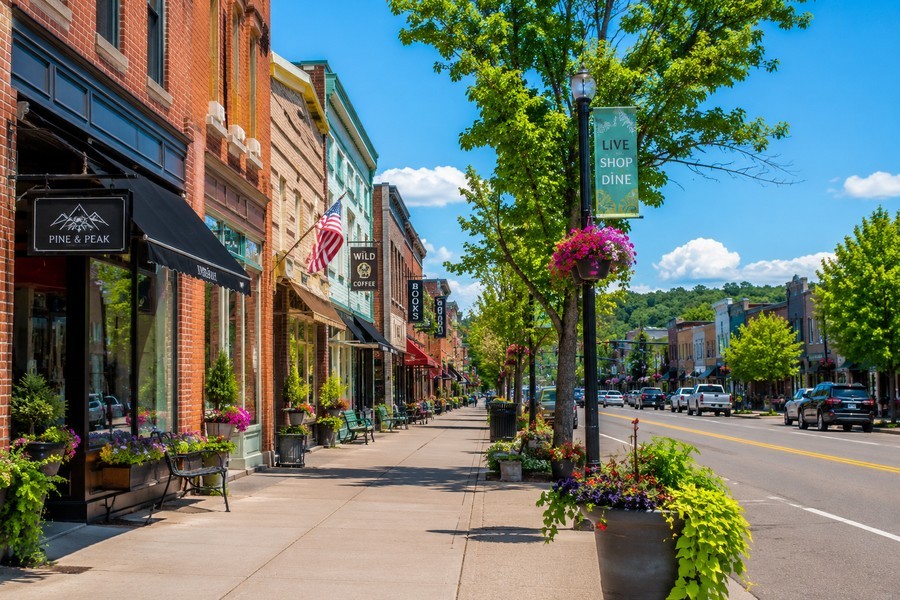
The look of traditional downtown shopping districts is changing rapidly. In a commuter suburb in New Jersey, which connects by train to a major metropolitan hub, the local streets have long been the heart of the community. For decades, residents and visitors came to this central area to buy everyday items. They shopped at local gift shops, stationery stores, family-owned pharmacies, and hardware stores where everything was just a short drive away.
Over time, those small shops faced waves of competition. First came the large national chain stores, followed by a surge of bank branches. Today, a new shift is taking place. The stores that once sold physical products are closing down. In their place, businesses that offer services and experiences—like spas, fitness centers, and restaurants—are moving in.
A Nationwide Trend Toward Services
This transformation is not unique to one town. It is happening across the entire country. Recently, for the first time, more than half of the leased retail space in the United States was occupied by service-based businesses rather than traditional stores. People are changing how they spend their money, and this shift is reshaping malls, suburban shopping centers, and downtown areas alike.
Data from the nation's twenty largest metropolitan areas shows that the number of traditional retail tenants has declined for three consecutive years. Meanwhile, businesses focused on entertainment and personal care are growing rapidly. Some of the fastest-growing businesses include:
- Fitness and wellness studios, such as Pilates classes and stretching centers.
- Entertainment venues, including escape rooms and virtual golf hubs.
- Personal care shops, like medical spas, hair salons, and barbershops.
In the New Jersey suburb, for example, there are now eleven barbershops in town. On a single block, three ice cream shops have opened, with a milkshake cafe coming soon.
Why Consumers Are Changing Their Habits
Market researchers note that consumers have been gradually shifting their spending from physical goods to experiences over a long period. While this trend paused briefly during recent global lockdowns, it has returned stronger than ever. The shift is largely driven by middle- and upper-income shoppers, though many consumers are also choosing to buy cheaper everyday goods so they have more money left over for outings and activities.
Modern trends around health, beauty, and fitness play a major role in this change. Additionally, the rise of online shopping has altered why people leave their homes. Since almost any physical item can be purchased online with a single click, people who visit physical shopping districts are usually looking for an activity. As one local business leader pointed out, you cannot stroll through a major online retailer the way you can a real street.
How Old Buildings Are Finding New Lives
The physical spaces in these downtown areas are adapting to meet the new demand. In the New Jersey town, a building that once housed a ski shop has been turned into a sushi restaurant. A former bank building, complete with its original vault and deposit boxes, has been transformed into an Italian restaurant featuring a rooftop bar.
While visitors can still find stores that sell clothes, shoes, and home decor, they are now surrounded by over a hundred dining options, dozens of coffee shops, salons, and specialty wellness spaces.
This mix of businesses can sometimes help traditional shops. For example, a trendy new bakery recently opened across the street from a local independent bookstore that has been open since the late twentieth century. The bookstore manager noticed that the new neighbor brought in fresh foot traffic. Families often buy a treat at the bakery and then head over to the bookstore to browse the children's section, helping to boost sales.
The Challenges of a Service-Heavy Downtown
While service businesses can bring energy to a shopping center, the transition can be more complicated for a traditional downtown. Large shopping malls often add gyms, arcades, and medical clinics to give people a reason to visit regularly. However, in a small downtown, a new restaurant or salon usually replaces an existing retail store.
This means there are fewer shops for visitors to browse. The bookstore manager noted that some visitors now come to town only to eat at a restaurant, and they may not walk around to see other businesses.
A local jewelry boutique owner expressed mixed feelings about this change. She wondered if replacing beautiful, unique shops with restaurants and service businesses improves the town's overall character or takes away from it. To keep her business appealing, she custom-makes jewelry by hand and rearranges her store displays daily to give people a reason to visit in person.
The Appeal of Physical Shopping
For many shoppers, the experience of browsing in person cannot be replaced by technology. One local customer explained that she drives half an hour to visit the town, push her stroller down the streets, and look into the shop windows. She enjoys buying custom items in person, noting that it allows her to avoid the high markups often found on social media advertisements.
For these visitors, a trip downtown is about more than just buying a product. It is an opportunity to walk, explore, grab a snack, and enjoy the community—an experience that cannot be replicated on a screen.