
How Modern Hands-Free Driving Systems Compare on the Road
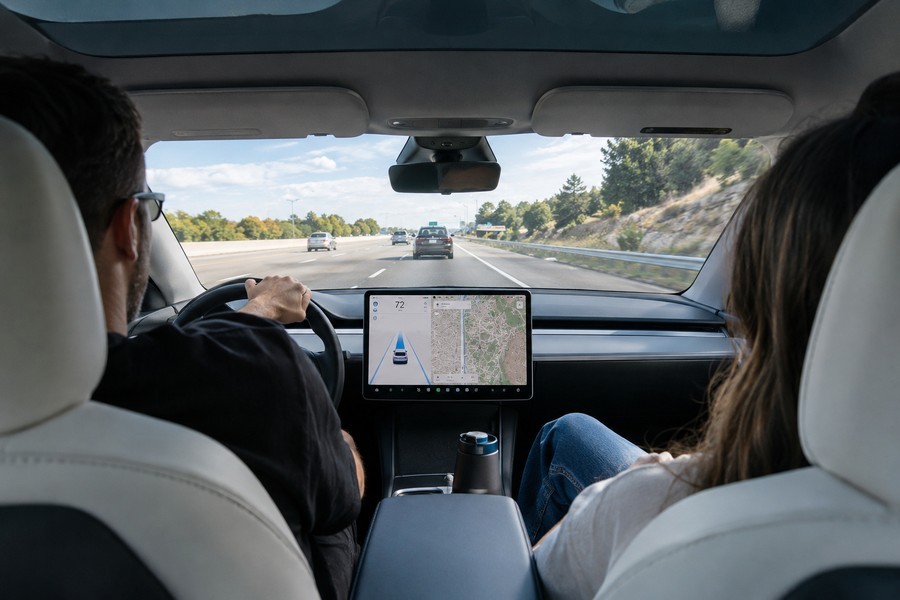
The race to build the ultimate driver-assist technology is heating up. Major electric vehicle manufacturers are developing software that can steer, accelerate, and brake on their own. While these systems are not fully self-driving, they represent a massive leap forward in automotive technology. Recently, real-world tests of two leading driver-assist systems revealed how they handle different roads, from simple highways to busy city streets.
The Core Differences in Assisted Driving
To be clear, no vehicle available to the public today is fully autonomous. Drivers must always keep their eyes on the road and be ready to take control at any moment. However, these advanced driver-assistance systems use a mix of cameras and sensors to make long trips much less tiring. Currently, the two most advanced systems on the market take very different approaches to helping drivers.
- The Pioneer's System: This software is designed to handle both highways and local city streets. It can navigate through intersections, stop at traffic lights, handle roundabouts, and even park the vehicle automatically.
- The Startup's System: This newer technology performs well on highways, keeping the vehicle safely in its lane and maintaining speed. However, it currently only alerts drivers to city traffic signals rather than navigating them automatically.
Navigating City Streets vs. Open Highways
During real-world testing, the differences between these two approaches became obvious. The pioneer's system managed to navigate nearly two hundred miles of diverse roads with minimal human intervention. It successfully negotiated complex construction zones, steered through traffic circles, and even bypassed a large truck blocking part of the lane. It also handled parallel parking upon reaching the destination.
In contrast, the startup's system is highly capable on the highway but still requires the driver to handle exits and construction areas. It cannot yet change lanes automatically, though that feature is expected to be released soon. When driving on local roads, the vehicle can detect stoplights and signs but relies on the human driver to take action. An engineering executive at the startup explained that the next major step is to transition from a highway-only system to a complete point-to-point system that handles the entire driving task from start to finish.
Driving on city streets is much more difficult than driving on the highway. Highways have predictable lanes, clear markings, and fewer pedestrians. City streets present a chaotic mix of bicyclists, pedestrians, construction zones, and unpredictable traffic rules that challenge even the smartest computer systems.
How Traditional Automakers Compare
Traditional domestic automakers were actually among the first to introduce hands-free driving on highways. However, they have been slower to expand these features. While their systems work well on pre-mapped highways, they do not yet offer hands-free driving on local city streets. Some of these older companies are working on advanced "eyes-off" technologies, but those features are not expected to be widely available for several years.
The Cost of Hands-Free Technology
These advanced systems come with different pricing structures, allowing buyers to choose how they want to pay for the technology:
- The pioneer's system is available as a monthly subscription costing about ninety-nine dollars.
- The newer electric truck manufacturer offers its system for a monthly fee of about fifty dollars, or a one-time lifetime purchase of twenty-five hundred dollars.
- A major traditional automaker offers its highway-only system for around forty dollars a month or a yearly rate of about three hundred ninety-nine dollars.
An industry financial analyst recently noted that companies building their own technology in-house are better positioned to make money from software services as vehicle production increases.
Different Views on Safety and Sensors
One of the biggest debates in the automotive industry is how vehicles should "see" the world around them. The pioneer company relies almost entirely on a camera-only system. They believe that computer vision is enough to navigate safely.
On the other hand, the newer electric truck manufacturer believes in using a variety of sensors. Their vehicles use a combination of at least ten cameras and five radar units. They also plan to add lidar technology—which uses light beams to map the surroundings—to future models. Proponents of this approach argue that extra sensors are crucial for detecting hazards in poor weather conditions, such as heavy fog or bright sun glare.
Safety remains a major concern for all driver-assist technologies. Government safety regulators have investigated several crashes involving automated systems, particularly in situations where the technology failed to alert the driver during low-visibility conditions. Additionally, safety experts worry that drivers can become too distracted, relying too heavily on the vehicle to drive itself. Because the handoff from the computer to the human can happen very quickly, staying attentive is vital for safety.