
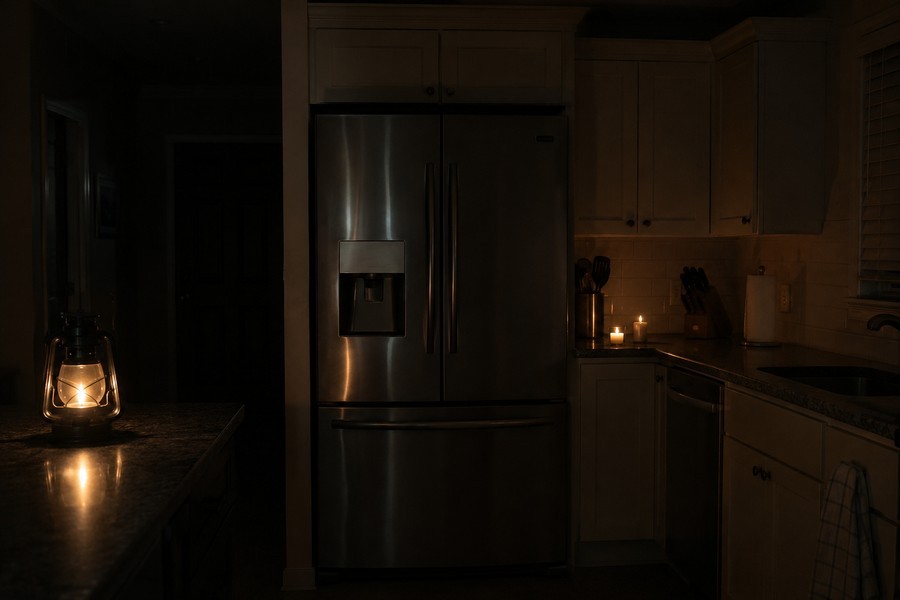
Protect Your Kitchen: How to Handle Food Safety When the Power Goes Out
Severe storms can quickly knock out electricity, leaving thousands of families in the dark. In one recent storm event, nearly 122,000 electricity customers lost power, leaving household refrigerators and freezers completely idle. When the lights go out, the clock starts ticking on the safety of the food in your kitchen. Knowing how to handle your perishable items can prevent food poisoning and help you save what is still good.
The Golden Rules of Fridge Safety
The most important rule to remember during any power outage is simple: when in doubt, throw it out. You should never taste food to check if it is still good. Bacteria that cause food poisoning do not always change the look, smell, or taste of food.
To keep your food safe for as long as possible, keep the refrigerator and freezer doors closed. Every time you open the door, cold air escapes, which speeds up the spoiling process. Here is how long your appliances can keep food safe without power:
- The Refrigerator: Your fridge will keep food safely cold for up to four hours, as long as you do not open the door.
- A Half-Full Freezer: A freezer that is only partially full will keep food safe for about 24 hours if left closed.
- A Full Freezer: A completely packed freezer can hold its temperature for up to 48 hours if the door stays shut.
Using Ice and Coolers to Save Your Food
If you expect the power to be off for more than a few hours, you should take action to protect your food. You can move your items into a cooler packed with ice or frozen gel packs. Use a food thermometer to make sure the temperature inside the cooler stays at 40 degrees Fahrenheit or below. Be ready to add more ice as it melts.
If you can find dry ice, it can be incredibly helpful for long outages. About 50 pounds of dry ice can keep an 18-cubic-foot freezer cold for up to two days. However, you must handle dry ice safely. Never touch it with your bare hands, and do not let it touch your food directly.
If you are unsure about freezer items, check the packages. If the food still has visible ice crystals, or if a thermometer shows it is at 40 degrees or below, you can safely refreeze it. Keep in mind that the quality or texture of the food might change slightly after refreezing. To help items stay cold longer inside your freezer, group them closely together.
Foods You Must Throw Away
Some foods are highly sensitive to temperature changes. If your refrigerator has been without power for more than four hours, or if these foods have been warmer than 40 degrees for two hours or more, you must discard them. Throw away the following items to stay safe:
- Meats and Dairy: Raw, cooked, or leftover meat, poultry, fish, soft cheeses, milk, yogurt, sour cream, and eggs.
- Deli and Prepared Foods: Hot dogs, bacon, lunch meats, pizza, shredded cheeses, casseroles, pasta, and pasta sauces.
- Salads and Dressings: Tuna, chicken, potato, or pasta salads, as well as cream-based salad dressings, sauces, and soups.
- Condiments: Opened mayonnaise, tartar sauce, and horseradish must be tossed if they have been held above 50 degrees for more than eight hours.
- Produce: Cut fruits and vegetables, as well as any leafy greens or bread that may have been dripped on by raw meat juices.
- Signs of Spoilage: Any fruits or vegetables that look slimy, or any food that has an unusual smell, color, or texture.
Foods That Are Safe to Keep
Fortunately, you do not have to throw everything away. Some items have natural preservatives, like high amounts of salt or sugar, which help them last longer. You can safely keep the following items:
- Condiments: Ketchup, mustard, soy sauce, bottled marinades, jellies, and jams. However, check your jams and jellies after a few days, and throw them out if you see any mold growing.
- Fats and Dairy: Butter, margarine, and hard or processed cheeses.
- Pantry Items: Foods that do not normally need to be refrigerated, such as fresh herbs, spices, flour, nuts, bread, and rolls.
- Whole Produce: Whole, uncut fruits and vegetables that do not show any signs of rotting.
How to Clean Your Fridge After an Outage
Once your electricity comes back on, you will need to clean your refrigerator and freezer thoroughly to remove any bad smells or bacteria. Follow these steps to get your appliances fresh and clean:
First, throw away all spoiled or questionable food. Next, pull out all the shelves, drawers, and ice trays. Wash these parts thoroughly with hot water and soap. After washing, rinse them with a sanitizing mixture made of one tablespoon of unscented liquid chlorine bleach mixed into a gallon of clean water.
Wash the entire inside of the refrigerator and freezer, including the doors and rubber seals, using hot water and baking soda. Rinse everything with the sanitizing bleach solution, and leave the doors open for about 15 minutes to let them dry.
If you need to get rid of mildew, wipe the inside surfaces with a mixture of equal parts vinegar and water. Leave the doors open and let the appliance air out for a few days if possible.
To eliminate stubborn odors, try these simple tricks:
- Stuff the inside of the fridge and freezer with rolled-up sheets of newspaper. Close the doors and leave them shut for several days. Afterward, remove the paper and wipe the inside down with vinegar and water.
- Place fresh coffee grounds or baking soda in a wide, shallow dish at the bottom of the empty appliance.
- Use a specialized odor remover from a local hardware store, following the directions on the package.
Where to Call for Extra Help
If you have questions about whether your meat or poultry is safe to eat, help is available. You can call a toll-free hotline at 888-674-6854. This service is open on weekdays from 10 a.m. to 6 p.m. Recorded safety messages are also available 24 hours a day to help you keep your family safe.