
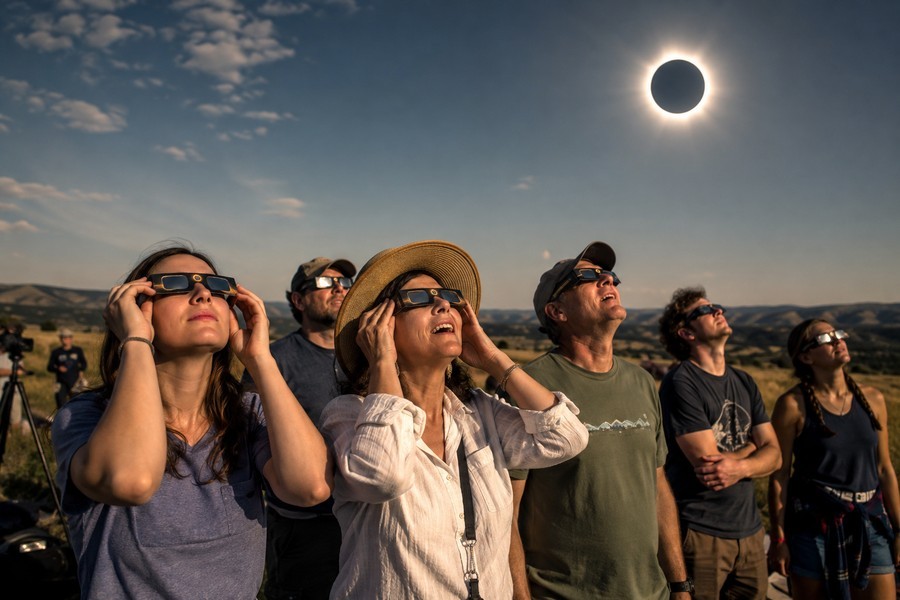
How to Safely Watch the Magic of a Total Solar Eclipse
A total solar eclipse is one of the most beautiful sights in nature. During this event, the moon passes directly between the Earth and the sun, completely blocking the sun's light for a brief time. People in certain parts of Greenland, Iceland, northern Russia, Spain, and Portugal will be able to see this amazing event. In some places, the eclipse will happen right as the sun is setting, creating a beautiful view of a crescent sun dipping below the horizon.
Only people located in the path of totality—the narrow track where the moon's shadow completely covers the sun—will see the total eclipse. People outside this path will see a partial eclipse, where the moon covers only a portion of the sun. This partial view will be visible across the northern United States, Canada, much of Europe, and northwestern Africa.
The Hidden Dangers of Looking at the Sun
It is never safe to look directly at the sun with the naked eye. The only exception is during the brief moments of totality, when the moon completely blocks the sun's face. The moment any sunlight begins to reappear, you must protect your eyes immediately.
Even when 99% of the sun is covered, the remaining 1% of exposed sunlight is strong enough to cause permanent damage. This light can destroy the sensitive cells in your eyes that allow you to see. This condition is called solar retinopathy, which is damage to the retina caused by solar radiation. There is no cure or treatment for this condition. It can cause permanent blind spots or blurry vision. In past eclipses, people have suffered permanent eye damage simply by using low-quality or damaged glasses.
How to Choose Safe Eye Protection
To view the eclipse safely, you must use specialized eye protection. Regular sunglasses, no matter how dark they are, will not protect your eyes. Safe eclipse glasses are 100,000 times darker than regular sunglasses and must meet an international safety standard known as ISO 12312-2.
- Special Materials: Eclipse glasses use lenses made of black polymer, which is a plastic resin infused with carbon particles. This material blocks almost all visible, ultraviolet, and infrared light.
- Sunglasses Fail: Ordinary sunglasses only block some ultraviolet light but do not block dangerous infrared radiation, leaving your eyes unprotected.
- Optical Devices: If you want to use a camera, binoculars, or a telescope, you must place a special solar filter over the front lens of that device.
Rules for Safe Viewing
Using your protective gear correctly is just as important as having the right equipment. Keep these safety tips in mind during the event:
- Put them on first: Always look down and put your eclipse glasses on before looking up at the sun. Turn away from the sun before taking them off.
- Supervise children: Make sure children keep their safety glasses on the entire time they are looking at the sun.
- Use with regular glasses: If you wear prescription eyeglasses, keep them on and place your eclipse glasses right over them.
- Avoid double-filtering mistakes: Never look through a camera, telescope, or binoculars while wearing eclipse glasses. The concentrated light from these devices can melt right through the thin film of your eclipse glasses and cause instant, severe eye damage.
- Welding filters: You can use certain welding filters if they are made of tempered glass or metal-coated polycarbonate. Look for a shade number of 12 or higher. Shades 13 and 14 offer the most comfortable view, though they will make the sun look green instead of its usual color. Avoid auto-darkening welding helmets, as they may not react quickly enough to protect your vision.
Caring for Your Eclipse Glasses
If your eclipse glasses meet the proper international safety standards and are not damaged, they do not have an expiration date. You can keep them and use them for future events. Here is how to care for them:
Keep them stored at room temperature in an envelope or their original box to prevent scratches. Never get them wet. Avoid using water, glass cleaner, or wet wipes to clean them, as moisture can ruin the cardboard frames and cause the lenses to detach. If the lenses get dusty, gently wipe them with a dry tissue or a soft cloth.
How to Watch the Eclipse Indirectly
If you do not have certified safety glasses, you can still enjoy the event safely using indirect viewing methods. These methods project an image of the sun onto another surface.
- Pinhole Projector: Take a piece of cardstock or an index card and poke a small hole through it. Stand with your back to the sun and hold the card up. The sunlight passing through the hole will project a tiny image of the crescent sun onto the ground or a wall. Do not look through the hole at the sun.
- Household Items: You can use kitchen colanders, straw hats, or anything with small holes to create the same projection effect.
- Hand Shadows: Cross your hands over each other with your fingers spread out to create a waffle pattern. The shadows on the ground will show tiny shapes of the eclipsed sun.
- Tree Leaves: Sunlight filtering through the leaves of a tree will naturally project dozens of crescent-shaped light patterns onto the ground below.